Graphene for Cars
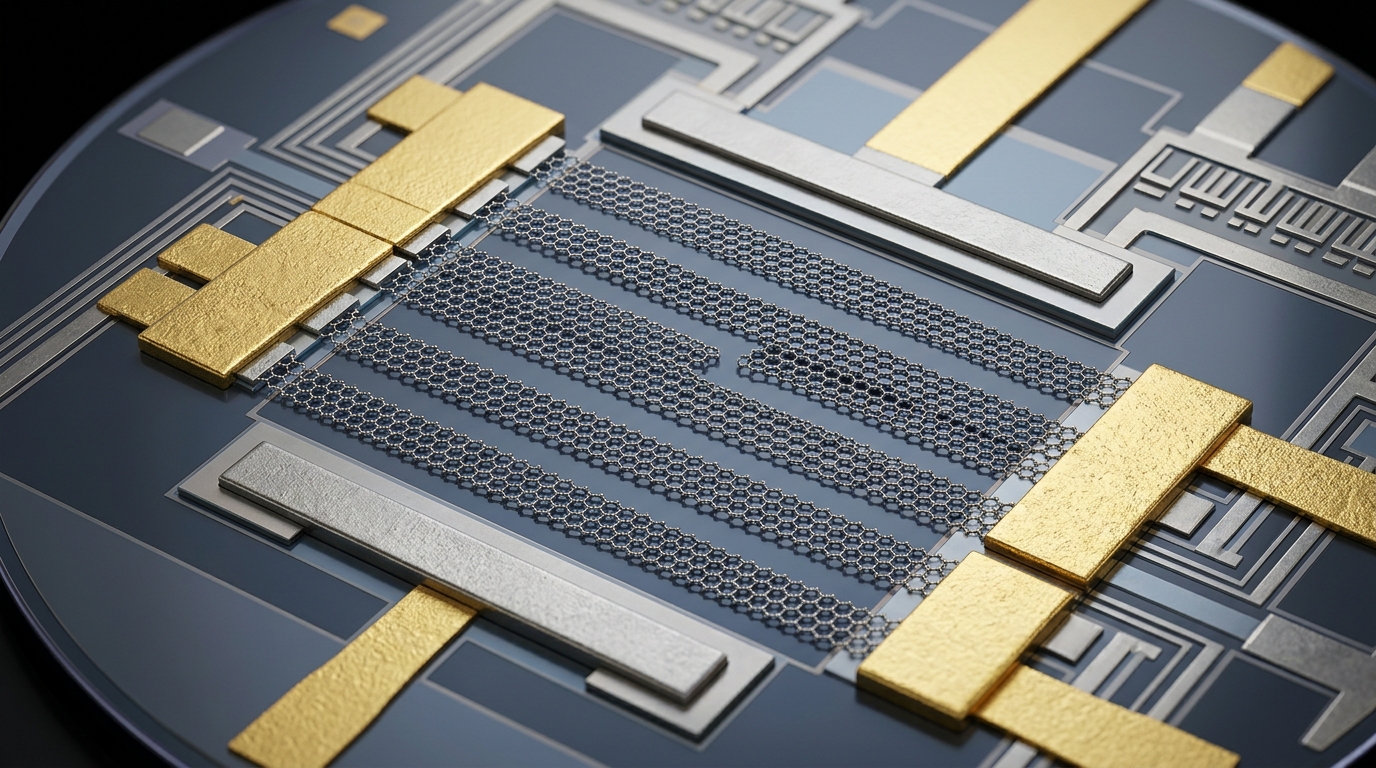
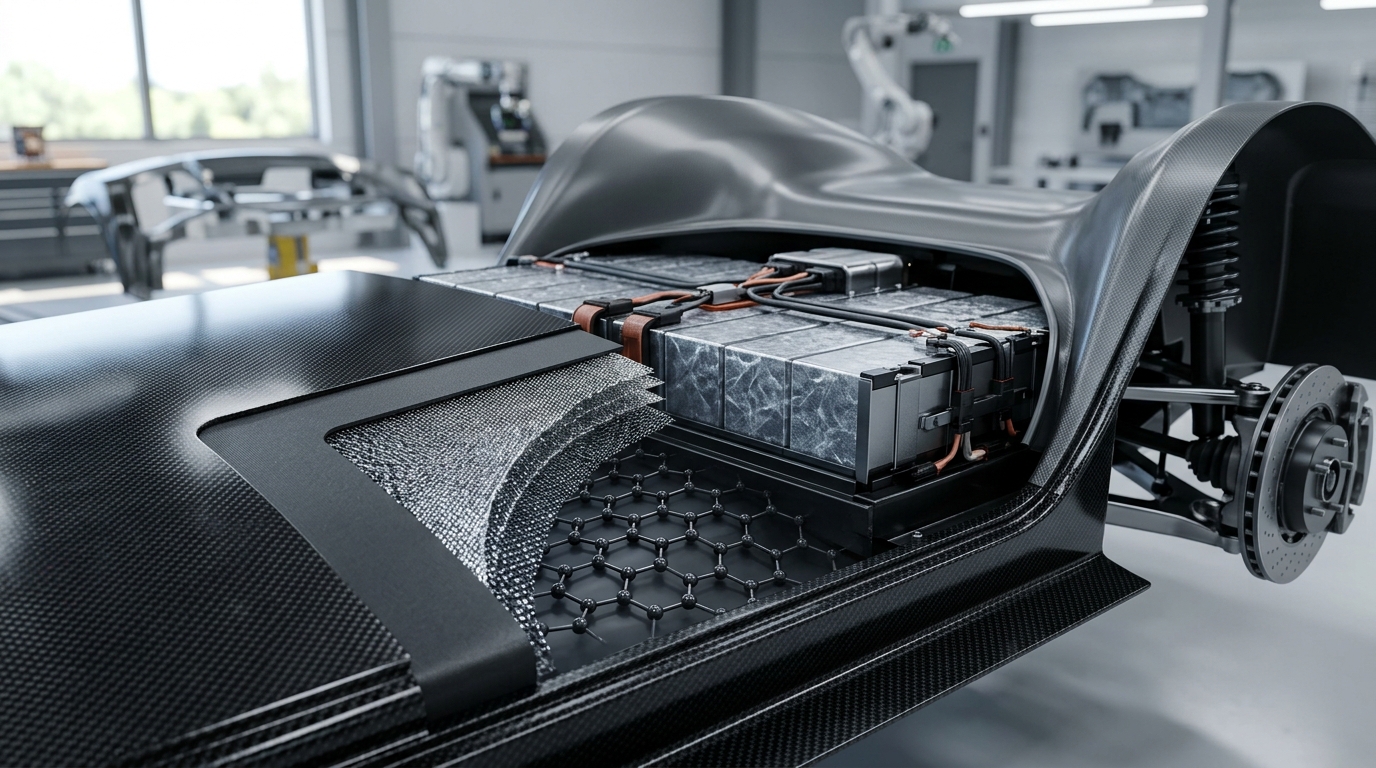
The integration of graphene for cars represents a shift from theoretical nanomaterial science to practical automotive manufacturing. While speculative headlines once envisioned entire car bodies carved from pure carbon lattices, modern automotive engineers leverage graphene as an advanced functional additive. By incorporating small fractions of graphene nanoplatelets into existing matrices—such as polyurethane foams, structural carbon fiber resins, rubber compounds, and battery slurries—automakers unlock significant improvements in weight reduction, acoustic dampening, durability, and thermal regulation.
Understanding the value of graphene in automotive engineering requires distinguishing between verified mass-production applications and marketing hype, particularly in consumer vehicle detailing. This guide examines where graphene operates today across production assembly lines, its role in next-generation electric vehicles (EVs), and how it compares to legacy automotive materials.
Overview of Commercial vs. Experimental Automotive Applications
Graphene adoption across the automotive industry occurs at vastly different maturity levels. While some applications have operated on high-volume production lines for years, others remain confined to motorsport prototyping or advanced research and development laboratories.
| Domain | Commercial Maturity | Primary Automotive Function | Industry Reference |
|---|---|---|---|
| Acoustic & NVH Foams | Commercial (Series Production) | Noise dampening, mechanical strength, thermal endurance | Ford Motor Company / Eagle Industries |
| Car Care & Detailing | Commercial (Aftermarket) | Surface hydrophobicity, chemical resistance, lower water spotting | Various detailing chemical formulators |
| Lightweight Composites | Commercial (Low-Volume / Motorsport) | Resin toughening, ply reduction, structural mass reduction | BAC Mono R / Haydale Composite Solutions |
| Tire Compounding | Pilot & Pre-Production (Auto) | Balancing rolling resistance, wet traction, and treadwear | Apollo Tyres, ZC Rubber, Vittoria (Bicycle Benchmark) |
| EV Battery Additives & TIMs | Commercial Pilot / Tier-1 Adoption | Charge transport percolation, pack thermal dissipation | GAC Group (Aion V), Skeleton Technologies |
| 100% Graphene Monocoques | Theoretical / Unviable | Full-vehicle structural fabrication without host resins | None (Current physics and processing limits) |
Noise, Vibration, and Harshness (NVH) Reduction in OEM Production
The most widespread, high-volume implementation of graphene in passenger cars is hidden beneath the hood. Traditionally, addressing automotive noise, vibration, and harshness (NVH) presented an engineering penalty: dampening engine noise, mechanical clatter, and pump resonance required adding dense, heavy rubber or polyurethane (PU) dampeners. This added mass directly compromised vehicle fuel economy and vehicle weight targets.
Ford Motor Company altered this paradigm starting in late 2018 by integrating graphene nanoplatelets into under-the-hood polyurethane foam components. Working in collaboration with tier-1 molder Eagle Industries and nanomaterial supplier XG Sciences, Ford implemented graphene-formulated foams on high-volume platforms including the Ford F-150 and Mustang, subsequently scaling the material across multiple vehicle lines.
Formulation and Performance Metrics
Rather than redesigning component geometry, engineers incorporated graphene nanoplatelets (GNPs) into the liquid polyurethane foam precursors at extremely lean loadings of less than 0.5 weight percent (<0.5 wt%). Despite this low concentration, the mechanical and acoustic improvements were substantial:
- 17% reduction in noise transmission: The ultra-high surface area of the dispersed nanoplatelets dissipates acoustic energy within the cellular foam matrix, quieting high-frequency cabin intrusions.
- 20% improvement in mechanical properties: The structural reinforcement of the nano-fillers increased compression and tensile resistance without altering foam density.
- 30% improvement in thermal endurance: The thermal dissipation characteristics of the platelets improved the foam heat tolerance under sustained engine-bay operating temperatures.
These graphene-enhanced foams are utilized in critical sound-generating areas, specifically covering fuel rails, high-pressure direct-injection fuel pumps, and front engine timing systems. By enhancing the dampening performance at the molecular scale, engineers eliminated the trade-off between acoustic isolation and lightweight design.
Structural Composites and Chassis Lightweighting
Beyond acoustic foam, structural composites represent a high-value domain for automotive graphene integration. In traditional carbon-fiber-reinforced polymers (CFRP), the mechanical limit is frequently dictated by the polymer resin rather than the carbon fibers themselves. Epoxy resin matrices are susceptible to micro-cracking, interlaminar shear failure, and delamination when subjected to cyclical fatigue or localized impacts.
Functionalizing epoxy resins with low concentrations of graphene nanoplatelets bridges this vulnerability. The nanoplatelets act as microscopic mechanical arrestors within the resin, blunting crack propagation, improving interlaminar fracture toughness, and raising the overall torsional stiffness of the finished component.
Case Study: The BAC Mono R Lightweight Panel Strategy
The viability of graphene-enhanced composites in automotive structures was demonstrated by Briggs Automotive Company (BAC) in collaboration with Haydale Composite Solutions and Pentaxia, supported by the UK Advanced Propulsion Centre and the Niche Vehicle Network. Implemented on the BAC Mono R supercar, engineers infused functionalized graphene into the epoxy prepreg matrix used across every body panel.
This material enhancement altered the required structural architecture. Because the graphene-doped resin delivered superior interlaminar strength, structural engineers safely reduced the panel composite stack from three carbon fiber plies down to two plies while preserving mandatory torsional and impact performance. The results delivered a marked reduction in component mass:
- Original body panel set weight: 41 kg
- Graphene-enhanced panel set weight: 32 kg
- Net mass reduction: 9 kg (a 22% weight reduction)
While low-volume supercar manufacturers can absorb the processing costs of specialized prepregs, high-volume automotive OEMs face integration hurdles. Graphene-enhanced CFRP adoption in mass-market vehicles remains constrained by resin cure cycle times, precision dispersion requirements to avoid particle agglomeration, and raw-material processing costs compared to standard sheet molding compounds or high-strength steels.
Tire and Rubber Compounding: Breaking the “Magic Triangle”
Automotive tire development is fundamentally constrained by what material scientists term the “Magic Triangle” of tire compounding. Optimizing one property typically compromises the other two:
- Rolling Resistance: Directly impacts fuel economy and EV range.
- Wet Grip: Governs road adhesion and emergency braking distances.
- Abrasion Resistance: Determines treadwear life and structural longevity.
Decreasing rolling resistance historically meant sacrificing wet grip, while maximizing grip generated softer compounds that wore out rapidly. The advent of modern electric vehicles has intensified this challenge: EVs are substantially heavier than internal combustion vehicles due to battery mass and deliver instant torque from zero RPM, causing standard automotive tires to wear between 20% and 35% faster.
Graphene as a Multifunctional Nano-Filler
In rubber vulcanization, graphene operates alongside traditional silica and carbon black fillers. When properly dispersed within natural and synthetic elastomer blends, graphene platelets form dense cross-linking networks. This molecular configuration yields distinct dynamic-mechanical advantages:
- Reduced Tread Abrasion: Pilot compound evaluations and patent filings indicate a 20% to 40% reduction in tread mass loss under dynamic abrasion testing, counteracting the aggressive wear patterns caused by heavy EV platforms.
- Hysteresis Reduction: Graphene accelerates thermal dissipation within the tire casing during deformation, preventing internal heat build-up that increases rolling resistance.
- Micro-Roughness Interaction: The flexibility and surface energy of the nano-filler allow the tread block to conform more intimately to micro-irregularities on wet road surfaces, maintaining traction during wet braking events.
The mass-market precedent for this technology emerged from cycling via Vittoria Corsa series tires, which blended graphene and silica to validate dynamic gains, including an estimated 9% increase in rolling speed, 32% increase in grip, and 21% improved puncture resistance. Tier-1 automotive manufacturers, including Michelin, Bridgestone, Apollo Tyres, and Gratomic/Perpetuus partnerships, continue pilot programs and production validation to introduce graphene-doped tread chemistries into passenger and commercial EV tire lines.
Electric Vehicle Battery Integration and Thermal Management
As the automotive sector transitions toward electrification, battery efficiency, charge velocity, and thermal reliability dictate performance. Graphene plays a critical role in addressing internal resistance and heat generation within cell chemistry and pack architectures.
Electrode Conductive Networks
Within lithium-ion cells, graphene operates as an advanced conductive additive in both cathodes and silicon-composite anodes. Traditional batteries rely on carbon black to form conductive pathways between active electrode particles. However, spherical carbon black particles provide limited point-to-point contact.
Graphene nanoplatelets provide a high-aspect-ratio, two-dimensional percolation network. This matrix facilitates rapid electron transport across the electrode, lowering internal impedance. In 2021, GAC Group introduced the Aion V, featuring a battery marketed with graphene additives supporting 6C extreme fast charging (achieving 0 to 80% charge in approximately 8 minutes at peak rates). It is crucial to distinguish reality from marketing: these power packs are advanced lithium-ion batteries using graphene as a performance additive, not an entirely novel, non-lithium “graphene-only” chemistry.
Pack-Level Thermal Interface Materials (TIMs)
Extreme fast-charging protocols introduce severe localized thermal spikes that threaten cell longevity and elevate thermal runaway hazards. Graphene-infused Thermal Interface Materials (TIMs)—including thermal adhesives, gap-filler pads, and encapsulants—deliver bulk thermal conductivities exceeding 15 W/m·K while maintaining required electrical insulation.
These materials rapidly transfer heat away from pouch or prismatic cells to active liquid-cooling plates, suppressing temperature differentials across the pack and extending cell cycle life during aggressive DC fast-charging cycles.
Hybrid Energy Storage and Ultracapacitors
Beyond chemical batteries, energy storage specialists like Skeleton Technologies develop hybrid systems using patented “Curved Graphene” ultracapacitors (SkelCap) and high-power cells engineered with the Karlsruhe Institute of Technology. These devices do not aim to replace the main traction battery. Instead, they handle rapid, microsecond-level load transients, capturing high-voltage regenerative braking spikes and stabilizing 12V automotive electrical networks without subjecting primary lithium-ion cells to high-wear thermal shocks.
Auto Detailing: Graphene Ceramic Coatings vs. Traditional SiO2
In the automotive aftermarket, the term “graphene” has become a major retail buzzword within exterior paint protection and vehicle detailing. Understanding these products requires a realistic comparison against established silicon dioxide (SiO2) ceramic coatings.
| Performance Attribute | Traditional Ceramic Coating (SiO2) | Graphene Ceramic Coating (rGO + Resin) |
|---|---|---|
| Carrier & Matrix Chemistry | Polysilazane / Siloxane liquid polymers carrying SiO2 nanoparticles | Polysilazane / Siloxane base doped with reduced graphene oxide (rGO) |
| Water Spotting Propensity | Higher: high contact angle causes water beads to hold minerals that bake in direct sun | Moderately Reduced: lower water sliding angle allows beads to roll off before baking |
| Chemical Resistance | High: resists environmental contamination from pH 2 to pH 12 | High: resists harsh detergents and fallout from pH 2 to pH 13 |
| Hardness & Marring Resistance | 9H pencil hardness: shields clear coat from light swirling, but vulnerable to impacts | Marketed up to 10H: real-world resistance to wash marring is identical to SiO2 |
| Coating Longevity | 2 to 5+ years for pro liquids; 6 to 12 months for consumer spray sealants | 2 to 5+ years for pro liquids; 6 to 12 months for consumer spray sealants |
Functional Differences on Clear Coat
Liquid graphene coatings sold by detailing chemical manufacturers are not liquid sheets of pure graphene. They are traditional polysilazane or siloxane ceramic resins modified with trace suspensions of reduced graphene oxide (rGO) or graphene nanoplatelets.
The functional benefit of this additive is modest but real. Standard SiO2 coatings create high water contact angles (often exceeding 110 degrees). Under direct sunlight, spherical beads act like magnifying lenses; as water evaporates, mineral deposits etch rings into the coating. The inclusion of rGO modifies the surface energy, lowering the water sliding angle. Droplets roll off the vehicle bodywork more readily while driving, marginally reducing water spotting. Furthermore, rGO imparts slightly higher resistance against aggressive wash chemicals and road salt.
Hype vs. Reality: Consumer Car Care Marketing Claims
Because graphene commands a reputation as a miracle material, consumer car care marketing frequently crosses from science into hyperbole. Dissecting these claims protects consumers and vehicle owners from unrealistic expectations.
Myth 1: “Pure Graphene Protection”
The Reality: Pure graphene cannot be spread across paintwork as a standalone liquid. Graphene is an insoluble carbon allotrope. Liquid detailing products rely entirely on established ceramic polymers (polysilazanes, siloxanes, or synthetic sealants) as the carrier and cross-linking binder. The graphene component—almost exclusively reduced graphene oxide—is added in sub-1% concentrations. The gloss, slickness, water beading, and UV protection stem primarily from the ceramic carrier matrix, not the suspended carbon powder.
Myth 2: “Electrical Conductivity Prevents Dust and Heat Accumulation”
The Reality: Marketing materials often claim that graphene coatings conduct heat away from the car to lower paint temperatures, or ground electrical charges to repel static dust. In reality, at thicknesses measured in nanometers, where trace rGO particles sit completely encapsulated within an electrically insulating cured polymer matrix, no conductive percolation threshold is achieved. Independent testing demonstrates that vehicles treated with graphene coatings register paint temperatures and static dust attraction indistinguishable from those treated with standard SiO2 coatings.
Myth 3: “10H Hardness Makes Paint Scratch-Proof and Chip-Proof”
The Reality: Claims of “10H hardness” refer to standardized pencil hardness tests (resistance to scratching by a graded graphite pencil), not the Mohs mineral hardness scale where diamonds rank at 10. A cured coating measuring microns in thickness cannot prevent stone chips, severe abrasion, or improper wash-induced swirl marks. Graphene-coated vehicles still scratch if wiped with dirty microfiber towels or run through abrasive automatic car washes.
Cost, Manufacturing, and Supply Chain Considerations
While graphene delivers proven technical enhancements, its broader adoption across automotive original equipment manufacturers (OEMs) depends on overcoming fundamental economic and manufacturing constraints.
- Material Quality and Agglomeration: Graphene sheets naturally tend to clump back together into graphite due to strong van der Waals forces. Automakers require reliable, chemically functionalized grades that maintain stable dispersion within liquid precursors (whether polyurethane polyols, epoxy resins, or rubber compounds) without falling out of suspension over prolonged shelf lives.
- Per-Kilogram Cost: While pristine monolayer graphene remains cost-prohibitive for mass automotive adoption, bulk industrial graphene nanoplatelets (GNPs) and rGO have achieved viable price points for high-performance applications. Even so, auto manufacturers operate on razor-thin margins where adding fractions of a dollar per part requires verified material savings elsewhere (such as offsetting component mass or speeding up demolding cycles).
- Processing Compatibility: Automotive production lines move quickly. Any additive that significantly alters resin viscosity, extends cure times, or requires specialized handling equipment creates assembly-line bottlenecks. Ford’s PU foam implementation succeeded precisely because the nanoplatelet additive integrated directly into existing liquid molding equipment without requiring redesigns of factory tooling.
The Future of Graphene for Cars
The role of graphene in the automotive sector has evolved past the phase of theoretical speculation. Today, graphene for cars is recognized as an effective mechanical, acoustic, and thermal enhancer when deployed in realistic, low-concentration formulations.
Its confirmed production footprint ranges from high-volume under-the-hood engine components that quietly solve NVH challenges to race-proven composite panels that lower structural weight. In the detailing sector, it provides an incremental, evolutionary refinement over standard ceramic chemistries, while in electric vehicle powertrains, its high thermal dissipation addresses the operational demands of fast-charging batteries and high-stress tires. As production costs stabilize and industrial dispersion methods mature, graphene will continue cementing its position as a staple additive across automotive design.