Graphene Coating vs. Ceramic Coating
When comparing a graphene coating vs ceramic coating for automotive paint protection, the primary distinction lies in formulation chemistry and surface performance characteristics rather than an entirely new category of surface armor. Traditional ceramic coatings rely on silicon dioxide (SiO2) or polysilazanes to form a rigid, glass-like sacrificial barrier over clear coats. Graphene coatings, on the other hand, are not sheets of pure carbon draped across a vehicle; they are ceramic coatings infused with reduced graphene oxide (rGO) designed to improve water roll-off, lower surface temperatures, and minimize water spotting.
Both protective technologies offer years of resistance against oxidation, chemical etching, bird droppings, and UV radiation. However, evaluating which option fits your vehicle requires looking beyond promotional claims to understand the chemical mechanics, physical limitations, application practicalities, and real-world durability of each system.
Direct Comparison: Graphene Coating vs. Ceramic Coating
The table below summarizes the key operational differences between automotive ceramic coatings and graphene-infused formulations based on standardized detailing criteria and laboratory evaluations.
| Performance Metric | Ceramic Coating (SiO2 / Polysilazane) | Graphene Coating (rGO-Infused Ceramic) |
|---|---|---|
| Primary Active Chemistry | Silicon Dioxide (SiO2), Titanium Dioxide (TiO2), Polysilazane polymers | Polymer matrix or SiO2 resin suspended with Reduced Graphene Oxide (rGO) |
| Durability Range | 2 to 7+ years (formulation and maintenance dependent) | 3 to 7+ years (similar core polymer resin life) |
| Water Contact Angle | Typically 100° to 110° (Beading profile) | Typically 110° to 118° (Higher contact angle, lower sliding angle) |
| Water Spot Resistance | Moderate; beads act as magnifying lenses, concentrating mineral deposits | High; lower sliding angle promotes rapid roll-off and reduces mineral ring etching |
| Heat Dissipation | Standard clear-coat thermal conductivity | Measurably enhanced thermal dissipation across the microscopic surface plane |
| Application Difficulty | Standard to High; short flash windows, sensitive to humidity and high spots | Moderate to High; longer flash windows on some formulas, distinct “sweating” visual cue |
| Chemical Resistance | pH 2 to pH 12 (typical) | pH 1 to pH 13 (marginal increase depending on resin purity) |
| DIY Kit Cost | Moderate to Upper-Tier | Comparable to Premium Ceramic formulations |
| Professional Install Cost | Moderate to High (labor primarily driven by paint correction) | Comparable (labor is primarily surface preparation and paint correction) |
Chemical Breakdown: How These Coatings Differ
Understanding surface performance requires analyzing how each liquid formula bonds to automotive clear coats at the molecular level.
Ceramic Coating Chemistry: The Silicon Network
Traditional ceramic coatings are formulated around inorganic polymers, primarily silicon dioxide (SiO2), titanium dioxide (TiO2), and various solvent carriers such as siloxanes or polysilazanes. When spread thinly across paintwork, the solvent evaporates, exposing the cross-linking agents to ambient humidity. This process initiates a condensation reaction, curing the liquid into an ultra-dense, semi-permanent matrix bound to the microscopic pores of the polyurethane clear coat.
This inorganic silica lattice produces exceptional surface hardness, chemical inertness, and a high refractive index that enhances gloss. However, because SiO2 cures as a rigid, glass-like crystalline structure, it retains heat under direct sunlight and produces spherical water droplets with relatively high roll-off resistance, predisposing the finish to mineral spot development if standing water evaporates under heat.
Graphene Coating Chemistry: The rGO Hybrid Matrix
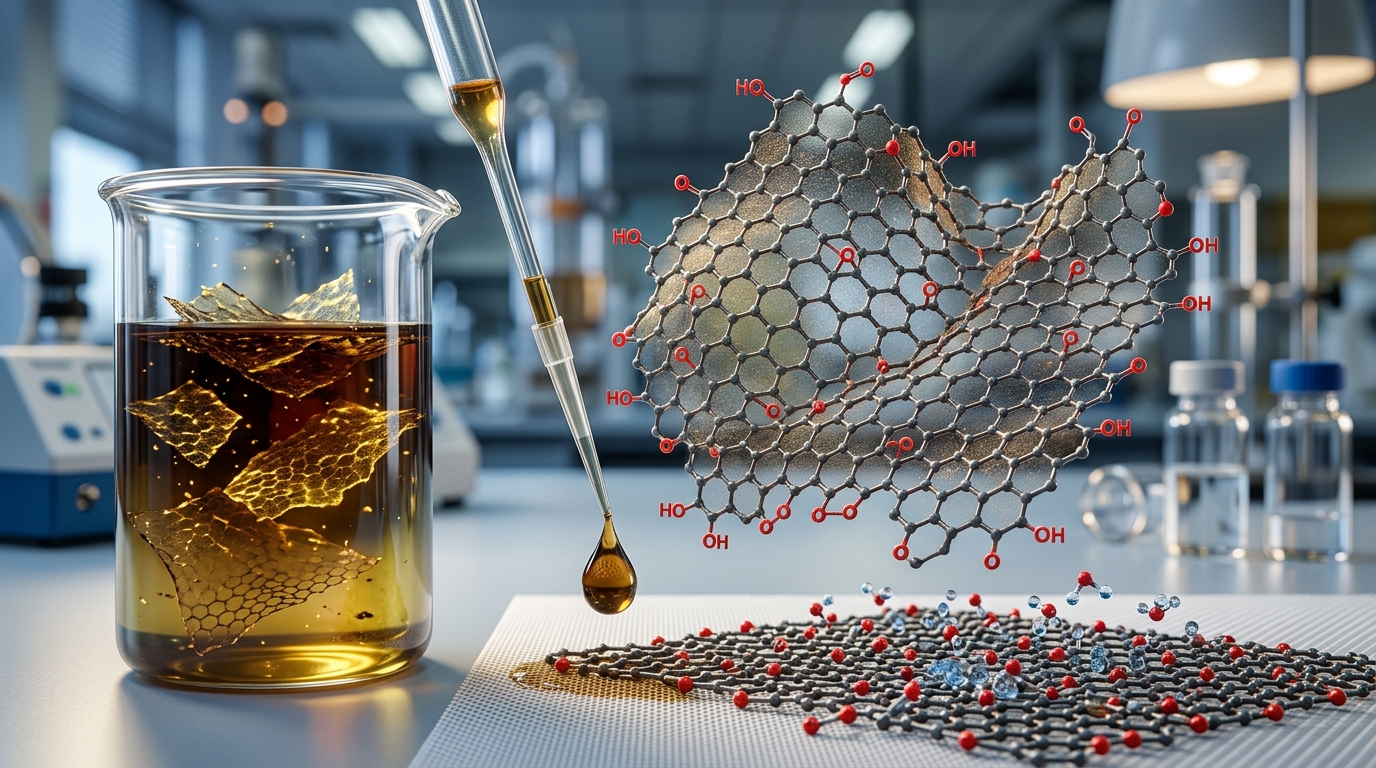
Consumer automotive graphene coatings are almost universally hybrid suspensions. True pristine graphene is a single, two-dimensional layer of carbon atoms arranged in a hexagonal honeycomb lattice. In its pure, unadulterated form, graphene is completely insoluble in typical liquid solvents and cannot spontaneously cross-link to clear coat.
To solve this, manufacturers synthesize reduced graphene oxide (rGO). Graphene oxide contains functional oxygen groups that allow it to be chemically processed, partially exfoliated, and dispersed within silazane or polymer resin carriers. Once applied and cured, the rGO platelets orient along the surface layer of the ceramic network. The presence of these hexagonal carbon lattices modifies the surface energy, introducing distinct anti-static properties and changing how water and thermal energy interact with the vehicle’s paintwork.
Debunking Marketing Hype: What Graphene Actually Does
The introduction of graphene into the detailing industry has generated significant marketing hyperbole. Separating practical attributes from commercial exaggeration is essential for objective product selection.
- Myth 1: Coatings create a 100% pure graphene monolayer over the car. Pure single-layer graphene cannot bond to automotive paint in ambient conditions. A true sheet of graphene is only one atom thick (approximately 0.34 nanometers), which would be instantly breached by normal mechanical abrasion. Commercial bottles contain liquid resins containing varying concentrations of suspended microscopic rGO flakes.
- Myth 2: Graphene coatings are virtually scratch-proof or impervious to rock chips. No liquid-applied coating—whether SiO2 or rGO-infused—possesses the thickness or tensile elasticity required to stop high-velocity stone impacts. Coatings measure between 0.5 and 3 microns in cured thickness. Protection against physical impacts requires Paint Protection Film (PPF), which measures roughly 150 to 200 microns.
- Myth 3: The coating provides unconditional lifetime durability. While graphene possesses extraordinary theoretical tensile strength, an applied coating’s longevity is limited by its bonding resin. If environmental weathering degrades the underlying polymer anchor over five years, the graphene embedded within that matrix sloughs off alongside it.
Where graphene genuinely excels is in modifying the top-tier physical properties of the ceramic carrier: lowering electrical resistivity (reducing static dust attraction), smoothing microscopic friction coefficients, and dramatically reducing the angle required for water to roll off the surface.
Water Spotting, Heat Dissipation, and Etching Resistance
Water spotting is the primary operational weakness of conventional SiO2 ceramic coatings. Understanding why this happens clarifies the primary functional advantage of graphene formulations.
The Physics of Water Spotting
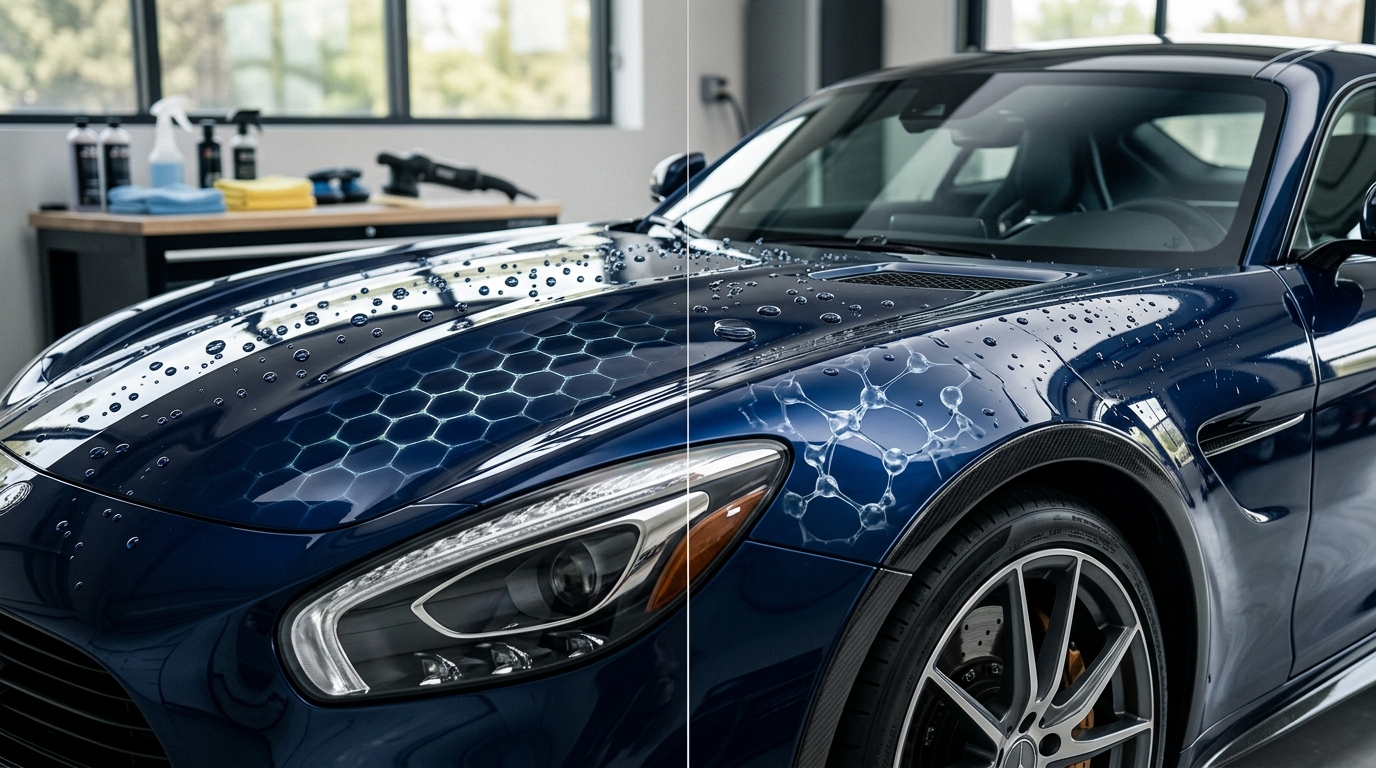
Traditional ceramic coatings produce high water contact angles (often 105° to 110°). This causes water to bead into tight, tall, spherical droplets. While visually appealing, stationary beads act as miniature optical lenses under sunlight. Furthermore, as municipal tap water or acid rain evaporates, the dissolved solids—such as calcium, magnesium, and industrial minerals—are concentrated into a shrinking perimeter. The intense thermal focus combined with concentrated alkaline salts can chemically etch the underlying clear coat in a matter of hours.
Sliding Angles and Sheeting Action
Graphene-infused coatings address this dynamic by emphasizing a low sliding angle (or roll-off angle). Rather than merely holding droplets in tall beads, the low surface friction of the rGO matrix allows droplets to dislodge and roll off the panels at much lower vehicle speeds or shallower angles of incline. If water cannot remain anchored to horizontal surfaces such as hoods and roofs, mineral deposits cannot crystallize in place.
Thermal Dissipation Dynamics
Pure carbon structures possess exceptional thermal conductivity. While microscopic rGO suspensions in polymer resins do not match pure carbon sheets, testing demonstrates that rGO-infused coatings dissipate heat across the panel more evenly than pure insulating silica. By lowering localized peak temperatures on dark-colored paint under direct solar radiation, the coating reduces the speed of water evaporation, affording the liquid more time to roll off before mineral precipitation begins.
Application Difficulty: DIY Enthusiasts vs. Professional Detailers
Applying either protection type demands comprehensive surface preparation. A coating will lock in whatever paint defects sit beneath it, meaning a full exterior decontamination (iron removal, clay bar) and multi-stage machine polishing are non-negotiable precursors.
Applying Ceramic Coatings
Ceramic coatings typically flash quickly. Depending on ambient temperature and relative humidity, a standard SiO2 liquid might “flash”—turning into a translucent, rainbow-like oil slick on the panel—in 30 seconds to two minutes. The installer must immediately buff the residue off with microfibers. Failing to wipe in time leaves hardened “high spots” that cannot be buffed off by hand and require abrasive machine compounding to remove.
Applying Graphene Coatings
Many modern rGO formulations feature a longer, more forgiving working window. Instead of displaying a faint rainbow sheen, many graphene formulas show a clear “sweating” behavior, where micro-beads of carrier solvents emerge uniformly across the panel. This characteristic gives DIY users a distinct visual cue showing exactly when to initiate the leveling pass. Furthermore, some graphene carriers are slightly less sensitive to moderate ambient humidity during the initial cross-linking period.
Professional Versus DIY Considerations
- DIY Applications: High-quality consumer kits of both types exist. DIY detailers working in open garages or varied climates often find graphene-infused options somewhat easier to level due to clear sweating behavior and slightly extended working windows.
- Professional Applications: Dedicated professional-grade coatings (both SiO2 and graphene) often contain higher solids content, utilize volatile carrier solvents, and may demand infrared (IR) lamp curing to achieve full mechanical hardness. A professional installer’s true value rests primarily in the 8 to 15 hours of paint correction completed prior to unsealing the coating bottle.
Maintenance and Longevity Practices
Regardless of whether a vehicle is coated with pure ceramic or an rGO hybrid, maintaining performance requires deliberate maintenance practices to prevent surface clogging from road films, industrial fallout, and oils.
- Two-Bucket or Contactless Pre-Wash: Always employ a dedicated snow foam or citrus pre-wash to loosen topical grit before touching the vehicle with a wash mitt, preventing surface micro-marring.
- pH-Neutral Shampoos: Avoid aggressive high-pH detergents or wash-and-wax soaps. Standard waxes contain carnauba polymers that sit on top of the coating, temporarily neutralizing its engineered contact angles and self-cleaning attributes.
- Decontamination Washes: Every three to six months, perform a chemical decontamination using an iron fallout remover and a mild acidic shampoo to clear embedded mineral deposits out of the coating’s pore structure.
- Sacrificial Top-Coats: Periodically mist the vehicle with a compatible silica or graphene maintenance spray after drying. These sacrificial spray-sealants bear the brunt of environmental degradation, preserving the underlying semi-permanent coating matrix.
Buyer’s Decision Rubric: Choosing the Right Protection
To determine whether to select a graphene coating or a ceramic coating, assess your driving habits, parking environment, and maintenance setup using the criteria below.
Choose a Graphene Coating If:
- You Own a Dark-Colored Vehicle: Black, dark blue, and charcoal paints absorb significant thermal energy, exacerbating water spot etching. Graphene’s lower sliding angle and thermal properties significantly decrease this risk.
- The Vehicle is Parked Outdoors: Cars parked without carports or garages face recurring dew cycles, tree sap, and sudden rain followed by direct sunlight. High roll-off performance reduces atmospheric residue accumulation.
- You Are a DIY Detailer Seeking Visual Cues: The pronounced sweating action and slightly more forgiving flash profiles of modern rGO formulations make installation more intuitive for beginners.
Choose a Ceramic Coating If:
- You Want Decades-Proven Track Records: High-solids SiO2 formulations have accumulated over twenty years of verified automotive field data across commercial and industrial detailing sectors worldwide.
- You Prioritize Maximum Optical Depth on Lighter Colors: Ceramic coatings form a glass-dense, highly reflective shell that creates a crisp, mirror-like depth on white, silver, and metallic finishes.
- You are Sourcing from a Verified Professional Studio: Established professional detailing networks often bundle multi-stage paint correction with accredited, insurer-backed warranties linked directly to established multi-layer SiO2/polysilazane formulas.
Ultimately, both graphene and ceramic coatings offer exterior defense that far surpasses conventional carnauba waxes and synthetic sealants. Selecting between them comes down to whether your vehicle’s specific operating environment calls for the proven, glassy rigidity of silicon dioxide or the enhanced thermal behavior and water spot resistance of reduced graphene oxide.