Adam's Polishes Graphene Shampoo
Automotive detailing chemistry has evolved from basic tallow-based detergents and carnauba wax suspensions into engineered polymer emulsions and nanomaterial additives. Among these developments, adam’s polishes graphene shampoo represents a specialized maintenance wash formulated to clean coated and non-coated vehicles while depositing a micro-thin layer of protective material. Rather than functioning as a permanent surface coating, this shampoo serves as an active maintenance wash that reinforces gloss, enhances slickness, and preserves the hydrophobic behavior of underlying protective layers.
The Formulation Chemistry Behind Graphene Wash Soaps
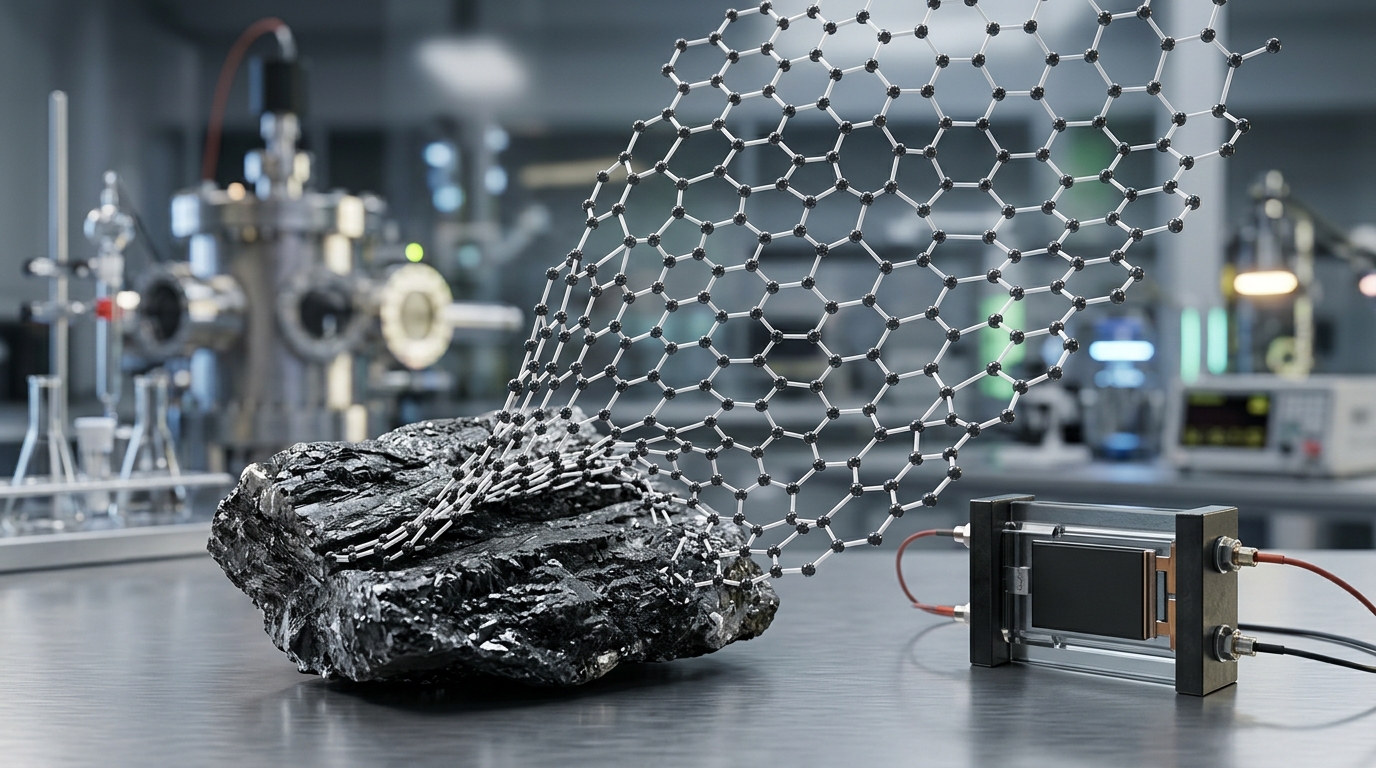
To understand how a wash soap can deposit carbon nanomaterials onto clear coat paint, one must look at liquid suspension chemistry. Pristine graphene consists of a two-dimensional, single-atom-thick hexagonal lattice of carbon. In its pure form, graphene is entirely hydrophobic, insoluble in water, and prone to rapid agglomeration (clumping together into graphite flakes). Consequently, liquid car wash formulations do not use raw graphene sheets.
Instead, commercial formulas employ reduced graphene oxide suspensions or organo-functionalized graphene derivatives blended with emulsified siloxanes and synthetic surfactants. Graphene oxide contains oxygen-bearing functional groups—such as hydroxyl, carboxyl, and epoxy groups—that allow it to disperse stably in water-based surfactant solutions. When these functionalized carbon platelets are paired with silicone resins or fluoropolymers, the shampoo can achieve stable bottle storage without irreversible settling, allowing the nanomaterials to transfer uniformly to the vehicle surface during the wash process.
The Role of Surfactants and Lubricity
A vehicle shampoo must first and foremost remove surface contaminants safely. Adam’s Polishes Graphene Shampoo utilizes high-foaming, pH-neutral surfactants that encapsulate particulate dirt, brake dust, and atmospheric fallout. The addition of water-soluble lubricants and nano-scale carbon structures contributes to boundary lubrication during mechanical contact with a wash mitt. This lower coefficient of friction minimizes the formation of wash-induced micro-marring and swirl marks across soft modern clear coats.
Primary Mechanisms: How It Interacts with Vehicle Surfaces
When washing a vehicle with a graphene-infused soap, multiple chemical and physical mechanisms occur simultaneously across the clear coat or existing coating:
- Encapsulation and Lifting: Amphiphilic surfactants reduce the surface tension of water, surrounding road grime and lifting it away from the substrate through micellar action.
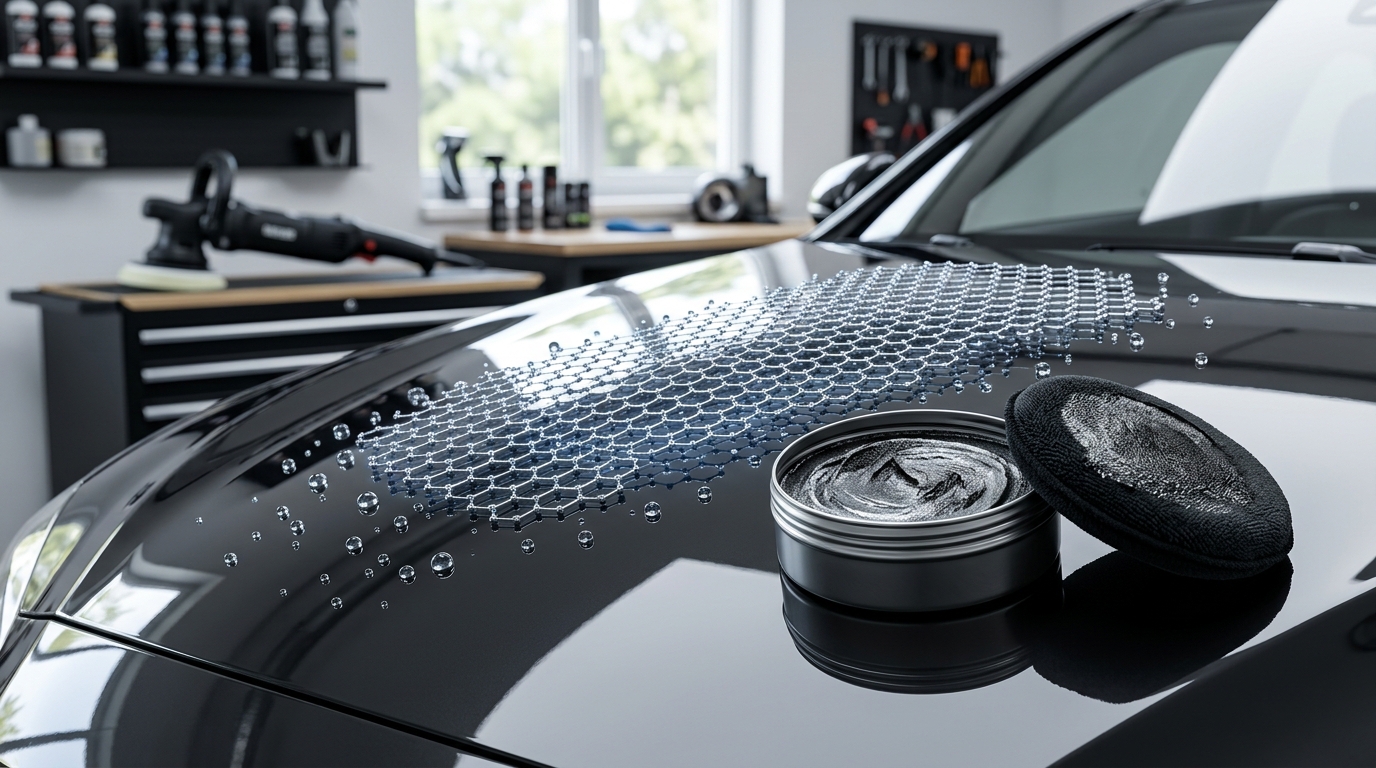
- Nanomaterial Adsorption: As the wash mitt glides over the surface, functionalized graphene platelets and cross-linking polymers adhere to microscopic surface imperfections and microscopic pores in the paint or ceramic coating.
- Restoration of Hydrophobic Properties: The deposited film lowers surface free energy, which restores high water-beading behavior and elevates hydrophobic contact angles on tired base coatings.
- Thermal and Anti-Static Modification: Carbon-based nanomaterials naturally exhibit high electrical conductivity and thermal dissipation properties, which helps reduce the static charge that attracts airborne dust particles to freshly washed panels.
Graphene Shampoo vs. Traditional and Ceramic Wash Formulations
Choosing between standard automotive soaps, ceramic (silica-infused) washes, and graphene shampoos depends on the surface condition, the underlying protection, and the desired maintenance interval.
| Attribute | Traditional Car Soap | Ceramic (SiO2) Wash | Adam’s Graphene Shampoo |
|---|---|---|---|
| Primary Function | Dirt removal and lubrication | Cleaning + silica sealant top-up | Cleaning + graphene/siloxane film deposition |
| pH Level | pH-neutral (typically 7.0) | Neutral to slightly alkaline | pH-neutral (approx. 7.0) |
| Water Spot Resistance | Neutral (depends on base wax) | Moderate (can spot if dried in sunlight) | High (reduces mineral ring adhesion) |
| Durability of Deposited Film | None (washes clean off) | 2 to 4 weeks | 3 to 6 weeks |
| Wash Slickness | Standard boundary glide | Moderate friction reduction | High lubricity and low drag |
| Foam Cannon Compatibility | Standard foam production | Low to moderate foam density | High, thick foam generation |
Application Procedures and Optimal Dilution Ratios
Achieving predictable results with advanced wash products requires proper mechanical procedure. The product can be deployed through a dedicated foam cannon, a standard garden hose foam gun, or directly into a wash bucket.
1. The Two-Bucket Contact Wash
The standard two-bucket wash method remains the safest mechanical contact procedure for delicate automotive paint. One bucket contains the wash solution, while the second bucket contains clear rinse water equipped with a grit guard to trap dislodged grit at the bottom.
- Add approximately 2 to 3 ounces of shampoo into a 5-gallon wash bucket.
- Fill the bucket with a high-pressure water stream to agitate the formula and create dense lubricating suds.
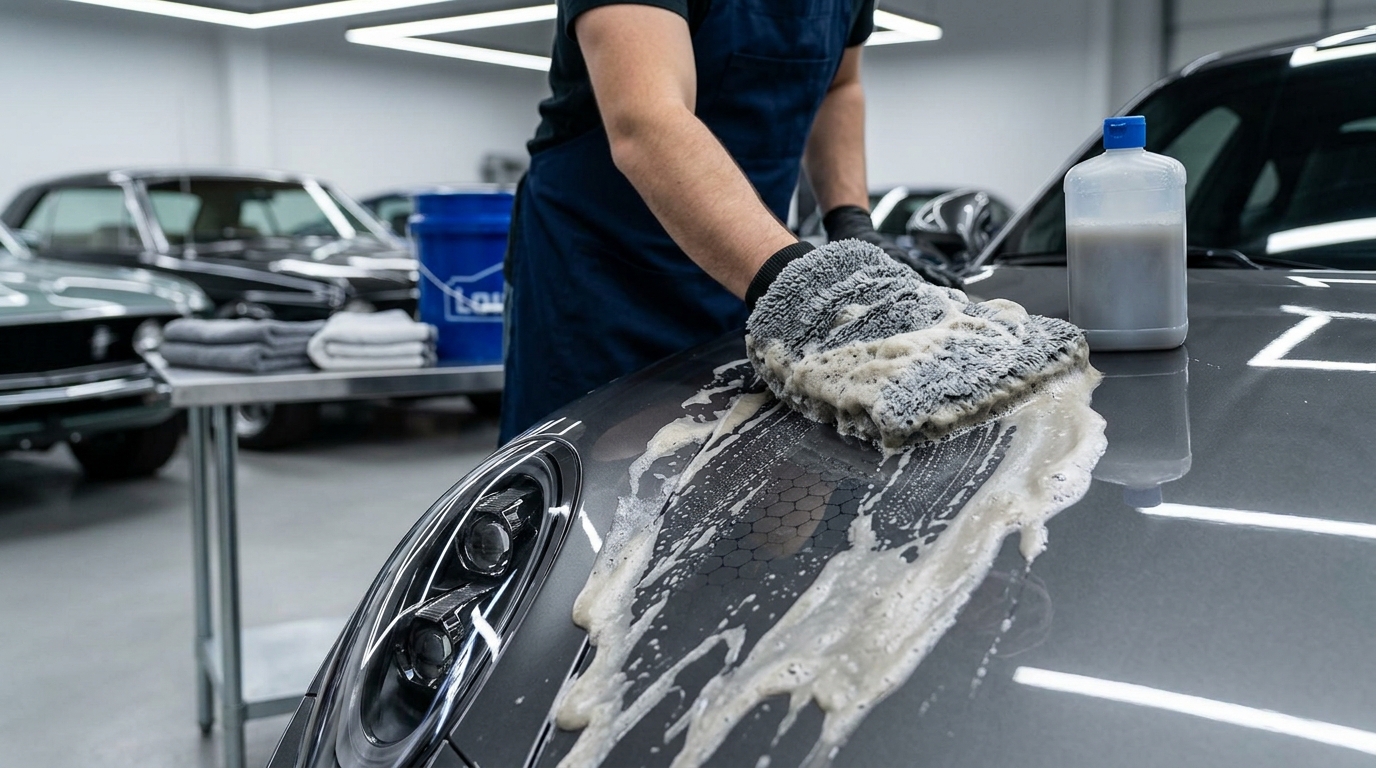
- Dip a clean microfiber wash pad into the solution, wash one body panel at a time using straight, overlapping passes, and rinse the mitt thoroughly in the rinse bucket before reloading soap.
2. Foam Cannon Pre-Wash and Contact Washing
For touchless pre-soaking or high-lubricity foam application, a pressure washer paired with an adjustable foam cannon provides optimal atomization.
- Pour 2 to 3 ounces of the shampoo into the foam cannon reservoir and fill the remainder of the bottle with warm water.
- Coat the vehicle from bottom to top, allowing the dense foam to dwell on the panels for 3 to 5 minutes to break down road film without letting the product dry.
- Rinse thoroughly from top to bottom with clean water, or use the foam blanket as an added layer of lubrication during the contact wash step.
Realistic Expectations and Performance Limitations
While graphene-infused soaps provide measurable maintenance advantages, clear distinctions must be drawn between temporary wash additives and true long-term protective coatings.
Not a Substitute for Base Coatings
A wash shampoo acts as a sacrificial protection layer. It does not replace professional-grade graphene or ceramic coatings that rely on non-volatile solids cured via cross-linking siloxane polymers. The protection deposited during a wash cycle lasts weeks rather than years because the nanomaterials are held in place by lighter bonding agents designed to wash away gradually over subsequent drive cycles.
Risk of Film Buildup and Streak Formation
Because the shampoo leaves active ingredients behind, improper rinsing or washing in direct sunlight can cause uneven drying. This may appear as streaking or a cloudy haze on glass and glossy paintwork. Always rinse the vehicle thoroughly with free-flowing water and dry immediately with a clean, high-GSM microfiber drying towel or dedicated warm-air vehicle dryer.
Decontamination Thresholds
While effective for weekly and bi-weekly maintenance washes, pH-neutral graphene shampoos cannot dissolve stubborn industrial fallout, heavy iron deposits, or bonded tree sap. Deep mechanical decontamination using detailing clay or specialized chemical iron removers is still necessary prior to applying new base layers.
Preserving Coated Vehicles Over Time
Using adam’s polishes graphene shampoo on top of existing ceramic or graphene coatings provides an effective strategy for preventing coating degradation. Base coatings undergo constant environmental stress from ultraviolet radiation, acid rain, and road salts, which slowly clogs the coating’s microscopic structure. Routine maintenance with graphene-enhanced surfactants removes embedded contaminants while refreshing the surface with a thin sacrificial barrier, preserving the underlying protection for its intended service life.