
Top 10 Graphene Stocks
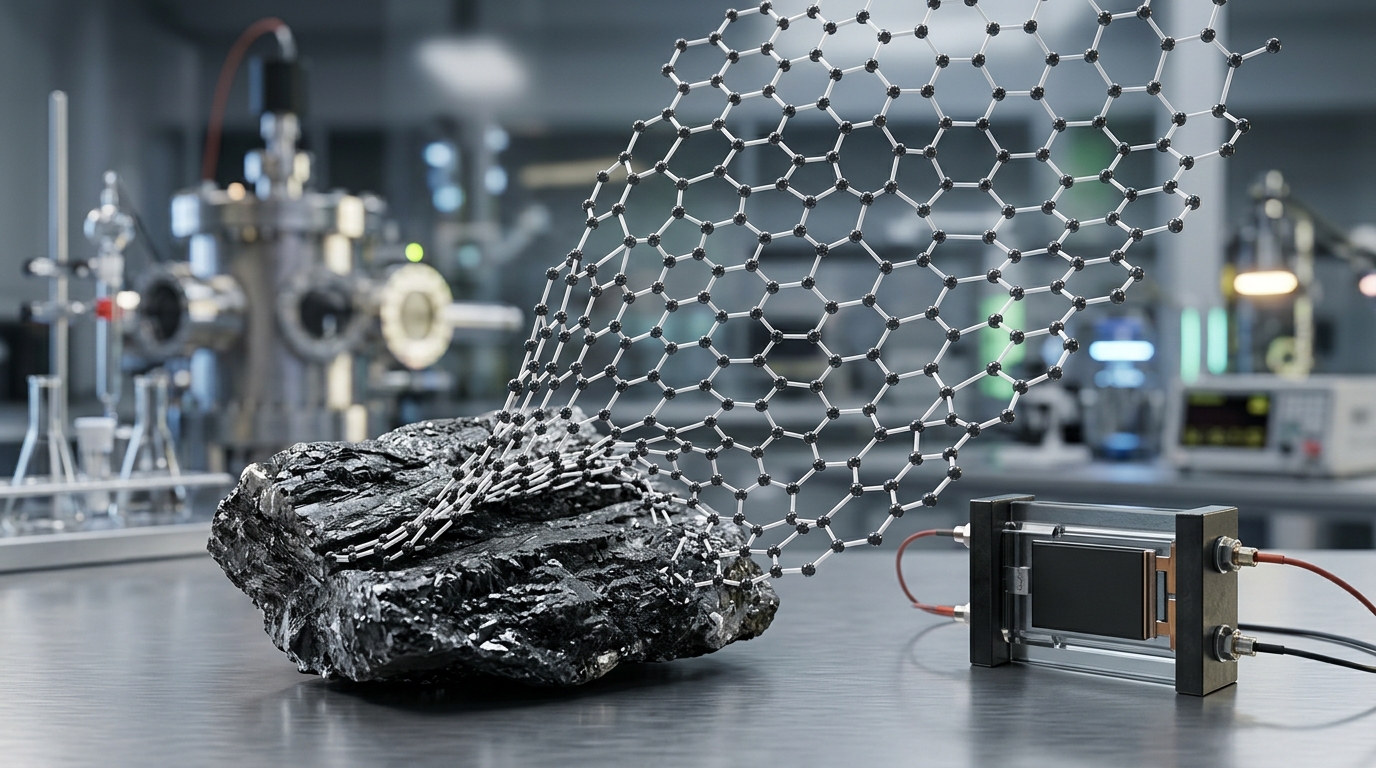
Evaluating the top 10 graphene stocks requires looking past early scientific excitement to examine industrial scalability, synthesis methods, and commercial supply chain integration. Graphene—a two-dimensional sheet of carbon atoms bonded in a hexagonal lattice—possesses exceptional electrical conductivity, thermal dissipation, mechanical strength, and barrier properties. However, commercializing this nanomaterial involves complex engineering hurdles. Publicly traded companies operating in the graphene space generally fall into three distinct tiers: pure-play nanomaterial synthesizers, specialized capital equipment manufacturers, and diversified chemical or industrial conglomerates integrating graphene into high-volume product lines.
Understanding which companies hold viable competitive advantages requires analyzing how each firm produces its material, the structural quality of the carbon delivered, and the target markets being addressed. The commercial value of graphene is dictated not by theoretical lab performance, but by cost per kilogram, dispersion stability in host matrices, and consistency across batch production runs.
The Graphene Industry Taxonomy: How to Classify Public Companies
Before evaluating individual stocks, investors and materials scientists categorize companies based on where they operate within the nanomaterial value chain. The production technique determines both the material properties and the final addressable market:
- Bulk Exfoliation Producers (GNP/FLG): These companies convert mined natural flake graphite or synthetic graphite into graphene nanoplatelets (GNPs) or few-layer graphene (FLG) via mechanical shearing, chemical exfoliation, or electrochemical expansion. This material serves as a functional additive for plastics, concrete, elastomers, protective coatings, and battery electrodes.
- Chemical Vapor Deposition (CVD) Specialists: CVD produces large-area, single-layer to few-layer graphene films grown on metallic substrates like copper foil. This high-purity form serves transparent conductive films, high-frequency electronics, biosensors, and semiconductor research.
- Functionalization and Masterbatch Formulators: Raw graphene agglomerates easily due to strong van der Waals forces. Formulators apply surface chemistry—attaching organic molecules, oxygen groups, or polymers—to ensure the material disperses evenly inside host matrices without clumping.
- Equipment and Precursor Suppliers: These firms manufacture the industrial reactors, deposition systems, and refined graphite precursors required by downstream nanomaterial processors.
Top 10 Graphene Stocks to Know
1. NanoXplore Inc.
NanoXplore is a pure-play advanced materials company based in North America that specializes in the high-volume production of graphene nanoplatelets. The company utilizes a proprietary liquid-phase mechanical exfoliation process that avoids harsh chemical oxidation, preserving the natural sp2 carbon lattice and delivering high electrical and thermal conductivity. NanoXplore focuses on integrating graphene into masterbatches for polyolefins, engineering plastics, and battery packaging, primarily serving the automotive, packaging, and industrial pipe sectors. Its vertical integration includes downstream compounding capabilities, enabling direct delivery of ready-to-mold composite pellets to manufacturing clients.
2. Directa Plus plc
Directa Plus is an established European nanomaterial producer centered on its proprietary non-chemical thermal expansion technology, known commercially as the G+ process. By rapidly heating intercalated graphite with superheated plasma, the company separates the carbon layers without chemical solvents, yielding high-purity, low-defect graphene flakes. Directa Plus concentrates on three core vertical sectors: smart environmental solutions (adsorbent barriers for hydrocarbon decontamination), performance textiles (thermal regulation and antimicrobial apparel), and asphalt road additives that improve pavement elasticity and rutting resistance.
3. Haydale Graphene Industries plc
Haydale differentiates itself through specialized surface engineering rather than raw volume extraction. Untreated graphene flakes rarely bond well with surrounding polymers or resins. Haydale uses a patented low-temperature plasma functionalization process that modifies the surface chemistry of graphene, carbon nanotubes, and silicon carbide microfibers without causing structural damage to the underlying carbon core. This enables tailored compatibility with epoxy resins, conductive inks, thermal pastes, and aerospace prepregs.
4. First Graphene Limited
First Graphene focuses on large-scale industrial bulk applications through an electrochemical exfoliation method. By sourcing high-grade Sri Lankan vein graphite, the company applies an electrical potential in an electrolyte bath to drive ionic expansion between the graphene layers. The resulting powder, characterized by high aspect ratios and mechanical robustness, is directed toward high-volume industrial commodities. Key target sectors include grinding aids and strength enhancers for Portland cement, wear-resistant liners for mining equipment, and flame-retardant polymer formulations.
5. AIXTRON SE
AIXTRON is a global semiconductor equipment manufacturer that serves as a key pick-and-shovel play for high-end graphene applications. The company builds specialized chemical vapor deposition equipment designed for the controlled growth of 2D materials, carbon nanotubes, and complex compound semiconductors. Rather than selling graphene powder, AIXTRON provides the deposition reactors required by microelectronic fabricators, optoelectronic developers, and academic institutions seeking repeatable, atomic-scale monolayer synthesis.
6. Talga Group Ltd
Talga approaches the market from a vertically integrated mining and materials processing model. Holding graphite mineral resources in northern Sweden, Talga bypasses conventional milling by directly processing raw, high-grade graphite ore through electrochemical liberation. This yields both purified graphite battery anodes and direct graphene additives. The company targets the lithium-ion battery sector, developing graphene-enhanced silicon composite anodes and conductive additives that improve fast-charging rates and cycling longevity in electric vehicles.
7. Black Swan Graphene Inc.
Black Swan Graphene utilizes a high-shear fluid exfoliation technology developed to process graphite directly into standard industrial additives. Formed through strategic partnerships with global chemical and concrete distribution enterprises, Black Swan focuses heavily on the commercial construction sector. Its primary commercial focus is incorporating graphene dispersions into ready-mix concrete formulations to lower clinker volume requirements, improve tensile strength, and reduce lifecycle carbon emissions in structural civil engineering.
8. Archer Materials Limited
Archer Materials is a technology development company engineering advanced graphene-integrated semiconductor devices and bio-chips. Rather than supplying bulk industrial additives, Archer focuses on lab-on-a-chip biosensing platforms that leverage the extreme surface sensitivity and electrical field effect of graphene. These devices aim to detect complex biological analytes simultaneously at ultra-low concentrations, utilizing graphene's ballistic electron mobility and biocompatible surface chemistry.
9. Versarien plc
Versarien specializes in the manufacture and formulation of 2D nanomaterial blends, utilizing mechanical shear exfoliation to produce both aqueous and solvent-based graphene suspensions. The firm concentrates on collaborative engineering partnerships across construction (admixtures for 3D-printed mortars), footwear and performance apparel (graphene-infused elastomer outsoles), and protective composite structures for civil transport.
10. Cabot Corporation
Cabot Corporation represents the diversified industrial chemical sector within the carbon nanomaterials landscape. As an established global leader in specialty carbons, carbon black, and fumed metal oxides, Cabot leverages its deep balance sheet and expansive international supply chain to develop engineered carbon blends. Cabot incorporates graphene and carbon nanostructures into conductive formulations for energy storage electrodes, electrostatic discharge polymers, and high-durability automotive coatings.
Comparison of Commercial Graphene Synthesis Methods
| Synthesis Method | Primary Material Form | Structural Quality | Scale & Cost Profile | Typical Target Applications |
|---|---|---|---|---|
| Liquid-Phase Exfoliation | Graphene Nanoplatelets (GNPs) | Medium to high; low oxygen content | High volume; low to moderate cost | Automotive plastics, barrier films, conductive polymers |
| Plasma / Thermal Expansion | Pristine Few-Layer Flakes | Very high; low basal plane defects | Moderate volume; mid-range cost | Smart textiles, thermal interface pastes, environmental cleanup |
| Electrochemical Exfoliation | Few-Layer Graphene Powders | High aspect ratio; low edge damage | High volume; low production cost | Cement and concrete admixtures, mining wear liners, fire retardants |
| Chemical Vapor Deposition (CVD) | Continuous Monolayer Sheets | Near-perfect crystal lattice | Low continuous area; high capital cost | Semiconductor channels, biosensing arrays, high-frequency RF devices |
| Chemical Oxidation-Reduction (rGO) | Reduced Graphene Oxide | Lower; permanent structural lattice defects | Scalable volume; low raw material cost | Electrochemical capacitors, basic filtration, water purification membranes |
Technical Drivers: Evaluating Graphene Commercial Viability
Analyzing public graphene entities requires rigorous technical screening. Investors and materials specifiers should evaluate companies using four objective material metrics:
1. Lateral Flake Size vs. Layer Count (Aspect Ratio)
Graphene is rarely sold as an isolated single atomic sheet in industrial settings. Most commercial materials consist of few-layer graphene (typically 2 to 10 layers) or graphene nanoplatelets (up to 30 or more layers). The ISO standard establishes that materials exceeding 10 layers begin to behave more like ultra-thin graphite than true 2D graphene. A company must maintain precise control over its layer count distribution and lateral flake dimensions, as this aspect ratio governs load transfer efficiency in composites and electrical percolation thresholds in conductive plastics.
2. Dispersion Chemistry and Agglomeration Resistance
Because graphene sheets are naturally hydrophobic and exhibit powerful inter-sheet attraction, adding dry graphene powder directly into a polymer melt or water-based mixture causes irreversible agglomeration. Clumped graphene acts as a mechanical defect rather than a reinforcing additive. Companies that provide pre-dispersed masterbatches, liquid concentrates, or chemically functionalized surfaces hold a decisive advantage over firms selling unformulated raw powders.
3. Regulatory Registrations and Safety Compliance
Commercializing industrial nanomaterials requires navigation of chemical safety frameworks, such as the European REACH regulations and the United States EPA TSCA inventory. Companies that have completed the rigorous ecotoxicological testing required to secure tonnage-band approvals possess a defensible barrier to entry. Downstream manufacturers cannot integrate graphene into mass-market goods without clear regulatory clearance verifying safe handling and processing.
4. Unit Economics and Dosage Thresholds
In commodities like concrete, asphalt, and structural polymers, margins are tight. The commercial value proposition relies on demonstrating measurable performance enhancements at very low loading levels (often between 0.01% and 0.1% by weight). If a high loading level is required to achieve marginal gains, the additive cost renders the final product non-viable.
Material Property Tradeoffs and Misconceptions
A persistent misconception in the advanced materials sector is that graphene is an immediate drop-in replacement for incumbent additives like carbon black, synthetic graphite, or chopped carbon fiber. In practice, graphene functions synergistically rather than as a total substitute.
For instance, while graphene provides exceptional intrinsic thermal conductivity, transferring heat across an interface between graphene and an organic polymer involves a high thermal boundary resistance (Kapitza resistance). As a result, adding graphene into an epoxy does not automatically yield the theoretical conductivity of a pristine isolated sheet. Achieving high performance requires precise matrix tuning, interface coupling agents, and strict shear management during compounding.
Similarly, reduced graphene oxide (rGO) is often marketed alongside pristine graphene. While rGO is inexpensive to manufacture via the chemical oxidation of graphite flakes followed by thermal or chemical reduction, the process leaves residual oxygen functionalities and atomic vacancies in the carbon lattice. These defect sites permanently degrade electrical mobility and mechanical modulus compared to pristine material derived from mechanical or electrochemical exfoliation.
The Long-Term Industrial Trajectory
Since the initial isolation of monolayer graphene was documented in 2004, the sector has transitioned from academic discovery to standard chemical supply chain qualification. The landmark 2010 Nobel Prize in Physics accelerated global research funding, but meaningful industrial adoption has demanded over a decade of formulation development, masterbatch engineering, and standards codification.
The growth of publicly traded graphene enterprises no longer hinges on discovering new theoretical physics. Success depends entirely on execution: lowering processing energy requirements, stabilizing dispersion quality across metric-ton volumes, and proving return on investment to conservative downstream industries such as civil construction, transport manufacturing, and electrochemical energy storage.