Graphene Coating Kapolei
Applying a graphene coating in Kapolei provides vehicle surfaces with advanced chemical resistance and thermal management engineered to withstand the demanding environmental conditions of West Oahu. Kapolei presents a unique microclimate where intense solar radiation, high ambient temperatures, airborne sea salt, coral dust, and industrial emissions converge. For vehicle owners and surface-care professionals in the Leeward region, graphene-infused nanocoatings represent a distinct functional evolution beyond traditional polymer sealants and standard silicon dioxide formulations.
The Environmental Stressors of West Oahu
To understand the utility of graphene coatings in Kapolei, one must examine the specific environmental factors degrading clear coats in this region. Leeward Oahu receives significantly higher levels of direct sunlight and lower average annual rainfall than the windward side of the island. This creates sustained thermal stress on automotive paint, accelerating photochemical oxidation and clear-coat failure.
Kapolei also borders heavy industrial operations, including Campbell Industrial Park, alongside active residential and commercial development corridors. Vehicles operating in this area encounter a complex mixture of airborne contaminants:
- Industrial particulate matter: Airborne iron particles, carbon deposits, and sulfur emissions that settle onto horizontal surfaces and embed into heated clear coats.
- Coral and mineral dust: Alkaline limestone particles kicked up from active construction zones, roadworks, and dry soil profiles across the Ewa plain.
- Marine salt aerosol: Fine sodium chloride particles carried inland by onshore trade winds and localized sea breezes, accelerating galvanic and atmospheric corrosion on exposed metal and paint defects.
- High UV index: Year-round solar radiation that breaks down standard hydrocarbon waxes within weeks and degrades synthetic polymer sealants in months.
Material Science: What Is a Graphene Coating?
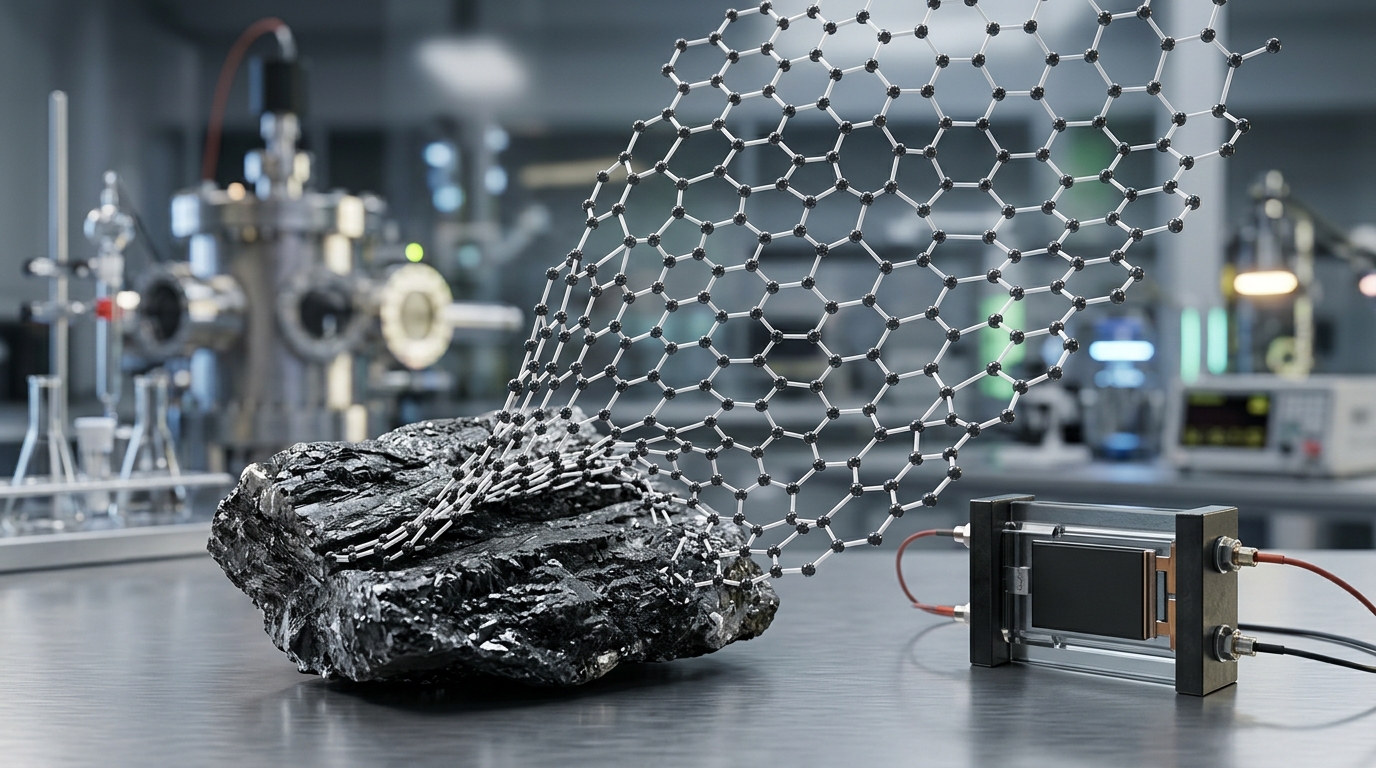
In the surface protection sector, a commercial “graphene coating” is not a freestanding, single-atom sheet of pure carbon. Pure pristine graphene is an insoluble monolayer that cannot adhere directly to automotive paint on its own. Instead, commercial formulations utilize functionalized reduced graphene oxide (rGO) or graphene nanoplatelets suspended within an organosilane, polysilazane, or polydimethylsiloxane matrix.
Graphene was first isolated in 2004 using mechanical exfoliation, establishing an allotrope of carbon arranged in a two-dimensional hexagonal lattice. When engineered into protective coatings, microscopic flakes of functionalized graphene are chemically bonded to silane carriers. The carrier fluid serves as the bonding agent that anchors to the microscopic pores of the clear coat via chemical cross-linking, while the graphene platelets orient toward the surface to impart specific mechanical, thermal, and barrier properties.
Mechanisms of Action on Automotive Substrates
The incorporation of graphene nanoplatelets alters the physical behavior of the protective layer in four critical ways:
1. Thermal Dissipation and Surface Temperature Reduction
Standard ceramic coatings based solely on silicon dioxide (SiO2) or titanium dioxide (TiO2) are thermal insulators. On dark-colored vehicles parked in direct Kapolei sunlight, surface temperatures can exceed 160 degrees Fahrenheit. Because graphene exhibits exceptional in-plane thermal conductivity, coatings infused with rGO help distribute surface heat across the entire panel. These thermal dissipation properties lower localized hot spots, reducing the tendency of standing water droplets to flash boil into the paint and leave etched mineral rings.
2. Water Evacuation and Spotting Resistance
Water spotting is the primary failure mode for standard ceramic coatings in tropical environments. Tap water in municipal systems, combined with airborne mineral dust, leaves behind calcium carbonate and magnesium salts when it evaporates under strong sun. Ceramic coatings typically produce high static contact angles, which can trap bead-shaped droplets on flat panels like hoods and roofs.
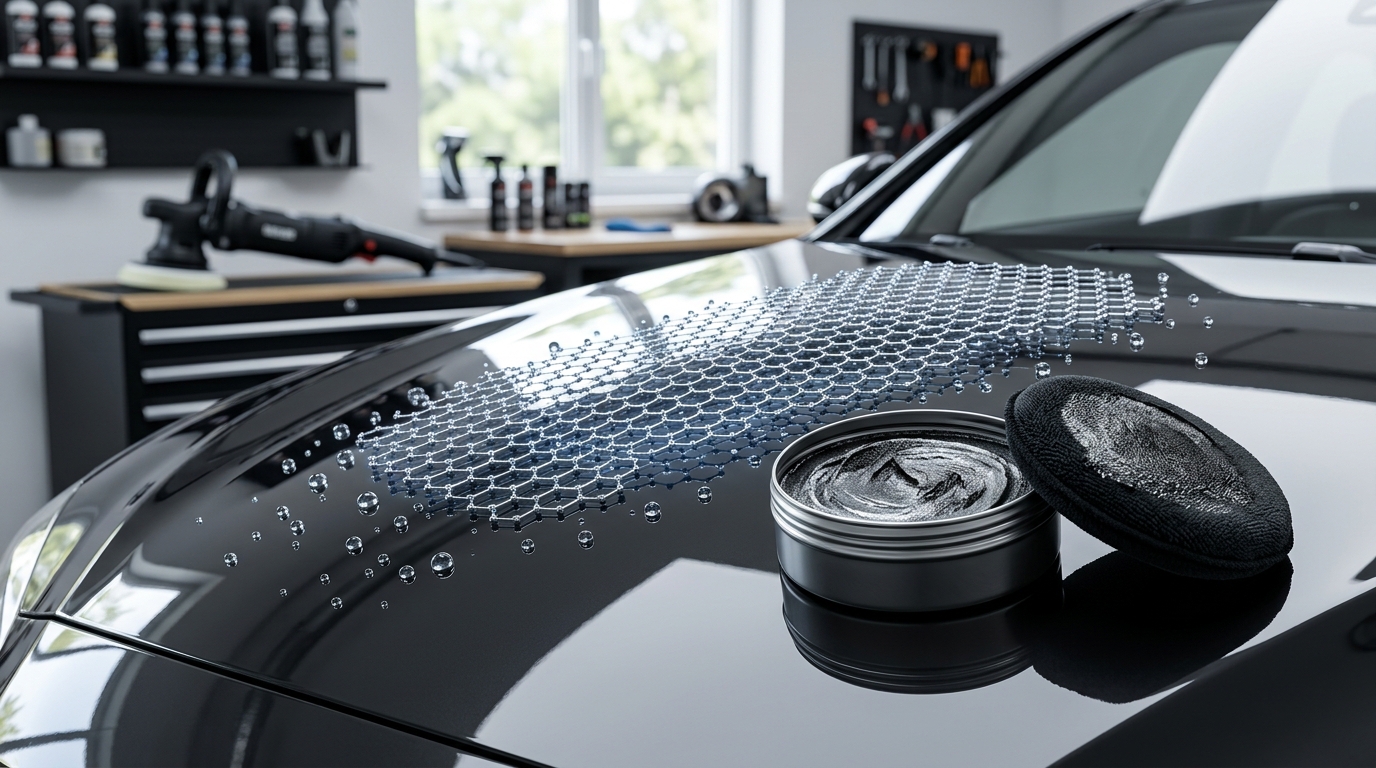
Graphene coatings optimize the hydrophobic sliding angle alongside a high water contact angle (typically between 110 and 118 degrees). By lowering the roll-off angle—the tilt angle required for a droplet to move—water rolls off horizontal panels at lower speeds and under minimal wind pressure, dramatically reducing the risk of water spot etching.
3. Antistatic Characteristics
Friction from high-speed driving and dry trade winds causes vehicles to accumulate a static electrical charge. This charge attracts dry coral dust, red volcanic soil, and industrial soot to the clear coat. Graphene exhibits superior electrical conductivity compared to ceramic polymers, which helps dissipate static charges across the body panels. By minimizing electrostatic charge accumulation, the coated surface repels dry particulates, keeping the vehicle cleaner between maintenance washes.
4. Chemical and Corrosion Barrier
The hexagonal honeycomb lattice of graphene creates an exceptionally tight molecular labyrinth that resists penetration by corrosive species. The composite layer protects underlying paints from strong acids (such as bird droppings and bug splatter) and harsh alkalis (such as commercial degreasers and concrete runoff), maintaining stable protection across a pH range of 2 through 12.
Comparative Performance: Wax, Ceramic, and Graphene
The following table illustrates the operational differences between primary surface protection categories under environmental conditions typical of West Oahu.
| Protection Type | Primary Chemistry | Water Roll-Off Angle | Heat Tolerance | Resistance to Water Spotting | Relative Dust Attraction |
|---|---|---|---|---|---|
| Carnauba / Synthetic Wax | Natural esters and synthetic hydrocarbons | High (Poor roll-off; beads pool easily) | Low (Degrades at ~140°F / 60°C) | Low | High (Oily residue attracts fine dust) |
| Traditional Ceramic (SiO2) | Silicon dioxide and polysilazane resins | Moderate (15° to 25° roll-off angle) | High (Exceeds 750°F / 400°C) | Moderate (Prone to hard water mineral rings) | Moderate (Static charge holds fine silt) |
| Graphene Nanocomposite | rGO nanoplatelets in siloxane matrix | Low (Under 10° to 15° roll-off angle) | High (Exceeds 1000°F / 537°C) | High (Fast evacuation prevents baking) | Low (Antistatic properties repel dust) |
Professional Application Workflow in Kapolei
Applying a graphene coating in high-humidity, high-temperature island conditions requires strict adherence to environmental controls. The installation cannot simply be wiped over existing clear coat; the bond is molecular and requires pristine paintwork.
Phase 1: Chemical and Mechanical Decontamination
The vehicle undergoes a thorough wash using a pH-neutral strip shampoo, followed by iron-remover solutions to dissolve embedded metallic particles from industrial traffic and brake dust. Next, a detailing clay bar removes bonded surface grit such as overspray, tree sap, and limestone sediment.
Phase 2: Multi-Stage Paint Correction
The clear coat is machine-polished using compound and finishing pads to eliminate swirl marks, light scratches, and oxidation. Graphene coatings are optically transparent; any defects left in the paint will be locked beneath the cross-linked layer for years.
Phase 3: Solvent Panel Wipe
An isopropyl alcohol (IPA) or specialized prep solvent solution is applied to remove all polishing oils, lubricants, and residues. The surface must be completely bare to allow the silane carriers to bond directly with clear-coat pores.
Phase 4: Precision Application and Curing
In Kapolei’s tropical ambient environment, the coating’s carrier solvents flash quickly. Technicians apply the liquid using microfiber applicator blocks in small, cross-hatch sections (typically two feet by two feet). As the carrier begins to evaporate, the coating exhibits a visible “sweating” or rainbow effect. It is then leveled and buffed off using low-pile, lint-free microfiber towels.
The vehicle must remain in a climate-controlled, dry environment for a minimum of 12 to 24 hours to achieve initial cross-linking before exposure to rain, moisture, or coastal mist.
Limitations and Common Misconceptions
While graphene coatings provide substantial benefits over older surface protection technologies, expectations must remain grounded in material science rather than marketing exaggeration:
- Not scratch-proof: Graphene coatings add measurable surface hardness (often rated up to 9H or 10H on the pencil hardness scale), but they will not prevent high-velocity rock chips, deep key scratches, or improper wash-induced marring.
- Requires regular maintenance: A coated car is not a “no-wash” car. Road grime, tree sap, and sea salt eventually form a film over the coating, temporarily degrading its hydrophobic performance until washed.
- Pure graphene does not exist in a bottle: Products marketed as “100% pure graphene” are misleading. If a product contained 100% pure graphene, it would be an opaque, brittle solid black mass, not a liquid coating that cures transparently onto automotive clear coats.
Long-Term Maintenance in a Marine Environment
To preserve the functionality of a graphene coating in Kapolei, vehicle owners should follow a disciplined maintenance regimen tailored to Leeward Oahu conditions:
- Two-Bucket or Foam Cannon Washes: Wash the vehicle every one to two weeks using high-lubricity, pH-neutral automotive shampoo without added waxes or gloss enhancers that can clog the coating’s microscopic structure.
- Filtered or Deionized Water: Avoid washing the vehicle under direct sunlight. When possible, rinse with softened or deionized water to eliminate the risk of spot formation during drying.
- Forced-Air Drying: Use a leaf blower or dedicated vehicle dryer to evacuate water from emblems, door jambs, and seams without mechanical contact.
- Periodic Silica/Graphene Boosters: Apply a spray-on graphene detailer or booster every six to twelve months to rejuvenate sacrificial top layers and maintain low roll-off sliding angles.
For vehicles exposed daily to the combined effects of Campbell Industrial Park particulate, coastal sea spray, and unshaded solar exposure, a properly applied graphene coating serves as a durable, highly engineered barrier that maintains finish clarity and simplifies ongoing maintenance throughout the vehicle’s lifespan.