Graphene Oxide Nanoparticles
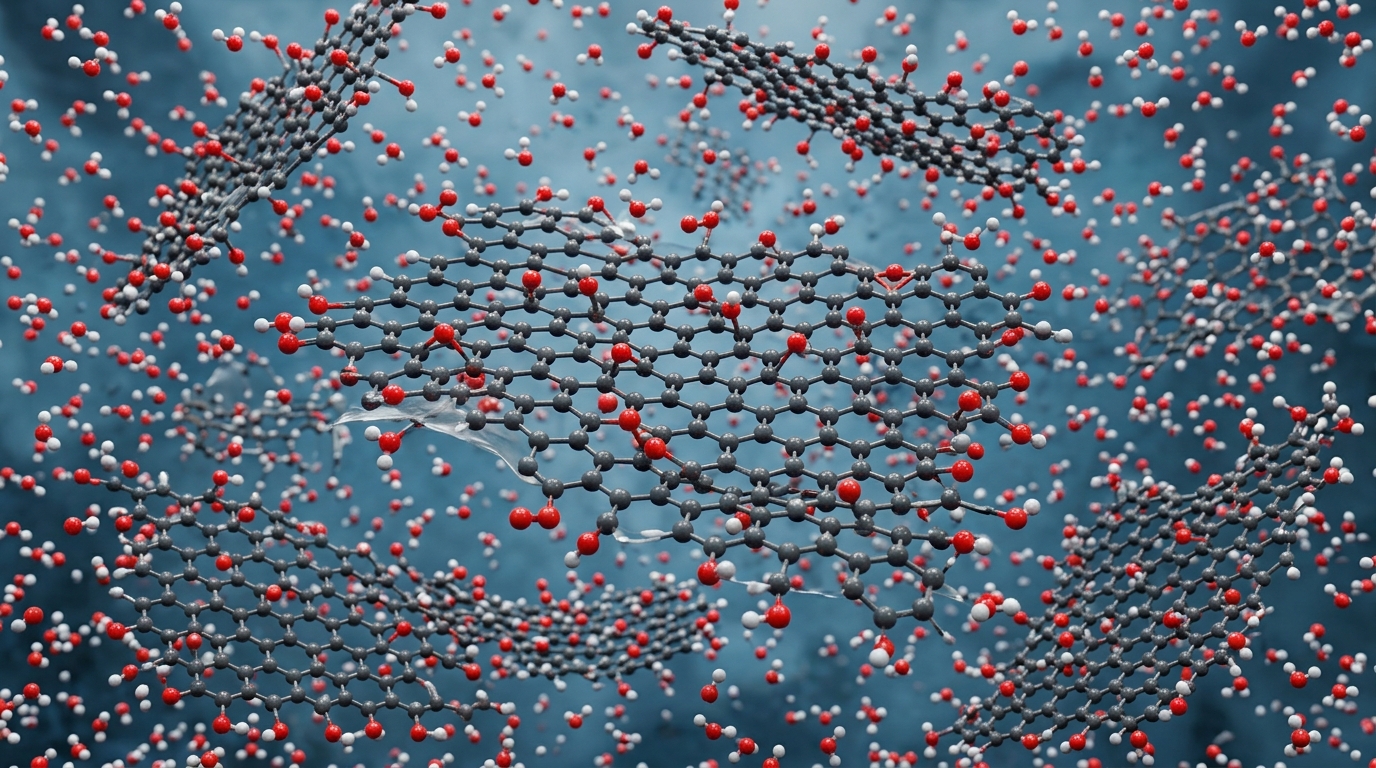
Graphene oxide nanoparticles are nanoscale fragments of oxidized graphene sheets featuring a hybrid carbon lattice decorated with oxygen-bearing chemical groups. Unlike pristine graphene, which consists purely of sp2-hybridized carbon atoms arranged in an atomically thin honeycomb lattice, graphene oxide (GO) nanoparticles incorporate a mixture of sp2 and sp3 carbon domains bonded to hydroxyl, epoxy, carbonyl, and carboxyl groups. When these sheets are synthesized with lateral dimensions ranging from a few nanometers up to several hundred nanometers, they exhibit a distinct balance of water dispersibility, surface reactivity, and mechanical resilience.
Reducing graphene oxide to the nanoscale alters how it behaves in physical and biological environments. Nanoscale lateral dimensions prevent the rapid settling common to larger microscale sheets, increase surface-area-to-volume ratios, and open energy bandgaps that produce photoluminescence. These characteristics position nanoscale graphene oxide as a foundational nanomaterial across environmental filtration, polymer reinforcement, chemical sensing, and nanomedicine.
Chemical Architecture and the Nanoscale Structure
Understanding the behavior of graphene oxide nanoparticles requires examining their atomic architecture. The structural arrangement is widely described by the Lerf-Klinowski model, which outlines how oxygen functionalities distribute across the two-dimensional carbon framework. Rather than a uniform chemical compound, graphene oxide is a non-stoichiometric material whose local chemistry varies based on synthesis conditions and oxidation intensity.
The basal plane of each nanoparticle contains intact aromatic sp2 carbon networks interspersed with disrupted, tetrahedral sp3 carbon centers bound to hydroxyl (-OH) and epoxide (-O-) groups. The edges of the sheet terminate predominantly in carboxyl (-COOH) and carbonyl (C=O) groups. This structural division establishes an amphiphilic behavior: the unoxidized carbon patches remain hydrophobic and capable of non-covalent interactions, while the oxygen-rich regions and edges are strongly hydrophilic and ionizable.
The ratio of carbon to oxygen (typically designated as the C/O ratio) dictates the physical and electronic characteristics of the nanoparticles. Unmodified graphene oxide typically presents a C/O atomic ratio between 2.0 and 3.0. High oxygen content disrupts the continuous electron delocalization of the original graphene framework, converting an electrically semi-metallic sheet into an electrical insulator with wide optical transparency in thin layers.
Synthesis and Lateral Size Reduction
The production of graphene oxide nanoparticles follows a top-down chemical pathway starting from natural graphite flakes. The process involves chemical oxidation, exfoliation into single or few-layer sheets, and controlled fragmentation to achieve nanoscale lateral dimensions.
Oxidative Intercalation and Exfoliation
Chemical oxidation relies primarily on variations of the method established by Hummers and Offeman in 1958. Graphite is treated with concentrated sulfuric acid, sodium nitrate, and potassium permanganate. The strong oxidizing agents intercalate between the graphite layers, generating oxygen functional groups that expand the interlayer spacing from approximately 0.34 nanometers to more than 0.70 nanometers. Subsequent exposure to water induces high electrostatic repulsion, allowing the oxidized layers to separate into individual sheets suspended in solution.
Controlling Particle Size and Morphology
Standard chemical exfoliation produces microscale sheets with wide size distributions. Converting these large sheets into discrete graphene oxide nanoparticles demands mechanical or chemical sizing techniques:
- High-Energy Ultrasonication: Acoustic cavitation generates localized shear forces and microjets that break large sheets along defect-rich sp3 domains, reducing lateral dimensions to tens of nanometers.
- Hydrothermal or Solvothermal Fragmentation: Elevated temperature and pressure cleave the carbon backbone at oxidized defect sites, yielding uniform, ultra-small fragments often termed graphene oxide quantum dots.
- Chemical Shearing: Controlled secondary oxidation cuts the basal plane along aligned epoxy or hydroxyl lines via chemical bond cleavage.
Following size reduction, separation methods such as differential centrifugation, cross-flow ultrafiltration, or dialysis isolate specific size fractions while removing residual mineral acids, metal ions, and synthesis byproducts.
Core Properties of Nanoscale Graphene Oxide
The combination of two-dimensional confinement, high edge-to-area ratios, and mixed sp2/sp3 surface chemistry gives graphene oxide nanoparticles several distinguishing physical and chemical attributes.
Colloidal Stability and Surface Charge
In aqueous environments, the carboxyl and phenolic hydroxyl groups on graphene oxide ionize, imparting a net negative electrical charge across a broad pH range. A high negative zeta potential (frequently exceeding -30 mV in neutral water) provides electrostatic repulsion that prevents spontaneous aggregation. Consequently, graphene oxide nanoparticles form stable colloidal dispersions in water and polar organic solvents without requiring external surfactants.
Optical Absorption and Photoluminescence
Unlike pristine graphene, which absorbs light uniformly across the visible spectrum with zero bandgap, graphene oxide nanoparticles demonstrate size- and oxidation-dependent optical absorption. The presence of isolated sp2 aromatic clusters surrounded by an sp3 insulating matrix creates localized electronic states. When the lateral size is reduced below 20 nanometers, quantum confinement effects emerge, enabling the material to emit photoluminescence across ultraviolet, visible, and near-infrared wavelengths upon optical excitation.
Surface Reactivity and Functionalization Pathways
The dense distribution of oxygen functional groups provides versatile anchoring sites for covalent and non-covalent modification. Carboxyl groups at sheet edges react via carbodiimide chemistry to form stable covalent amide or ester bonds with polymers, biomolecules, and small-molecule catalysts. Concurrently, pristine sp2 patches on the basal plane support non-covalent π–π stacking interactions and hydrophobic binding, allowing the nanoparticles to load aromatic organic compounds, dyes, or therapeutic payloads efficiently.
Primary Industrial and Scientific Applications
Graphene oxide nanoparticles serve as active functional components, processing precursors, or structural additives across multiple engineering disciplines.
Environmental Remediation and Water Treatment
The high surface area and dense oxygen functionality of graphene oxide nanoparticles make them potent sorbents for water purification. Negatively charged surface groups form coordination complexes and electrostatic bonds with heavy metal cations, including lead, cadmium, copper, and arsenic. Simultaneously, unoxidized aromatic islands adsorb organic contaminants such as dyes, pharmaceuticals, and phenolic compounds. When incorporated into thin-film composite membranes, nanoscale GO flakes align to create laminated nanochannels that allow water molecules to permeate rapidly while sieving out hydrated salts and organic pollutants.
Polymer Nanocomposites and Protective Coatings
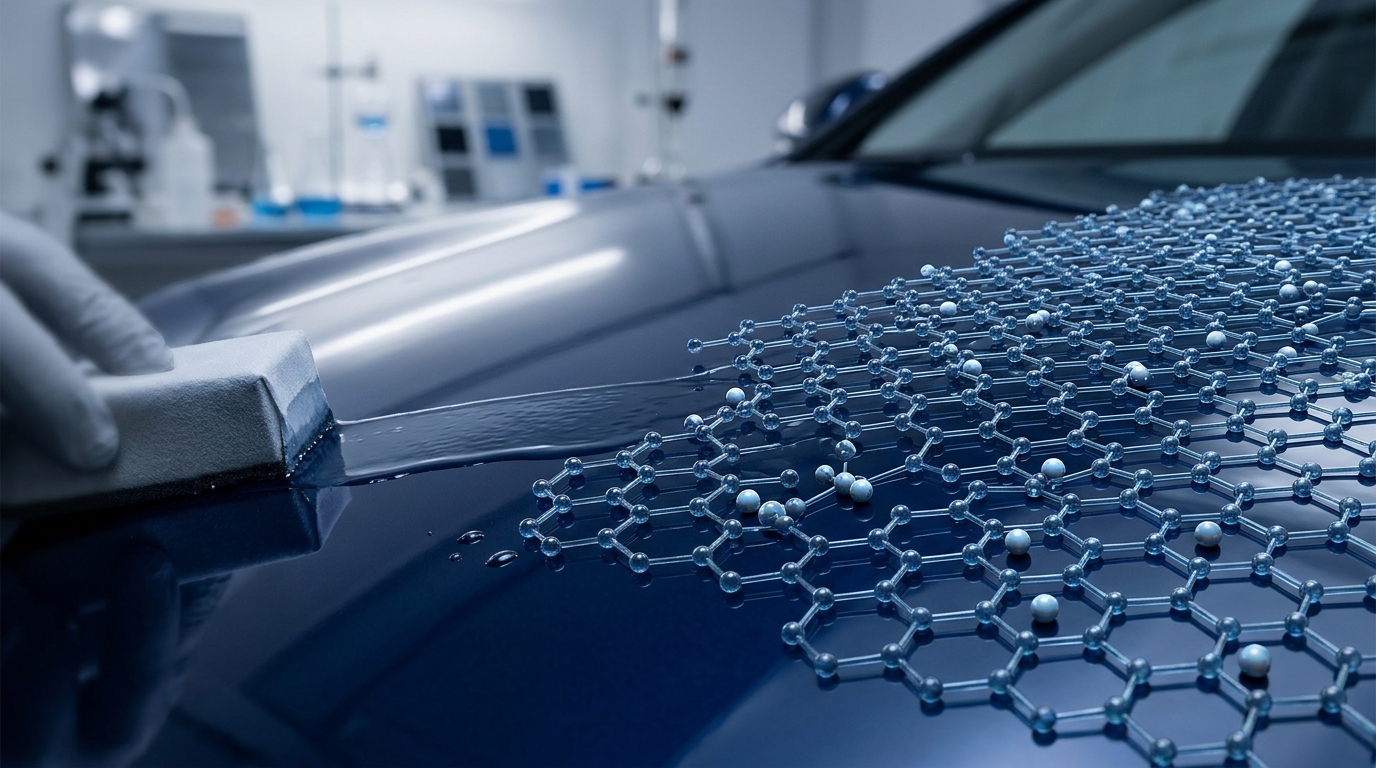
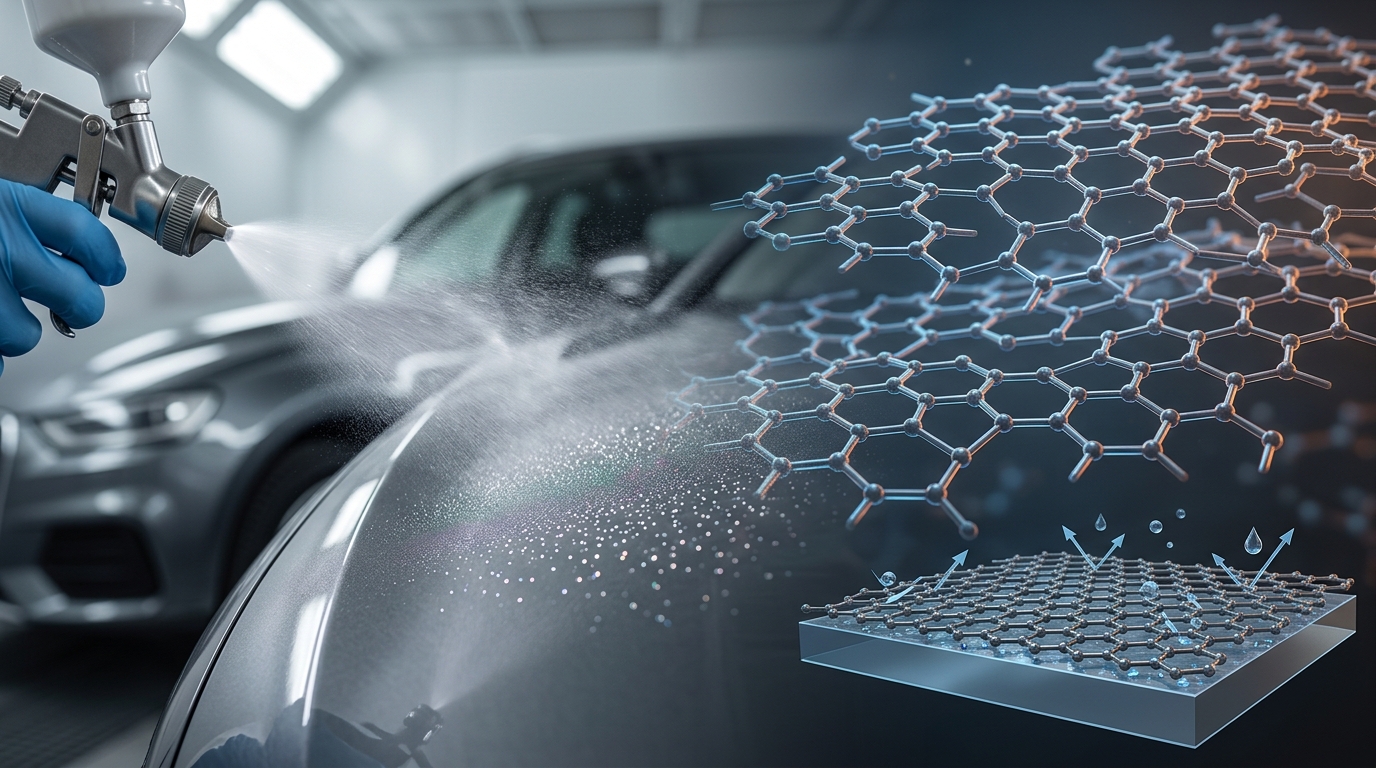
Integrating graphene oxide nanoparticles into polymer matrices improves mechanical strength, thermal stability, and barrier performance. Because nanoscale GO disperses well in polar polymers such as polyvinyl alcohol, epoxy resins, and polyurethanes, it forms strong interfacial hydrogen bonds with the polymer chains. These interactions improve load transfer, reduce polymer creep, and increase tensile modulus at low filler loadings. Furthermore, the impermeable carbon sheets create a tortuous diffusion path for gas molecules, reducing oxygen and moisture permeability in barrier films and anti-corrosion coatings.
Biomedical and Nanomedicine Research
In nanomedicine, the colloidal stability and dual-surface chemistry of nanoscale GO provide distinct engineering pathways:
- Targeted Drug Delivery: Nanoscale GO carriers exploit π–π stacking to transport aromatic chemotherapy molecules, releasing them conditionally in response to acidic pH or intracellular triggers.
- Photothermal Systems: Near-infrared light absorption allows GO nanoparticles to convert optical energy into localized heat, a mechanism explored for thermal ablation of targeted tissues.
- Diagnostic Biosensing: Graphene oxide quenches the fluorescence of labeled single-stranded DNA probes via resonance energy transfer. Upon encountering a complementary target, the probe detaches, restoring the optical signal and enabling precise nucleic acid detection.
Precursors for Conductive Materials
Graphene oxide nanoparticles act as liquid-processable precursors for conducting carbon materials. Applying thermal annealing, chemical reductants, or laser irradiation removes oxygen groups, converting insulating GO into reduced graphene oxide (rGO). This reduction partially restores the conjugated sp2 network, increasing electrical conductivity by several orders of magnitude. Solution-processed rGO nanoparticles are used to fabricate transparent conductive electrodes, printed electronic circuits, and electrode materials for supercapacitors and lithium-ion batteries.
Property Comparison Across Nanocarbon Forms
To understand the role of graphene oxide nanoparticles, it is helpful to contrast their key characteristics with related carbon nanomaterials.
| Material Form | Typical C/O Ratio | Aqueous Dispersibility | Electrical Conductivity | Dominant Interaction Mechanism |
|---|---|---|---|---|
| Pristine Graphene | > 50 | Extremely low (aggregates) | Very High (> 105 S/m) | π–π stacking, hydrophobic sorption |
| Graphene Oxide Nanoparticles | 2.0 – 3.5 | High (stable colloids) | Insulating (10-3 to 10-1 S/m) | Hydrogen bonding, electrostatic, covalent coupling |
| Reduced Graphene Oxide (rGO) | 8.0 – 20 | Moderate to poor | Semiconducting/Conductive (102 to 104 S/m) | Mixed π–π stacking and residual oxygen coordination |
| Carbon Nanotubes (Oxidized) | 5.0 – 15 | Moderate | Moderate to High | 1D morphological percolation, end-group bonding |
Performance Trade-offs and Practical Limitations
While graphene oxide nanoparticles offer high functional flexibility, engineering them into real-world systems involves technical tradeoffs that require careful management.
The primary compromise lies between chemical dispersibility and electrical conductivity. Achieving stable liquid dispersions requires extensive oxidation, but the resulting sp3 defects permanently disrupt charge carrier mobility. While chemical reduction can restore electrical conductivity, it simultaneously removes hydrophilic groups, causing the nanosheets to aggregate and precipitate unless stabilizing surfactants or polymers are added.
In biological and environmental media, high ionic strength poses another operational challenge. Dissolved salts, such as sodium chloride or calcium chloride, screen the negative surface charge of the nanoparticles. Once the electrostatic barrier collapses, attractive van der Waals forces dominate, leading to rapid particle aggregation and sedimentation. Surface passivating agents, such as polyethylene glycol (PEG) or zwitterionic polymers, are frequently required to maintain colloidal stability in physiological environments.
Biocompatibility and environmental safety also depend heavily on particle dimensions and surface state. Nanoscale GO particles penetrate cellular membranes more readily than microscale sheets. Inside biological systems, exposed sharp edges and localized catalytic sites can generate intracellular reactive oxygen species (ROS) or cause physical membrane disruption. Evaluating the toxicological profile of any GO formulation requires verifying the lateral size distribution, degree of oxidation, metal impurity content, and surface coating.
Material Characterization and Quality Assessment
Consistent deployment of graphene oxide nanoparticles in research and manufacturing depends on precise analytical characterization to establish batch-to-batch uniformity:
- Atomic Force Microscopy (AFM): Measures topographic height to confirm single-layer exfoliation (typically 0.8 to 1.2 nm for single-layer GO due to oxygen groups) and maps lateral flake dimensions.
- Transmission Electron Microscopy (TEM): Verifies nanoscale morphology, edge structure, and crystalline domain distributions.
- X-ray Photoelectron Spectroscopy (XPS): Quantifies the elemental C/O ratio and deconvolutes specific chemical bindings, including C-C, C-O (epoxy/hydroxyl), C=O (carbonyl), and O-C=O (carboxyl).
- Raman Spectroscopy: Assesses structural order through the intensity ratio of the defect-induced D-band (near 1350 cm-1) to the graphitic G-band (near 1580 cm-1).
- Dynamic Light Scattering (DLS) and Zeta Potential Analysis: Evaluates apparent hydrodynamic diameter distributions in suspension and quantifies surface charge stability.
By establishing rigorous quality baselines through these methods, researchers and manufacturers can reliably exploit the distinct surface chemistry, optical features, and interface dynamics of graphene oxide nanoparticles across diverse advanced material systems.