Adams Graphene Coating
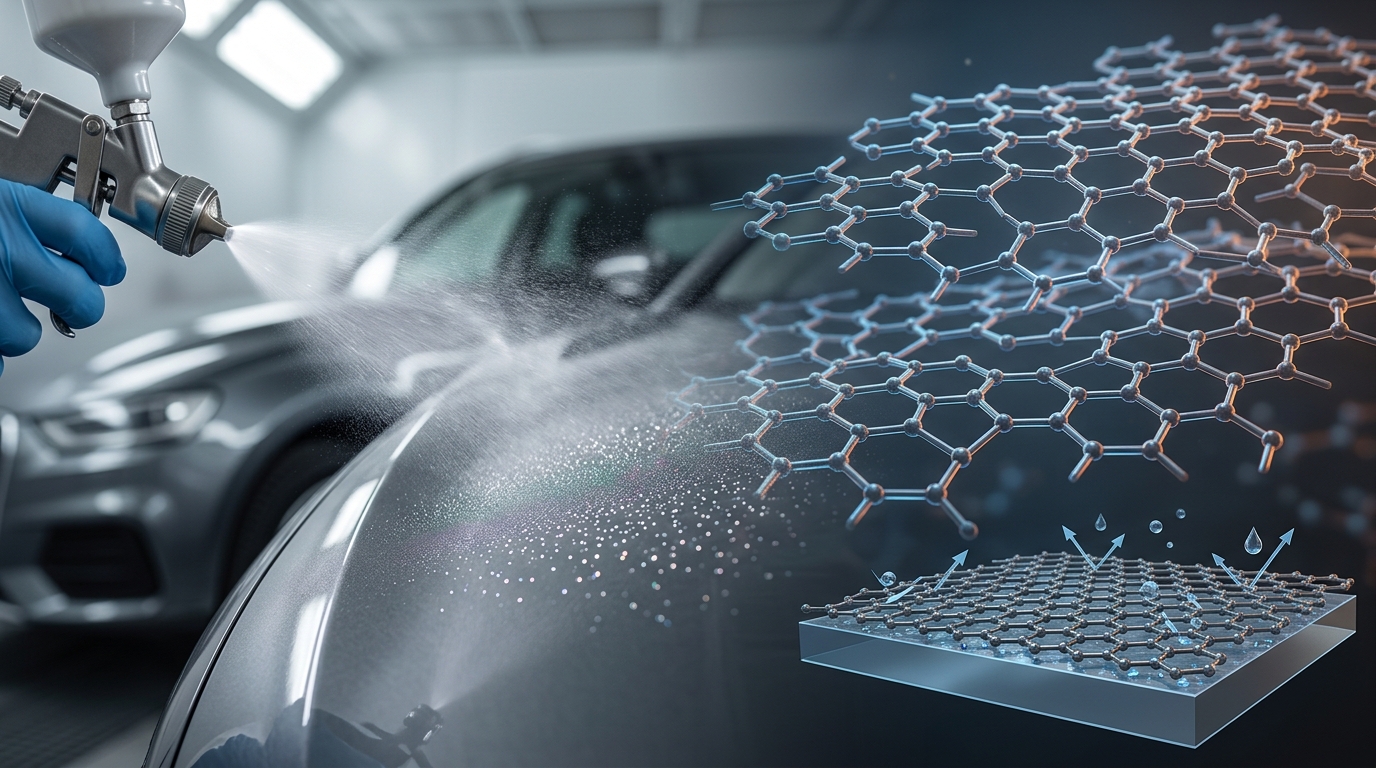
Adams Graphene Coating is an automotive paint protection system that incorporates functionalized graphene derivatives into a liquid ceramic resin matrix. Unlike traditional silicon dioxide (SiO2) coatings, this formulation blends siloxane and polysilazane polymers with reduced graphene oxide (rGO) or graphene nanoplatelets. The result is a semi-permanent sacrificial barrier engineered to bond covalently with vehicle clear coats, providing resistance against environmental etching, chemical degradation, UV breakdown, and minor surface marring.
The Chemical Architecture Behind Graphene-Infused Coatings
Understanding how an advanced coating operates requires examining its core formulation. Automotive clear coats consist of polyurethane polymers that feature microscopic pores and microscopic surface irregularities. Unprotected clear coat is vulnerable to chemical penetration, oxidation, and mineral etching. Adams Graphene Coating addresses these vulnerabilities through a multi-component chemical matrix.
The Polysilazane and Siloxane Matrix
The foundation of the coating is not pure carbon, but an inorganic-organic polymer backbone based on siloxanes or polysilazanes. When exposed to ambient moisture, these liquid pre-polymers undergo hydrolytic polycondensation. In this reaction, silicon-nitrogen (Si-N) or silicon-alkoxy bonds hydrolyze and crosslink into a dense, three-dimensional silicon-oxygen (Si-O-Si) network. This network anchors directly to hydroxyl groups present on the automotive paint surface, creating an enduring covalent bond.
Role of Functionalized Graphene Nanoplatelets
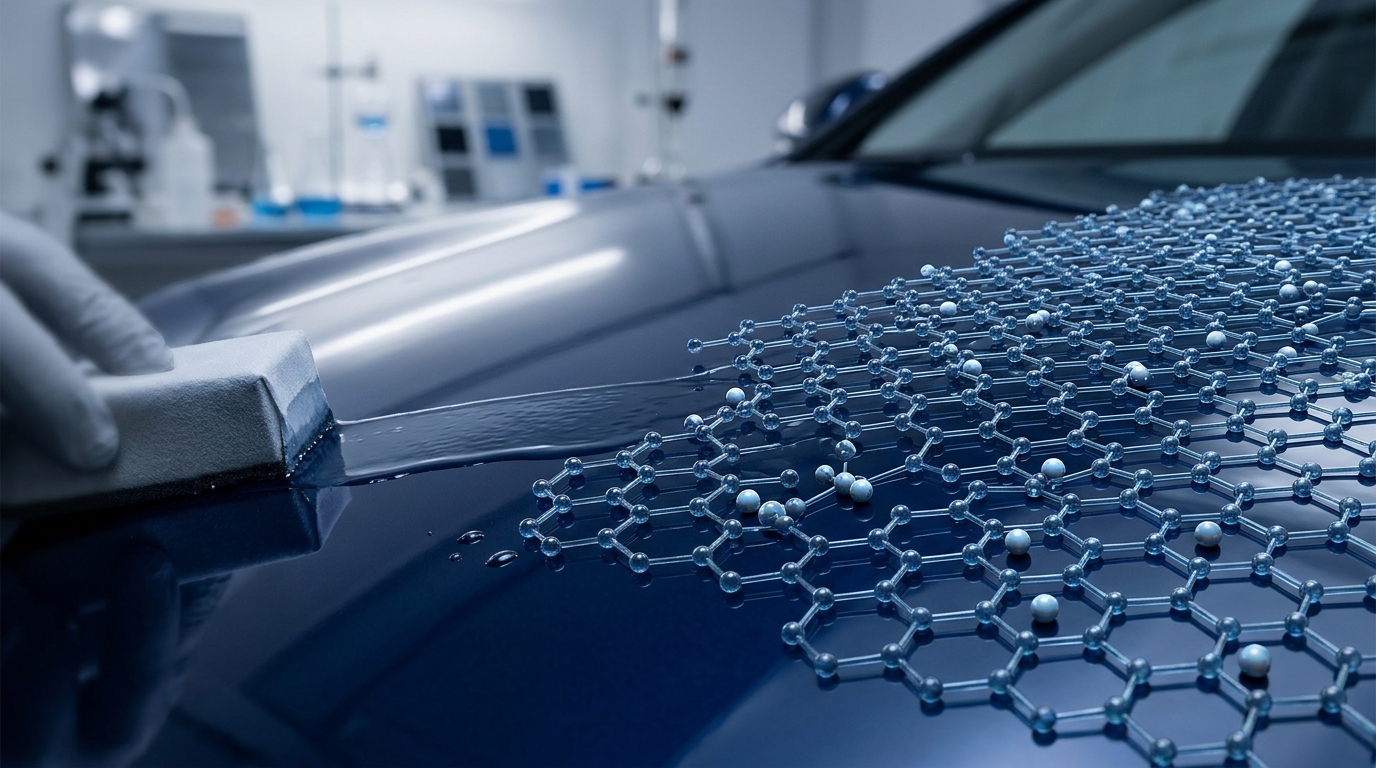
Pristine monolayer graphene—first isolated in 2004—cannot easily dissolve or suspend in standard coating solvents due to strong van der Waals attraction between carbon sheets. To overcome this, commercial formulations utilize chemically modified graphene forms, primarily reduced graphene oxide (rGO) or functionalized nanoplatelets. These platelets possess oxygen-containing functional groups (such as epoxy, hydroxyl, and carboxyl groups) that allow stable dispersion within the solvent carrier and polymer resin.
Once cured, these microscopic carbon sheets sit suspended throughout the crosslinked silica matrix. The platelets act like microscopic rebar in concrete, reinforcing the structural integrity of the coating layer, enhancing impermeability, and modifying the physical properties of the surface interface.
Functional Properties and Material Mechanisms
The introduction of graphene into a traditional ceramic formulation changes several mechanical and thermodynamic behaviors on the vehicle exterior.
Mitigation of Water Spotting
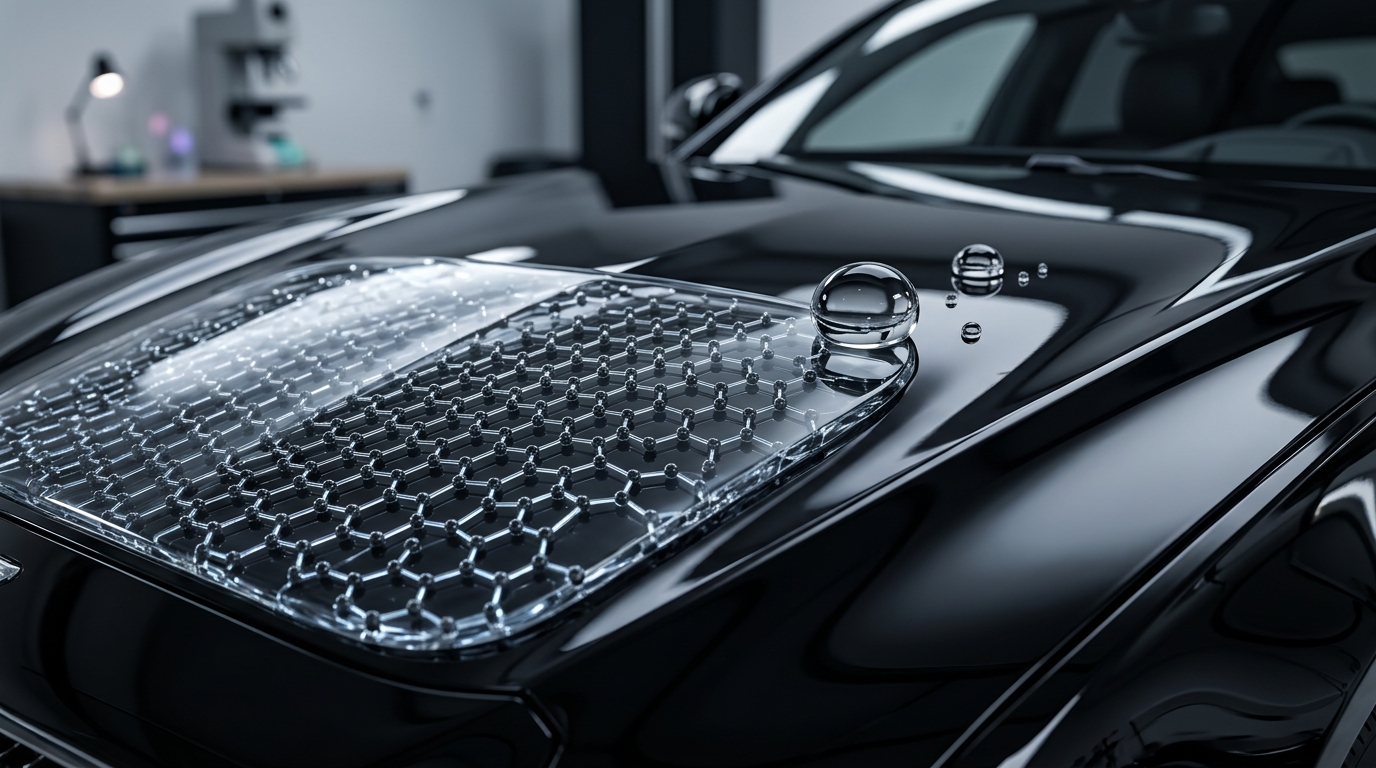
One notable drawback of conventional SiO2 ceramic coatings is their susceptibility to water spotting. Traditional ceramics create high static contact angles, causing water to bead into tight spheres. Because silicon dioxide has relatively low thermal conductivity, heat from direct sunlight concentrates within these droplets, functioning as tiny magnifying lenses that bake dissolved minerals (calcium and magnesium) deep into the coating.
Graphene-infused coatings alter this dynamic in two ways:
- Thermal Dissipation: The high thermal conductivity of carbon structures helps disperse localized surface heat more evenly across the panel, reducing the temperature spikes directly under water droplets.
- Low Sliding Angle: Graphene formulations reduce the water sliding angle (the tilt angle required for a droplet to roll off). Rather than remaining pinned in place under direct sunlight, droplets roll off more readily when the vehicle is in motion or parked on a slight grade, leaving fewer mineral deposits behind.
Chemical Resistance and pH Tolerance
Environmental contaminants—including bird droppings, acid rain, bug splatter, and harsh road salts—attack automotive clear coat through aggressive acidic or alkaline chemical reactions. The dense, crosslinked network of Adams Graphene Coating provides chemical resistance rated across a broad pH spectrum (typically pH 2 through pH 12). The stacked, non-porous structure of embedded graphene nanoplatelets creates a tortuous path, significantly slowing the rate at which corrosive compounds can diffuse through to the underlying paint.
Surface Hardness and Scratch Resistance
Automotive coatings are often evaluated using standardized pencil hardness ratings, where formulations achieve ratings up to 9H or 10H under the ASTM D3363 test protocol. This rating measures the coating’s resistance to surface indentation and scratching by calibrated graphite pencils under a fixed load. While graphene reinforcement increases tensile strength and mar resistance against light wash-induced swirl marks, it is important to clarify that no liquid-applied coating can prevent high-velocity rock chips or aggressive mechanical abrasion.
The UV Tracing Mechanism
A practical challenge in applying transparent coatings is verifying uniform coverage and complete removal of excess residue. High spots—areas where excess coating was not leveled before crosslinking began—cure into dark, uneven blemishes that often require mechanical compounding to fix.
Adams Graphene Coating integrates a patent-pending UV tracer technology. An optical brightener (a fluorescent dye molecule) is blended directly into the liquid carrier. When illuminated with a specialized 395nm ultraviolet light source, the uncured and curing coating glows visibly. This allows the user to inspect panels in real time, identifying:
- Missed sections or incomplete coverage along body lines.
- Uneven application density across panel contours.
- Residual high spots during the leveling and buffing phase.
Step-by-Step Application Protocol
Applying a semi-permanent graphene coating requires careful surface preparation to ensure direct covalent bonding to the substrate. Any oil, wax, or oxidation trapped beneath will compromise bonding and shorten durability.
1. Decontamination and Surface Preparation
The process begins with an intensive wash using an alkaline detergent, followed by chemical decontamination to dissolve embedded iron particles. A mechanical clay bar treatment removes bonded environmental fallout. If the paint exhibits swirl marks, oxidation, or scratches, machine compounding and polishing must be completed, as defects cannot be corrected once the coating cures over them. Finally, an isopropyl alcohol (IPA) or solvent-based panel prep wipe removes all residual polishing oils.
2. Application and Cross-Hatch Pattern
Working in controlled indoor environments out of direct sunlight is essential for consistent curing rates:
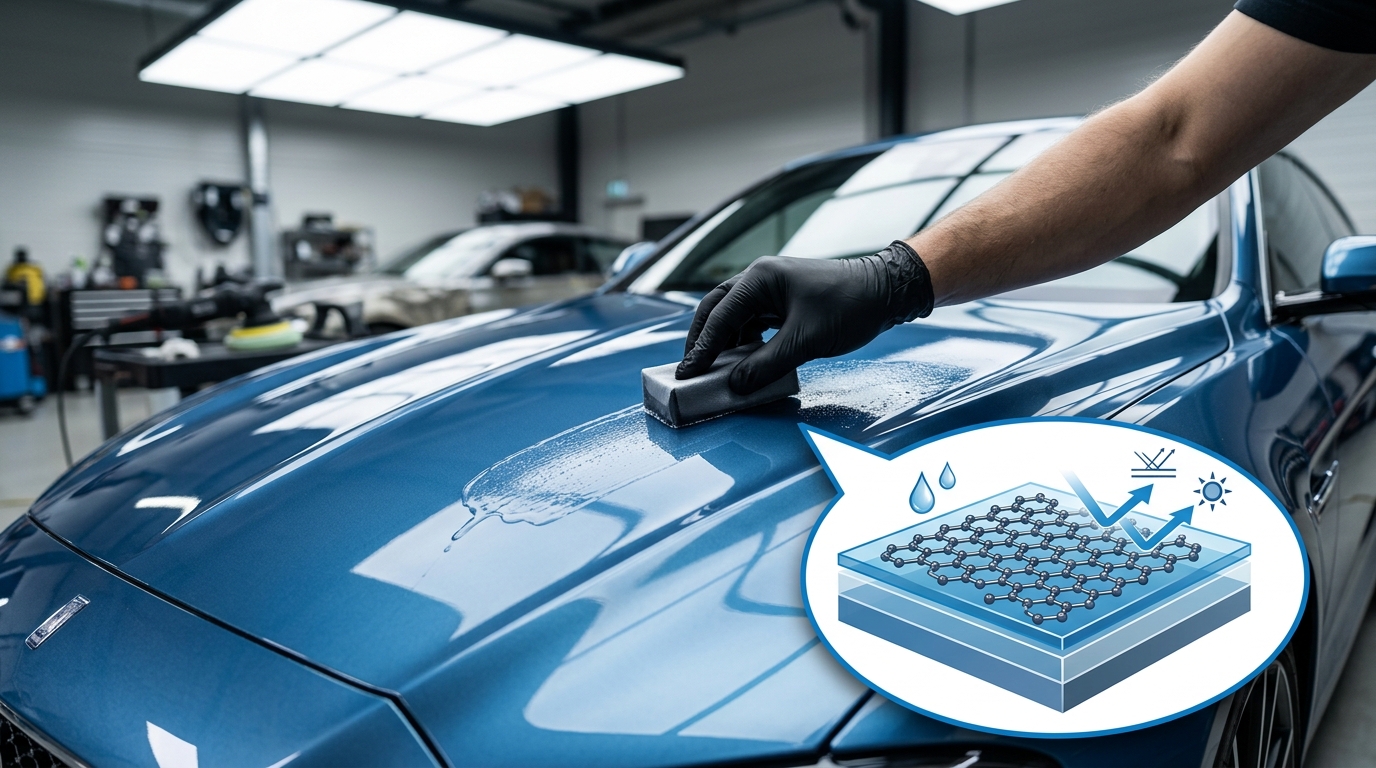
- Apply several drops of coating onto a micro-silk applicator wrapped around a dense foam block.
- Work in manageable sections, typically 2 feet by 2 feet.
- Spread the product using a cross-hatch pattern (horizontal passes followed immediately by vertical passes) to ensure uniform film thickness.
3. Flashing and Leveling
As the carrier solvents evaporate, the product undergoes a visible transition known as “flashing.” The liquid layer will begin to bead up into an oily appearance, displaying a rainbow-like sheen or sweating effect across the panel. Depending on ambient temperature and relative humidity, this occurs within one to three minutes.
Once flashing begins, gently level the surface with a plush microfiber towel to knock down high spots, followed by a second low-pile microfiber towel to buff the surface to a clear finish. Inspect the panel using the UV light to confirm no uneven residue remains.
4. Curing Kinetics
The coating achieves initial dry-to-touch status within a few hours, but full crosslinking requires 24 to 48 hours without exposure to water, rain, or dew. Complete chemical curing time takes up to seven days, during which the vehicle should not be washed with chemical soaps or agitated mechanically.
Comparison of Protective Surface Technologies
To contextualize where graphene-infused systems fit in automotive care, consider how they compare to traditional wax and standard ceramic coatings:
| Feature | Carnauba / Synthetic Wax | Standard SiO2 Ceramic | Adams Graphene Coating |
|---|---|---|---|
| Bond Type | Physical adhesion (temporary) | Covalent crosslinking (semi-permanent) | Covalent crosslinking with carbon reinforcement |
| Durability Range | 1 to 3 months | 2 to 5 years | Up to 7+ years (formulation dependent) |
| Water Contact Angle | 90° – 100° | 105° – 115° | 110° – 118° |
| Water Sliding Angle | Moderate (high retention) | High (prone to spotting) | Low (fast shedding) |
| Chemical Resistance | pH 6 – 8 | pH 3 – 11 | pH 2 – 12 |
| Application Verification | Visual inspection only | Visual inspection only | UV optical tracing dye |
Maintenance and Coating Longevity
Although graphene-infused barriers offer enhanced durability, they are not maintenance-free. Over time, road grime, traffic film, and mineral deposits accumulate on top of the coating, masking its hydrophobic behavior.
- Routine Washing: Wash every two to three weeks using a pH-neutral, wax-free car shampoo. Avoid automated brush washes that inflict abrasive micro-marring.
- Decontamination: Periodically use an iron remover to dissolve metallic particles trapped on the surface.
- Graphene Boosters: Apply a diluted graphene-infused maintenance spray every few months during drying. This acts as a sacrificial top layer, rejuvenating the contact angle and extending the life of the underlying base coat.
- Abrasive Avoidance: Never apply traditional polishes, compounds, or abrasive cleaners over the coating, as mechanical friction will strip the protective barrier away.