Adam's Polishes Graphene Detail Spray
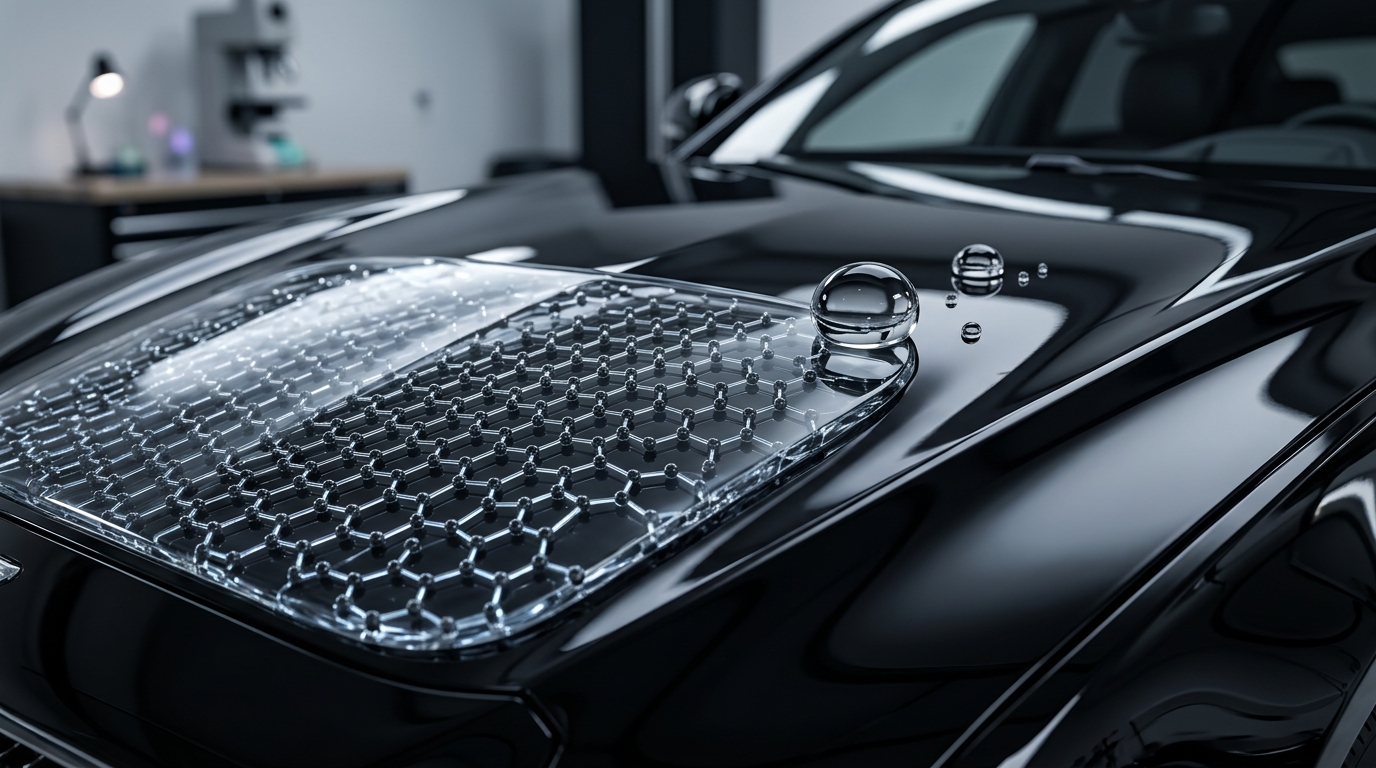
Adam’s Polishes Graphene Detail Spray is a water-based automotive surface enhancer formulated with functionalized graphene oxide nanoplatelets suspended within a ceramic-polysiloxane backbone. Designed to serve as a versatile quick detailer, drying aid, and coating booster, it bridges the gap between traditional carnauba-based maintenance sprays and semi-permanent ceramic coatings. By introducing carbon nanomaterials into an easy-to-use spray format, it enhances gloss, surface slickness, and water evacuation while reducing static attraction on painted, glass, and exterior plastic surfaces.
The Chemistry Behind Graphene-Infused Detailers
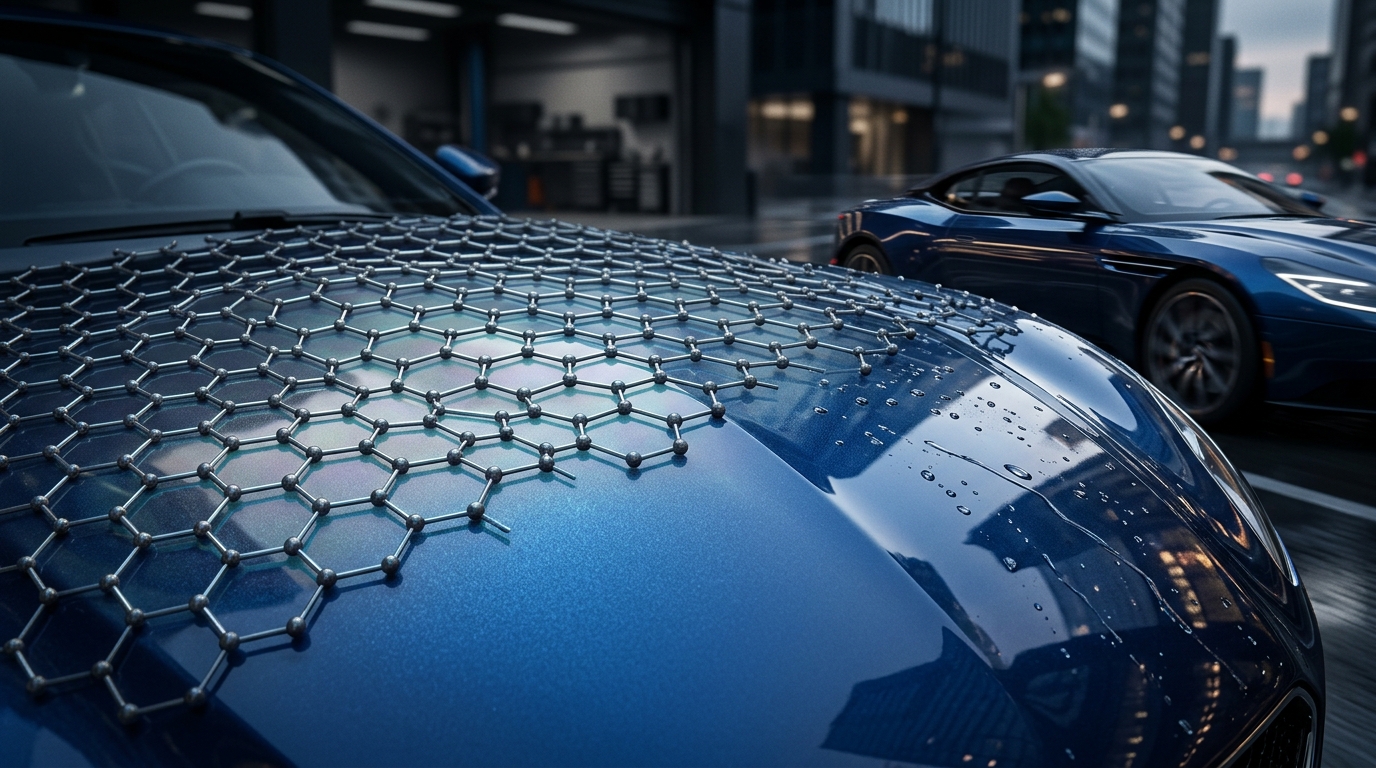
Understanding how a graphene detail spray functions requires distinguishing between raw elemental carbon and modified carbon nanomaterials suitable for liquid delivery. Monolayer graphene in its pristine, unfunctionalized state is an insoluble, hydrophobic carbon sheet that does not naturally disperse in water or standard solvent carriers. In industrial formulations like car care products, manufacturers utilize functionalized graphene oxide or reduced graphene oxide (rGO) nanoplatelets.
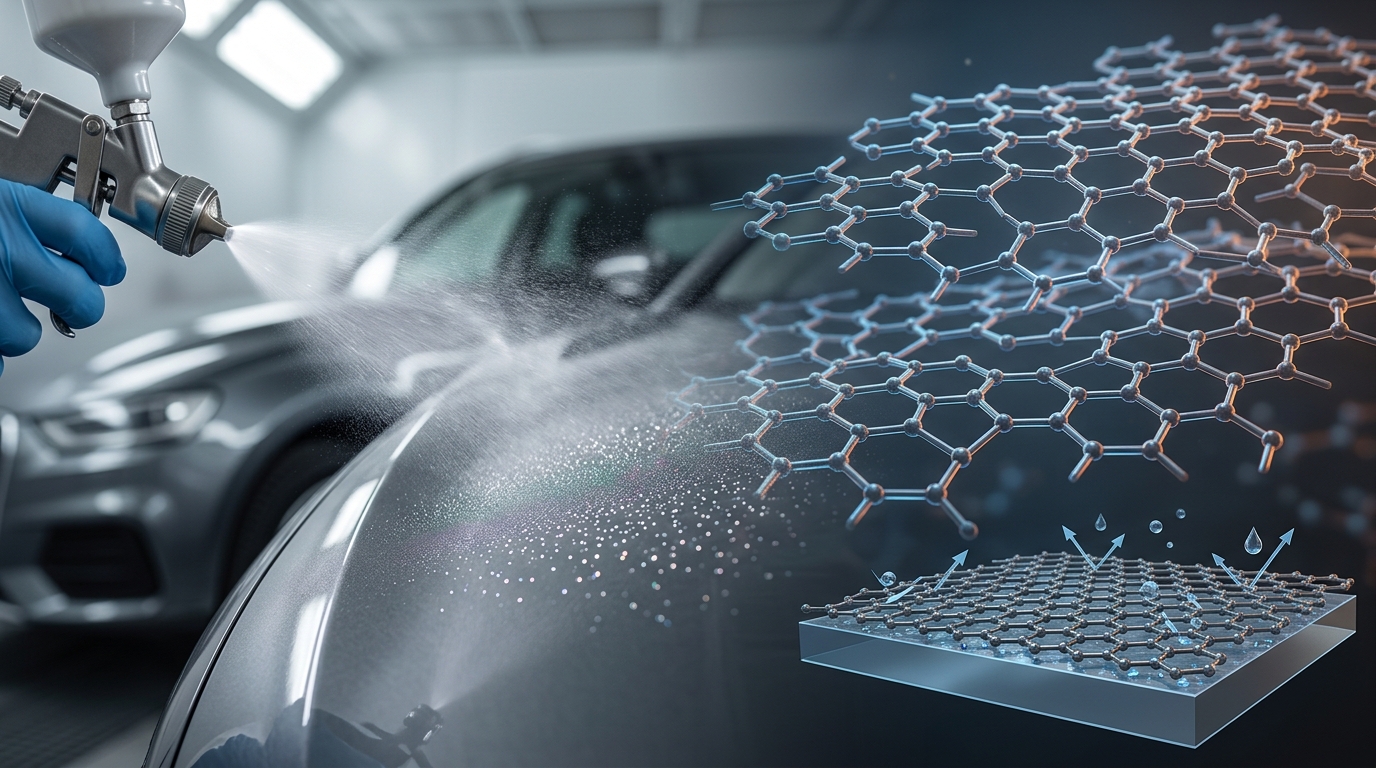
These engineered nanoplatelets feature functional oxygen groups along their edges and basal planes. This functionalization allows them to stay in a stable colloidal suspension when combined with specialized surfactants, emulsifiers, and modified polydimethylsiloxane (PDMS) resins. When sprayed onto an automotive clear coat, the carrier solvents evaporate, allowing the reactive ceramic siloxanes and graphene nanoplatelets to cross-link across micro-irregularities in the paint finish.
Key Material Mechanisms and Performance Characteristics
Integrating graphene into a detailing spray alters several surface-level physical and optical properties compared to conventional detailers. The functional benefits are driven by specific physical phenomena rather than mystical chemistry.
1. Hydrophobic Contact Angle and Sliding Mechanics
Hydrophobic performance is typically quantified by two metrics: water contact angle and sliding (roll-off) angle. Adam’s Polishes Graphene Detail Spray produces a high water contact angle, often exceeding 100 degrees, causing water droplets to form tight, spherical beads.
More importantly, the ultra-flat morphology of graphene platelets reduces surface friction at the microscopic level. This lowers the sliding angle, enabling water beads to roll off moving exterior panels at lower vehicle speeds. Faster water roll-off minimizes the dwell time of standing water, which directly helps mitigate mineral-based water spotting.
2. Static Charge Dissipation and Dust Reduction
One of the primary frustrations with standard polymer-based or carnauba-based quick detailers is static build-up. Wiping a vehicle with dry microfiber towels generates friction, imparting a positive static charge to clear coat surfaces. This static field naturally attracts ambient airborne dust, pollen, and debris shortly after wipe-down.
Graphene possesses exceptional electrical conductivity. While graphene oxide is less conductive than pure graphene, functionalized nanoplatelets within the cured film establish a thin, semi-conductive network. This network accelerates static charge dissipation, neutralizing the electrostatic charge generated during towel friction and noticeably reducing immediate dust accumulation.
3. Surface Smoothing and Optical Depth
Automotive clear coats are never perfectly planar; microscopic peaks and valleys scatter incident light, muting gloss. The nano-scale dimensions of graphene flakes allow them to settle alongside siloxane molecules into minor clear coat pores. This leveling effect increases specular reflection, producing sharp light reflections and deepening darker color pigments without relying on heavy masking oils that leave hazy residues.
Practical Roles in an Automotive Detailing Workflow
The versatility of adam’s polishes graphene detail spray stems from its balanced formula, which combines light cleaning lubricants with sacrificial protective polymers. It fits into several distinct stages of paint maintenance.
- Post-Wash Drying Aid: Misting the product onto wet exterior panels before drying reduces towel drag, adds instantaneous lubrication to prevent swirl marks, and accelerates sheet-drying.
- Light Dust and Smudge Removal: Formulated with mild wetting agents, it encapsulates light surface dust, fingerprints, and road film so they can be safely wiped away without scratching clear coats.
- Coating Maintenance Booster: When applied over existing ceramic or graphene coatings, it acts as a sacrificial layer, rejuvenating the coating’s hydrophobicity and restoring degraded water-beading performance.
- Clay Lubricant: Due to its high mechanical lubricity, it can be paired with synthetic clay mitts or traditional clay bars during decontamination steps.
- Multi-Substrate Compatibility: Safe for application across exterior glass, painted wheels, chrome accents, and unpainted matte plastic trim without leaving white chalky residue.
Comparative Performance Matrix
To understand where this product fits relative to alternative detailing chemistries, consider how different categories balance protection longevity, application effort, and functionality.
| Product Class | Primary Chemistry | Durability Window | Dust Repulsion | Primary Function |
|---|---|---|---|---|
| Traditional Detail Spray | Carnauba emulsion / light surfactants | Several days | Low (static prone) | Light cleaning & quick gloss enhancement |
| Ceramic Detail Spray | SiO2 / Silane polymers | 3 to 6 weeks | Moderate | Hydrophobic maintenance & slickness |
| Graphene Detail Spray | Functionalized rGO + Polysiloxanes | 4 to 8 weeks | High (anti-static) | Cleaning, hydrophobic boost & anti-static layer |
| Full Graphene Resin Coating | Solvent-based curable silazane/rGO resins | Multiple years | Very High | Semi-permanent hard barrier protection |
Application Techniques and Best Practices
Achieving optimal, streak-free results with adam’s polishes graphene detail spray depends on proper surface preparation and towel discipline, especially on dark paint finishes that readily highlight residue.
The Two-Towel Method
Because graphene detailers contain active polymer solids that cure upon exposure to air, over-application can lead to secondary hazing or streaking. The two-towel technique provides the most consistent finish:
- Fold two plush, high-pile microfiber towels into squares.
- Mist one or two light sprays directly onto an individual exterior panel or onto the primary towel. Avoid saturating the panel.
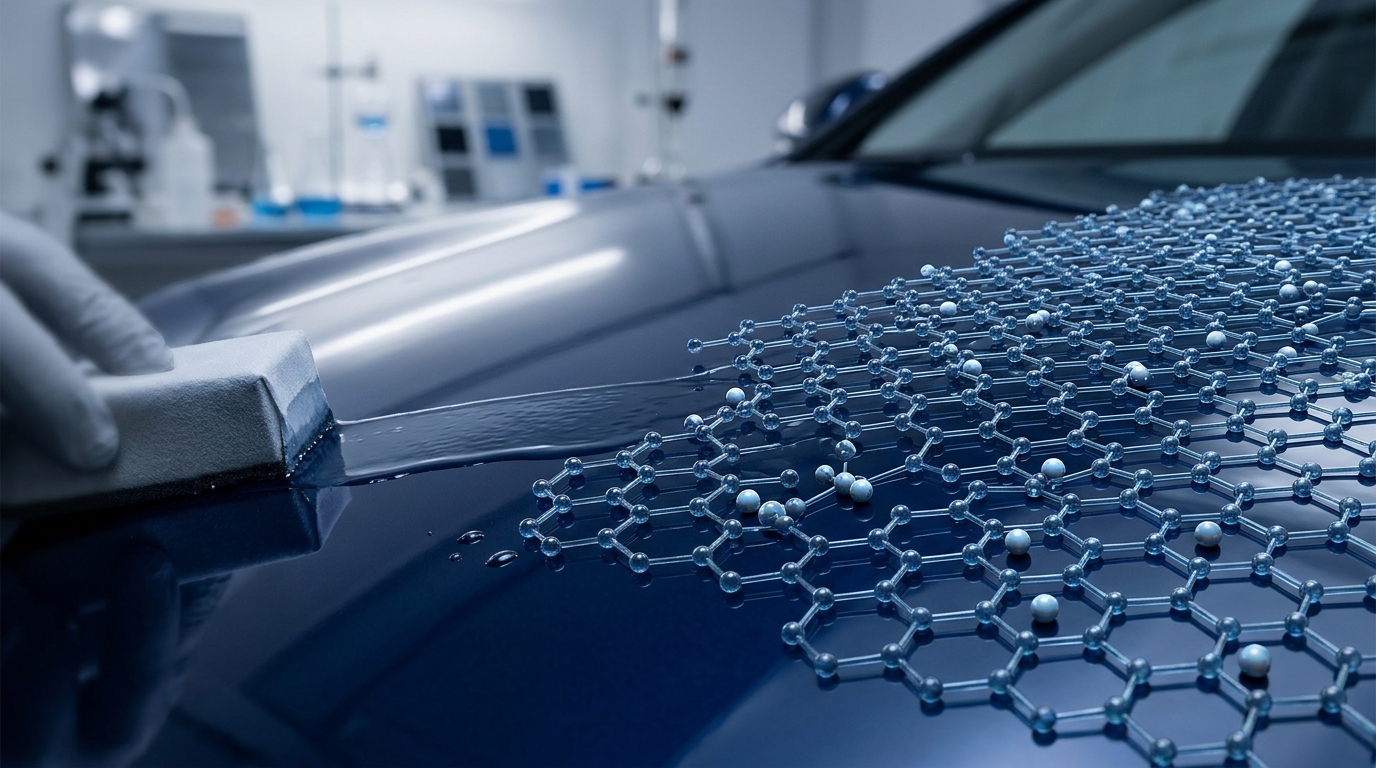
- Spread the product across the working area with the first towel, allowing the emulsified formula to clean and lay down an even film.
- Immediately follow with the second, completely dry microfiber towel to buff the surface to a clear, high-gloss finish before the carrier fluid dries unevenly.
Environmental Considerations
For the smoothest application, work on paint surfaces that are cool to the touch and out of direct, intense sunlight. While modern carrier solvents are formulated to be resilient in warm conditions, excessive panel heat accelerates solvent flash-off, potentially leaving concentrated resin streaks that require a secondary mist to re-emulsify and level out.
Limitations and Realistic Expectations
Distinguishing actual material capabilities from marketing hype is essential for establishing realistic expectations. Graphene spray detailers offer undeniable usability and maintenance advantages, but they operate within clear physical boundaries.
First, spray-applied detailers deposit a microscopic sacrificial barrier measured in single-digit nanometers. Consequently, they do not provide structural scratch resistance against rock chips, harsh wash marring, or deep gouges. True physical abrasion resistance requires thick, high-solids resin coatings or paint protection film.
Second, durability is measured in weeks or a few months, not years. Environmental factors such as automatic wash detergents, road salts, and high-pH degreasers will gradually strip the polymer matrix over time. Reapplication during routine maintenance washes is necessary to preserve the anti-static and hydrophobic benefits.
Finally, while graphene integration reduces heat retention compared to raw silicone oils, it does not make paint immune to mineral deposits. If hard, mineral-laden water evaporates completely on hot vehicle panels, mineral rings will still form, though the slick interface created by the detail spray makes removing them significantly easier during subsequent washes.