GMG doubles energy density in graphene aluminium-ion battery update ahead of 2026 customer testing
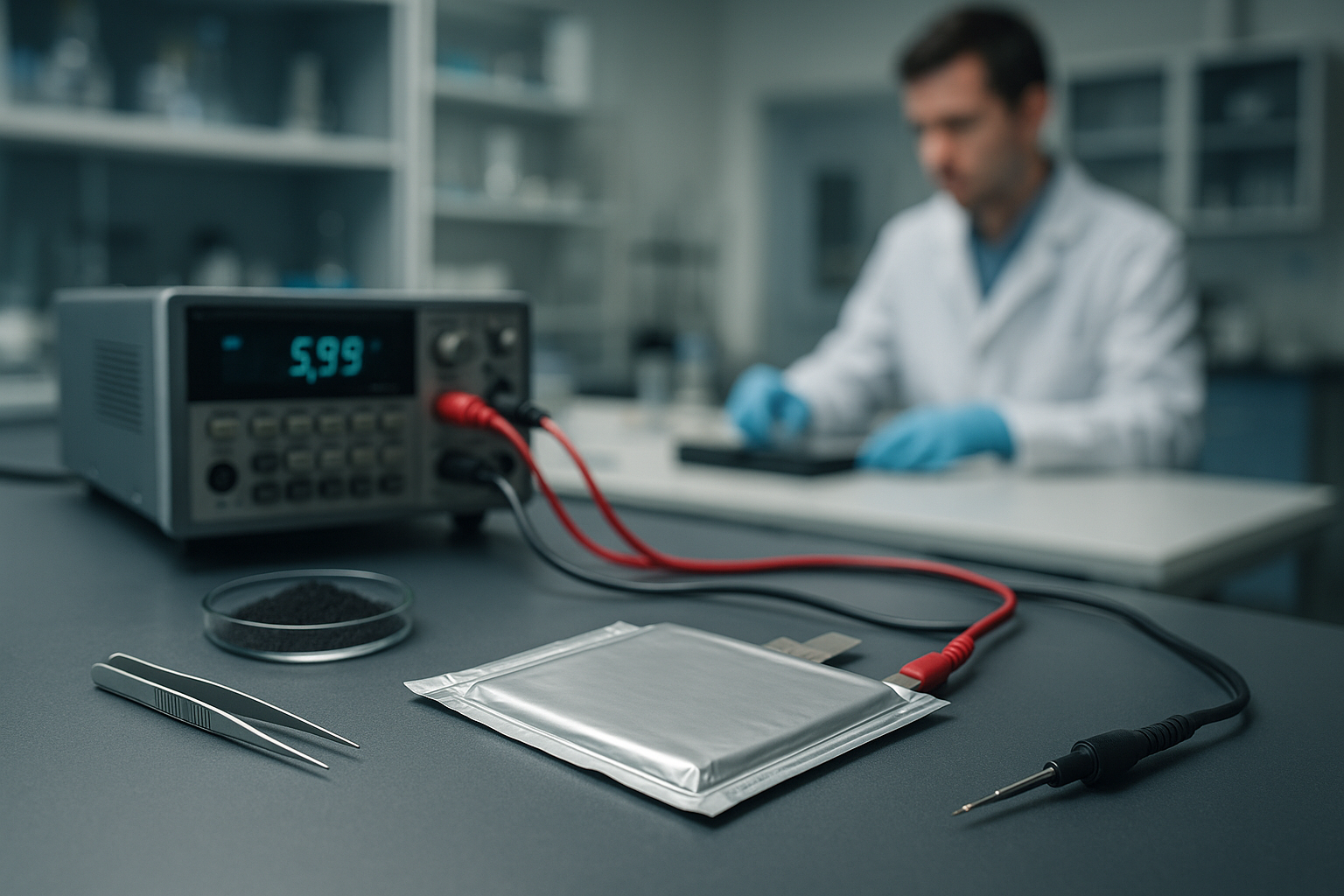
Graphene Manufacturing Group said on April 15, 2026, that the energy density of its six-minute-charging graphene aluminium-ion battery cells has doubled to 49 Wh/kg from 26 Wh/kg in December 2025, marking a concrete step forward in a program still years from broad market release. The company said it expects customer testing in 2026 and small commercial production in 2027.
GMG’s latest battery data shows a sharper performance jump
The company said the result came from testing at the Battery Innovation Center and compared the cells with fast-charging lithium titanate batteries. GMG said the current pouch-cell format remains in development, but the latest figure is its clearest technical improvement yet in a program built around rapid charging rather than maximum energy density alone.
GMG also said it believes the technology could eventually exceed 160 Wh/kg with a one-hour charge and 80 Wh/kg with a six-minute charge, though those targets depend on further work across the cathode, anode, electrolyte and other cell components.
Customer trials are now part of the roadmap
The more newsworthy element is not just the lab result, but the timetable. GMG said it expects customer testing in 2026, followed by small commercial production in 2027. That places the battery in an industrial qualification phase, where repeatability, pack integration and manufacturing compatibility become as important as headline material properties.
The company said the current design could use a plastic battery pack rather than a metal case if development continues to track as expected, which it says could reduce weight, cost and complexity. GMG also said the cells may not require the thermal management systems commonly used in lithium-ion packs.
Why the number matters for graphene batteries
Graphene battery projects have often generated attention long before they generated commercial products. GMG’s update does not change that reality, but it does provide a measurable gain tied to a published development schedule and an identifiable testing partner.
For graphene developers, that combination is more meaningful than a one-off materials claim. A battery program only advances when cell-level performance improves, the format can be manufactured consistently and customers are willing to test it under real operating conditions. GMG’s latest update suggests the company is trying to cross that threshold rather than simply describe it.
The broader commercialization test still lies ahead
Even with the latest improvement, the battery remains at a development stage and not a market-ready product. The next important step is whether the company can sustain the performance gain outside controlled testing and move the cells through qualification without losing the fast-charging properties that make the program distinctive.
For now, the key fact is that GMG has moved its graphene aluminium-ion battery from another incremental claim to a more concrete commercialization milestone, with customer trials set for 2026 and production still aimed at 2027.
Source: Newsfile Corp. via Graphene Manufacturing Group Ltd.
Date: 2026-04-15T07:30:00-04:00