Battery storage becomes the fastest-growing power technology as AI demand reshapes the market
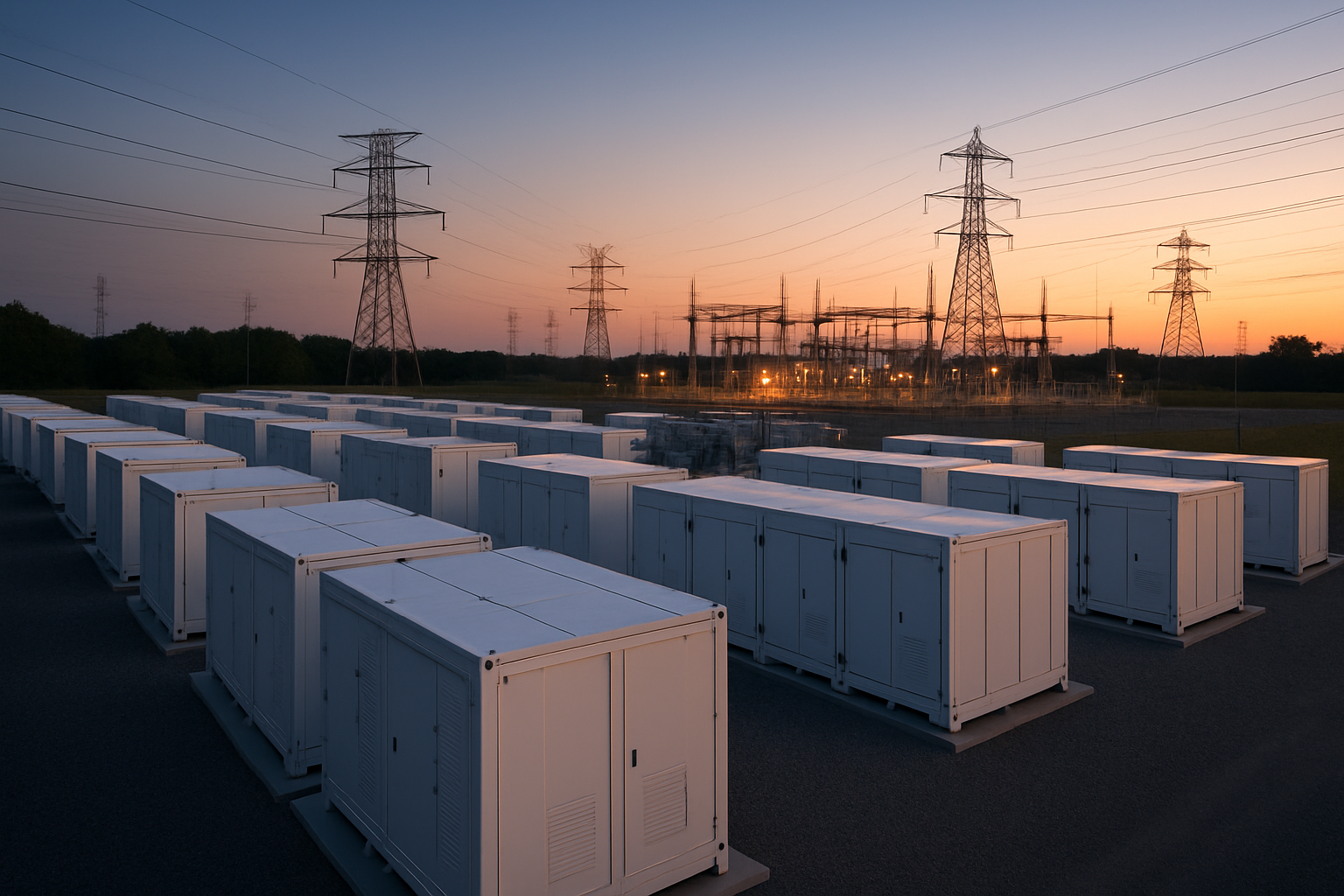
Battery storage emerged as the fastest-growing power-sector technology in 2025, according to the International Energy Agency, which said the world added roughly 110 gigawatts of new battery storage capacity that year. The update lands as automakers and battery suppliers are increasingly trying to repurpose idle electric-vehicle manufacturing capacity for stationary storage systems tied to data-center and grid demand.
IEA: Battery storage outran every other power technology in 2025
The IEA said in a report published on April 20, 2026, that battery storage was the fastest-growing technology in the power sector last year, outpacing all other generation and storage categories. The agency said new battery deployments reached about 110 gigawatts in 2025, a scale it described as larger than the biggest annual capacity additions ever recorded for natural gas.
That growth came alongside a broader surge in electricity use driven by buildings, industry, electric vehicles and data centers. Solar PV supplied the largest share of global energy demand growth, but the battery figure is the clearest marker that storage is now becoming a core part of power-system expansion rather than a niche add-on.
U.S. battery factories are being retooled for stationary storage
Reuters reported on April 15, 2026, that carmakers and battery companies are scrambling to convert underused EV battery plants to make energy-storage systems instead. The article said the shift is being pushed by weaker U.S. electric-vehicle demand and rising electricity needs from AI infrastructure, which is increasing interest in batteries that can support data centers and grid balancing.
Reuters said companies including General Motors, Ford, Panasonic, Samsung SDI and LG Energy Solution are among those trying to reposition capacity for stationary storage. LG Energy Solution told Reuters it is converting three North American factories to produce batteries for storage systems, while GM’s Ultium Cells said last month it would convert an EV battery plant in Tennessee for storage cells.
Why the storage pivot is harder than it looks
The commercial opportunity is real, but the manufacturing transition is not simple. Reuters said most energy storage systems use lithium iron phosphate, or LFP, chemistry, which is cheaper than the nickel-heavy battery chemistry common in North American EV production. Changing a factory to LFP can take as long as 18 months and cost several hundred million dollars, according to battery executives cited in the report.
That makes the current wave of storage demand more than a market story. It is forcing a slow industrial conversion at a time when utilities, data-center developers and automakers are all competing for the same production lines, materials and engineering know-how. The result is a storage market that is growing quickly, but still constrained by chemistry, supply chains and factory retooling timelines.
A power-system technology is turning into an industrial one
What changed in 2025 is not just deployment volume, but the role batteries now play in the energy system. Storage is increasingly being treated as infrastructure that can smooth renewable generation, support grid reliability and provide firm power to large loads that need around-the-clock electricity.
With electricity demand still rising and data-center power needs accelerating, the latest numbers suggest battery storage is moving from a complementary asset to a central piece of the next buildout. The question now is how quickly manufacturers can turn announced conversion plans into actual cells, racks and commissioned projects.
Source: International Energy Agency; Reuters
Date: 2026-04-20; 2026-04-15