Vorbeck Materials Secures $6.6 Million Defense Contract to Scale PFAS-Free Graphene Firefighting Foam
In a significant milestone for the commercialization of advanced nanomaterials, Vorbeck Materials has finalized a $6.6 million contract with the U.S. Defense Logistics Agency (DLA). This agreement supports the rapid scale-up and deployment of the company’s proprietary, graphene-enabled firefighting foam, providing a high-performance alternative to traditional chemical suppressants.
The contract represents a major step forward for the graphene sector, demonstrating that the material is successfully transitioning from laboratory validation to high-volume defense procurement. It also addresses a critical environmental challenge currently facing military and civilian aviation sectors worldwide.
Replacing Toxic Forever Chemicals in Defense Operations
For decades, military bases and airports have relied on aqueous film-forming foams (AFFFs) to extinguish high-intensity fuel fires. However, traditional AFFFs contain per- and polyfluoroalkyl substances (PFAS), commonly known as “forever chemicals”. Due to their persistence in the environment and links to adverse health effects, Congress mandated that the Department of Defense phase out PFAS-based fire suppressants.
The search for viable alternatives has led to the development of graphene-enhanced formulations. By utilizing the unique structural and thermal properties of graphene, Vorbeck Materials has engineered a highly effective, PFAS-free firefighting foam. The nanomaterial helps stabilize the foam structure and enhances its heat-blocking capabilities, allowing it to smother intense liquid fuel fires without relying on toxic fluorinated surfactants.
Seawater Compatibility and Extreme-Cold Resilience
One of the most notable advantages of Vorbeck’s graphene-enabled technology is its ability to be mixed directly with seawater. This capability is highly valuable for naval operations, where shipboard fire suppression systems must rely on readily available ocean water rather than limited freshwater reserves.
Furthermore, the formulation is optimized for extreme environments. Because saltwater has a significantly lower freezing point than freshwater, the foam remains fully operational in sub-zero climates. This dual benefit—seawater compatibility and cold-weather resilience—makes the technology an ideal fit for both marine vessels and arctic military installations.
A Dedicated Manufacturing Footprint in North Dakota
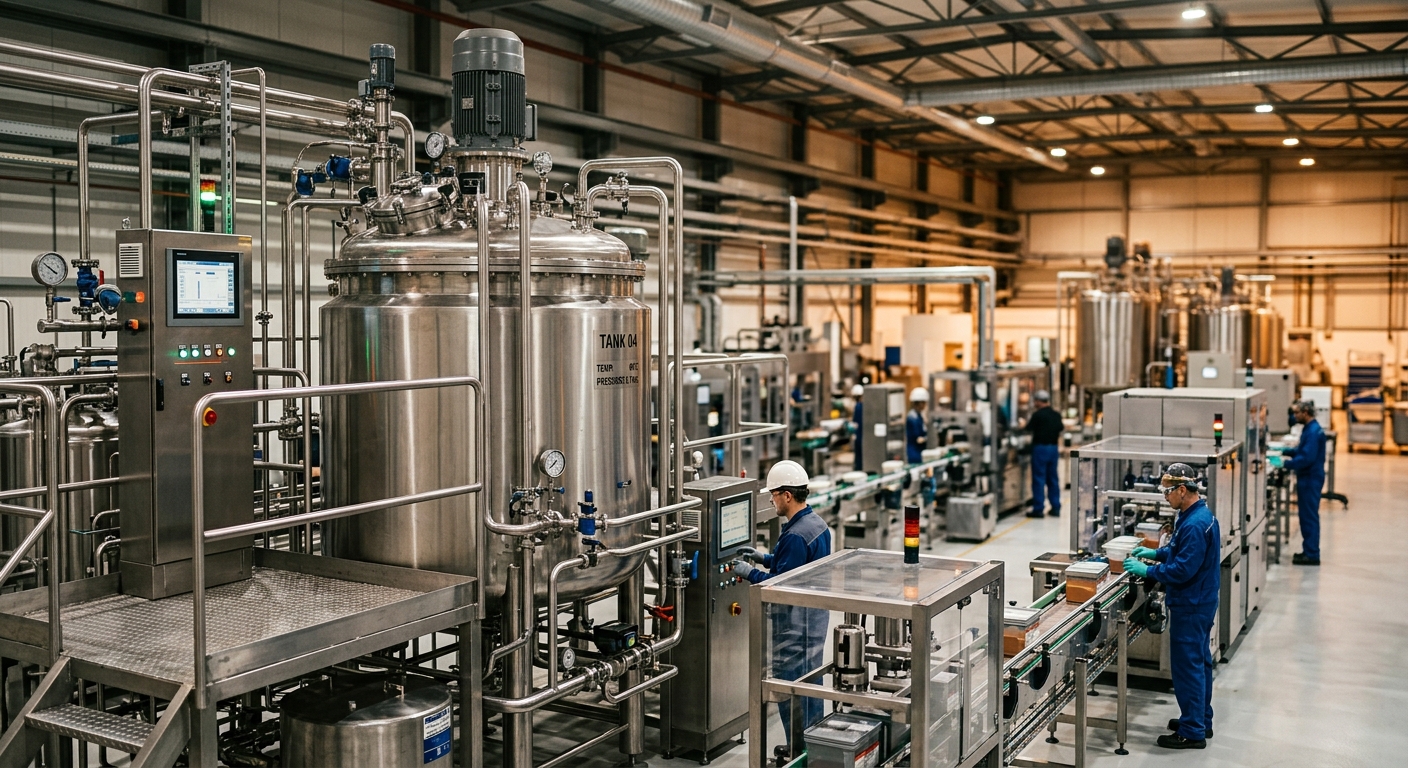
To support the contract and meet the high-volume demand of the U.S. military, Vorbeck Materials is leveraging its newly opened 47,000-square-foot manufacturing facility in Grand Forks, North Dakota. The state-of-the-art plant serves as the primary production hub for the company’s advanced fire suppressants, with an initial capacity target of producing 1 million gallons of the specialized foam annually.
The project is also supported by a collaborative partnership with Graphite One, which aims to secure a robust, domestic supply chain for the natural graphite required to manufacture the graphene additives. This domestic sourcing strategy aligns with broader federal efforts to secure supply chains for critical minerals and advanced materials, reducing reliance on foreign imports.
The Industrial Shift Toward Tangible Procurement Contracts
For years, investors and industry analysts have closely watched the graphene market for signs of mature, commercial-scale adoption. While early interest focused heavily on electronics and energy storage, the Vorbeck DLA contract highlights how industrial-grade applications are leading the current wave of market penetration.
Securing a multi-million dollar federal procurement deal provides the kind of predictable revenue and operational validation that the advanced materials sector has long sought. Beyond fire suppressants, Vorbeck is also actively developing flexible, lightweight graphene-based antennas for defense and aerospace applications, indicating that the company’s industrial footprint in North Dakota could expand into other high-tech defense sectors in the near future.