Bangladeshi Researchers Convert Jute Waste into Graphene to Cut Import Costs and Enter Nanomaterials Market
In a major development for agricultural sustainability and advanced materials science, a research team led by Bangladeshi scientists has successfully transformed discarded jute sticks into high-purity three-dimensional graphene frameworks and eco-friendly printing ink. The breakthrough could dramatically reduce Bangladesh’s reliance on expensive industrial imports while opening a direct pathway for the country to enter the rapidly growing global nanotechnology market.
Bangladesh is the world’s second-largest producer and top exporter of jute, commonly referred to as the “golden fiber”. While the outer fiber is widely harvested for textiles, burlap, and ropes, the woody inner core—known as jute sticks—is largely treated as agricultural waste. In rural regions, massive piles of these dried sticks are typically burned as low-grade cooking fuel or utilized for cheap fencing. This new research re-imagines this abundant biomass as a highly valuable precursor for advanced industrial carbon products.
Transforming the ‘Golden Fiber’ into Advanced Nanomaterials
The research, led by Dr. Md Abdul Aziz, a scientist at the King Fahd University of Petroleum and Minerals (KFUPM) in Saudi Arabia, alongside international collaborators, focused on converting this low-value agricultural byproduct into high-performance materials. The team developed two distinct processes to extract commercial-grade carbon materials from the jute sticks.
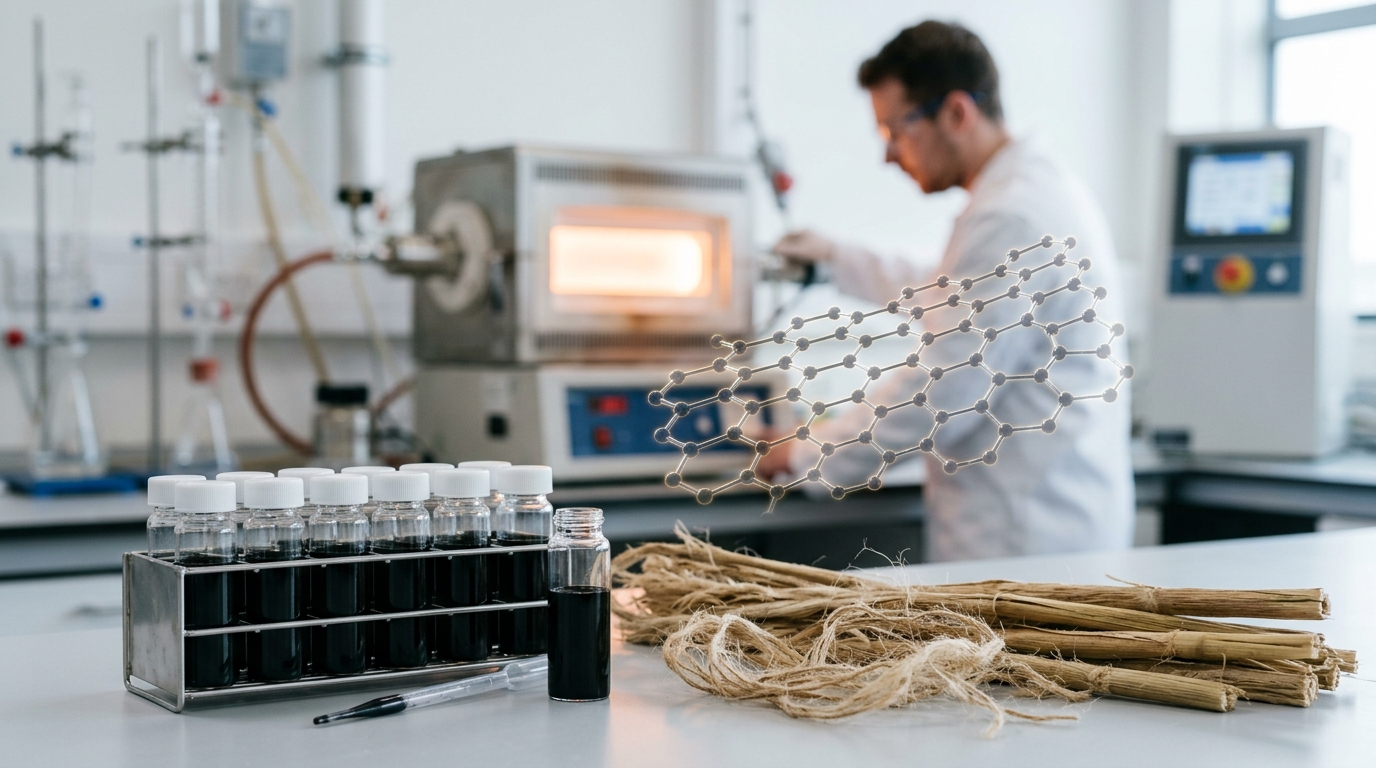
To produce eco-friendly printing ink, the researchers pyrolyzed the jute sticks using a custom-designed pilot furnace. This specialized system is engineered to capture and recycle the hazardous gases generated during the thermal decomposition process, reusing them as fuel to power the system and significantly reducing environmental emissions. The resulting carbon material was then ball-milled into submicron particles averaging 250 nanometers in size. When dispersed into a water-based solution containing biocompatible ethylene glycol and isopropyl alcohol, it yielded a highly stable, non-toxic black printing ink.
High-Temperature Synthesis of Three-Dimensional Graphene
Beyond printing ink, the researchers achieved a more complex milestone by synthesizing graphene from the same agricultural waste. The team first processed the powdered jute sticks into activated carbon nanosheets. This precursor was then subjected to extreme thermal treatment, heating the material to approximately 2,700 degrees Celsius (4,892 degrees Fahrenheit) under inert conditions.
This ultra-high-temperature process forced the carbon atoms to self-assemble into a three-dimensional interconnected graphene framework. Characterization of the final material revealed exceptional properties, including:
- High chemical purity and low defect density.
- Strong structural stability and robust electrical conductivity.
- An interconnected porous network ideal for energy storage and electronic applications.
By achieving a high-quality 3D graphene structure from a renewable, low-cost organic source, the researchers have demonstrated a scalable alternative to conventional graphene synthesis methods, which often rely on fossil-fuel-derived hydrocarbons or expensive chemical vapor deposition processes.
Economic and Environmental Implications of Jute-Derived Materials
The commercial implications of this dual-innovation are substantial. Bangladesh’s printing and packaging sectors are currently almost entirely dependent on imported ink. The domestic market for commercial ink is valued at approximately $245 million annually, with local printing presses consuming roughly $163 million worth of imported ink and the laser, inkjet, and pen industries importing the rest. According to the research findings, producing ink from locally sourced jute sticks could cut manufacturing costs by up to 10 times compared to current import prices.
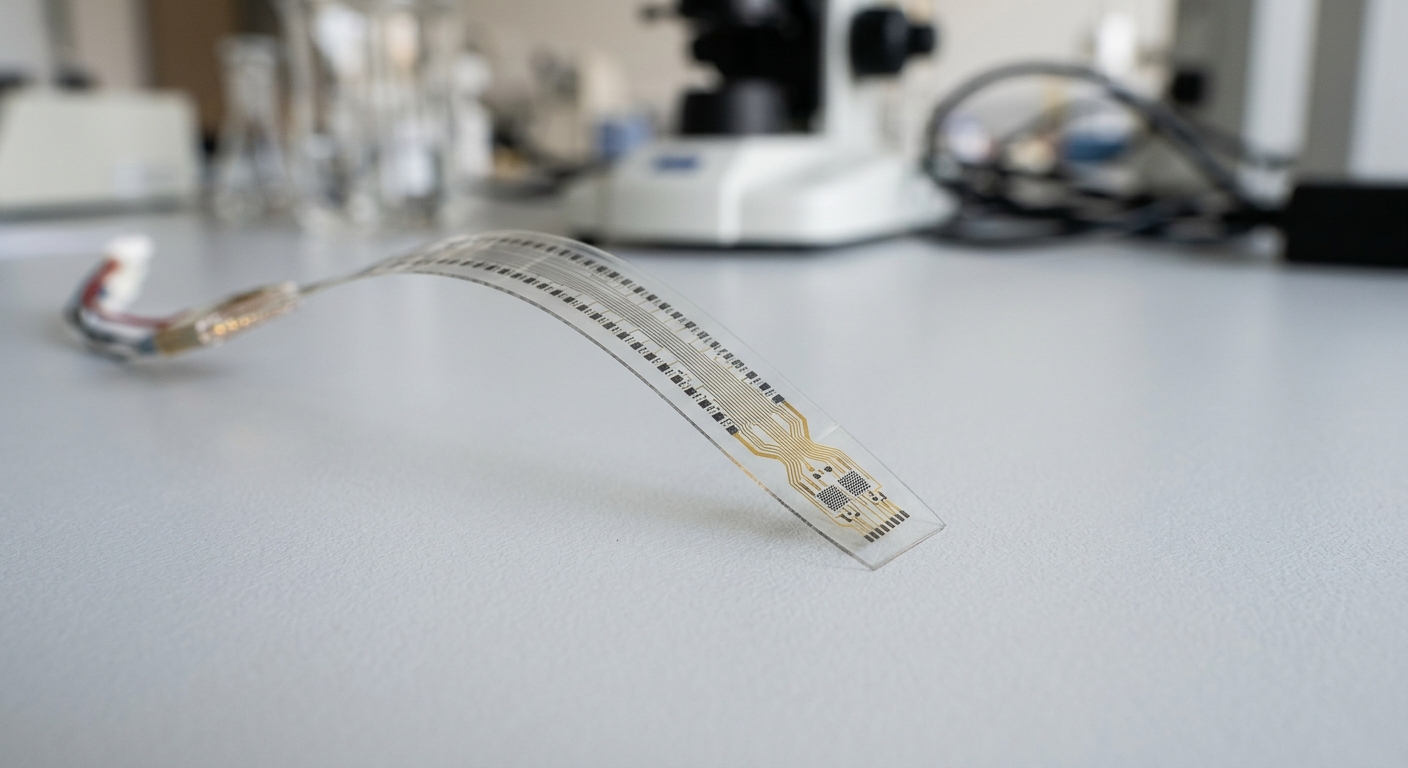
Furthermore, the ability to synthesize graphene domestically aligns with the needs of global industries. Graphene is highly sought after for next-generation applications, including advanced lithium-ion battery anodes, semiconductors, conductive coatings, water purification systems, and flexible electronics. Utilizing a circular economy model that recycles its own process gases makes this synthesis route far more environmentally friendly than traditional carbon black and graphene manufacturing methods.
Positioning Bangladesh in the Global Nanomaterials Landscape
This breakthrough offers a blueprint for how agricultural nations can leverage waste streams to secure a foothold in high-tech industries. The global graphene market is projected to expand from $1.65 billion in 2025 to over $9 billion by 2030. By establishing a reliable, domestic supply chain of high-purity graphene from jute, Bangladesh could transition from an exporter of raw agricultural commodities to a key supplier of advanced nanomaterials.
As the global manufacturing sector continues to prioritize decarbonization and sustainable sourcing, jute-derived graphene represents a timely convergence of green chemistry and industrial scaling. The research team is now looking toward commercial scaling and partnerships to transition these laboratory achievements into industrial-scale production facilities.