GIT Coatings Launches Graphene Propeller Coating to Cut Marine Fuel Consumption
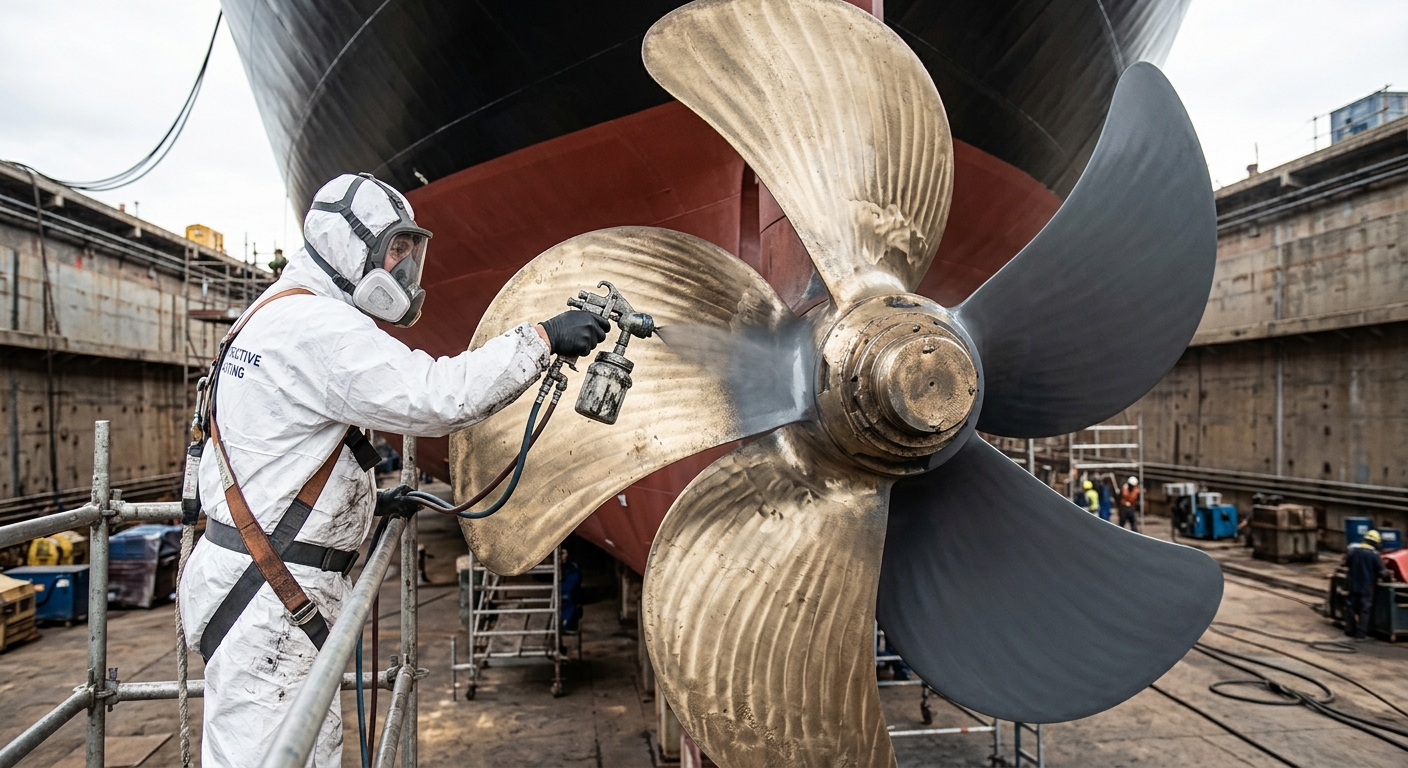
At the Posidonia 2026 maritime exhibition in Athens, Greece, Canadian advanced materials firm GIT Coatings officially launched XGIT-VORTEX™, a next-generation, graphene-based propeller coating system designed to dramatically improve shipping efficiency. The launch was marked by a joint ceremony with global maritime classification society Lloyd’s Register, which has granted official Type Approval to the new technology.
The shipping industry faces mounting regulatory pressure to decarbonize, particularly through frameworks like the Carbon Intensity Indicator (CII) and the European Union Emissions Trading System (EU ETS). Propeller efficiency represents one of the most immediate, cost-effective operational levers to achieve these goals, as a fouled or damaged propeller significantly increases engine drag and fuel burn.
Addressing Cavitation and Marine Fouling
Traditional marine propellers require periodic underwater polishing to remove marine growth and restore surface smoothness. However, polishing is a temporary fix, and the mechanical stress of cavitation—the formation and collapse of vapor bubbles at high speeds—frequently damages standard coatings, leading to rough surfaces and performance degradation.
The newly unveiled XGIT-VORTEX™ system addresses these challenges through a dedicated three-layer architecture powered by the company’s proprietary Amphiphilic Graphene Nanonetwork (AGN) technology. This molecular structure provides a unique combination of properties:
- A foul-release topcoat that deters marine organisms from attaching to the blade surfaces without relying on toxic biocides.
- A reinforced graphene mid-coat that acts as a structural buffer, absorbing cavitation stress and reducing physical damage at the blade tips and edges.
- An ultra-low-friction surface that maintains hydrodynamic smoothness over multi-year drydock intervals.
Commercial and Environmental Milestones
According to data released by GIT Coatings, the system delivers up to 5% fuel savings for commercial vessels. By preserving the propeller’s smooth, low-friction surface, operators can avoid the performance drop-offs that typically occur between drydock cycles.
The Type Approval from Lloyd’s Register provides independent technical assurance, giving shipowners the confidence to adopt the advanced nanotechnology at scale. The certification follows a series of successful real-world deployments; the company has already surpassed 600 vessel and propeller coating applications globally since 2022.
For shipowners and freight operators, the commercial implications are substantial. Reducing fuel consumption directly lowers bunker fuel costs and helps mitigate exposure to carbon taxes, while the durable coating extends maintenance intervals and improves fleet reliability.