South Korea’s battery makers push solid-state materials into public view at InterBattery 2026
South Korea’s battery industry used InterBattery 2026 in Seoul to put all-solid-state battery materials in front of a global audience, underscoring how next-generation cells are moving from research programs into industrial show-and-tell. The event, held in March 2026, featured materials displays and prototype batteries tied to the country’s largest cell and materials groups, including EcoPro and Samsung SDI.
EcoPro’s materials display puts the supply chain on the stand
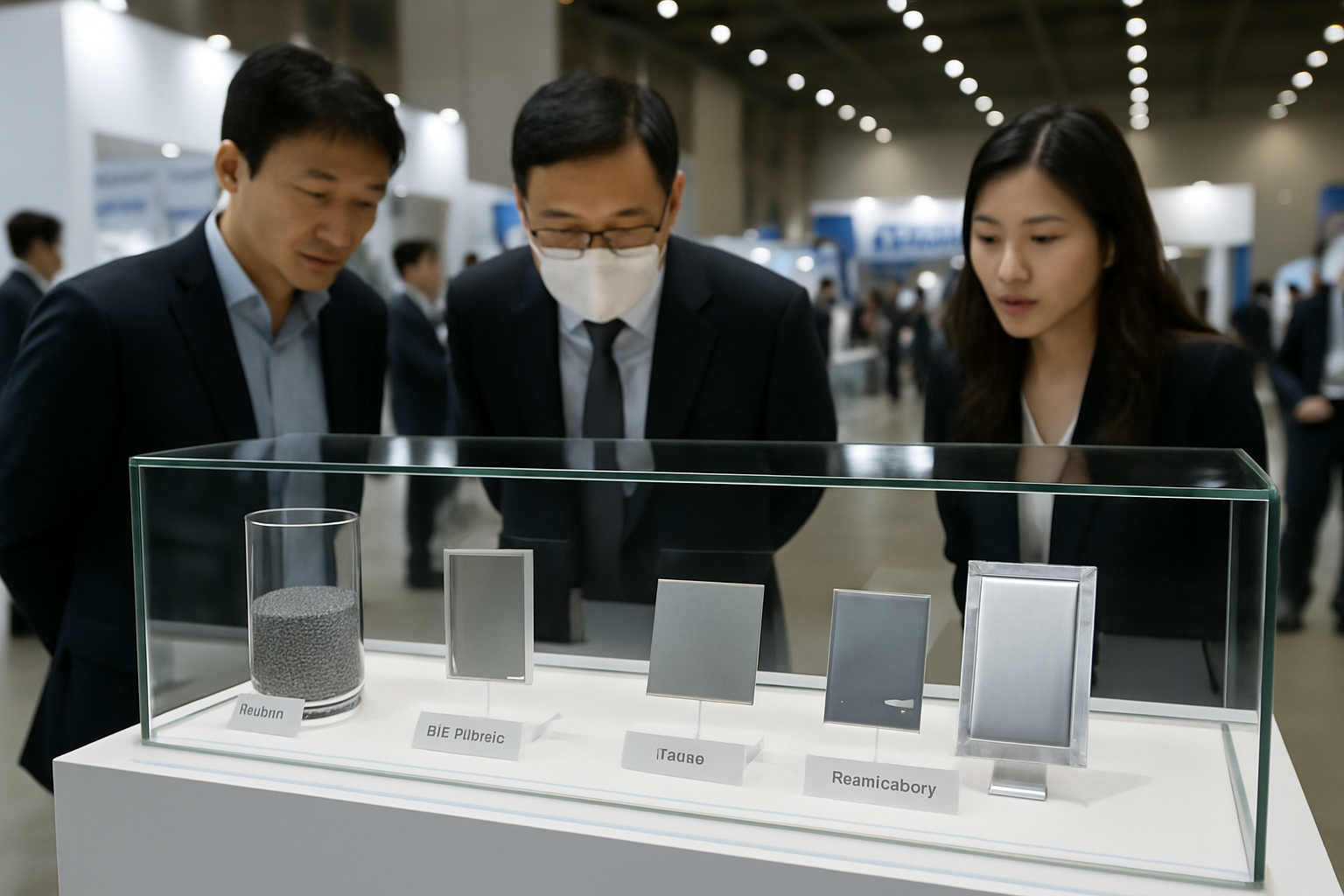
One of the clearest signals came from EcoPro’s booth, which Reuters Connect described as featuring core materials for all-solid-state batteries, including cathode materials, lithium sulfide, solid electrolyte and lithium metal. That mix matters because solid-state batteries depend on a tighter and more technically demanding materials stack than conventional lithium-ion cells, with each component affecting ionic transport, stability and manufacturability.
For the industry, the significance is not simply that prototypes exist. It is that suppliers are now presenting the full materials chain together, suggesting that commercialization is increasingly being framed as a manufacturing problem rather than a pure laboratory challenge.
Samsung SDI’s pouch cell adds a robotics target
AJU Press reported that Samsung SDI displayed a pouch-type all-solid-state battery aimed at robotics during the same show. That kind of public targeting is notable because robotics applications can tolerate different trade-offs than passenger EVs, giving battery makers a narrower but more realistic entry point for first-generation solid-state products.
In practice, that suggests the earliest commercial cases may be defined less by headline range claims and more by reliability, package size and safety advantages where thermal stability and energy density are both valuable.
A trade show, but also a manufacturing test
InterBattery 2026 offered a visible checkpoint for a sector that has spent years promising solid-state breakthroughs. The materials on display pointed to the bottlenecks that still matter most: how to produce stable solid electrolytes, how to pair them with high-performance cathodes and lithium metal, and how to scale those materials without breaking yield or cost targets.
That is why the event drew attention beyond the exhibition floor. The companies involved were not announcing mass production, but they were making a public case that the raw materials and cell architectures needed for next-generation batteries are now far enough along to be shown as part of an industrial roadmap.
Source: Reuters Connect / AJU Press
Date: 2026-03-12