Graphene “nano-aquariums” let Manchester team film gold atoms in liquid at atomic resolution
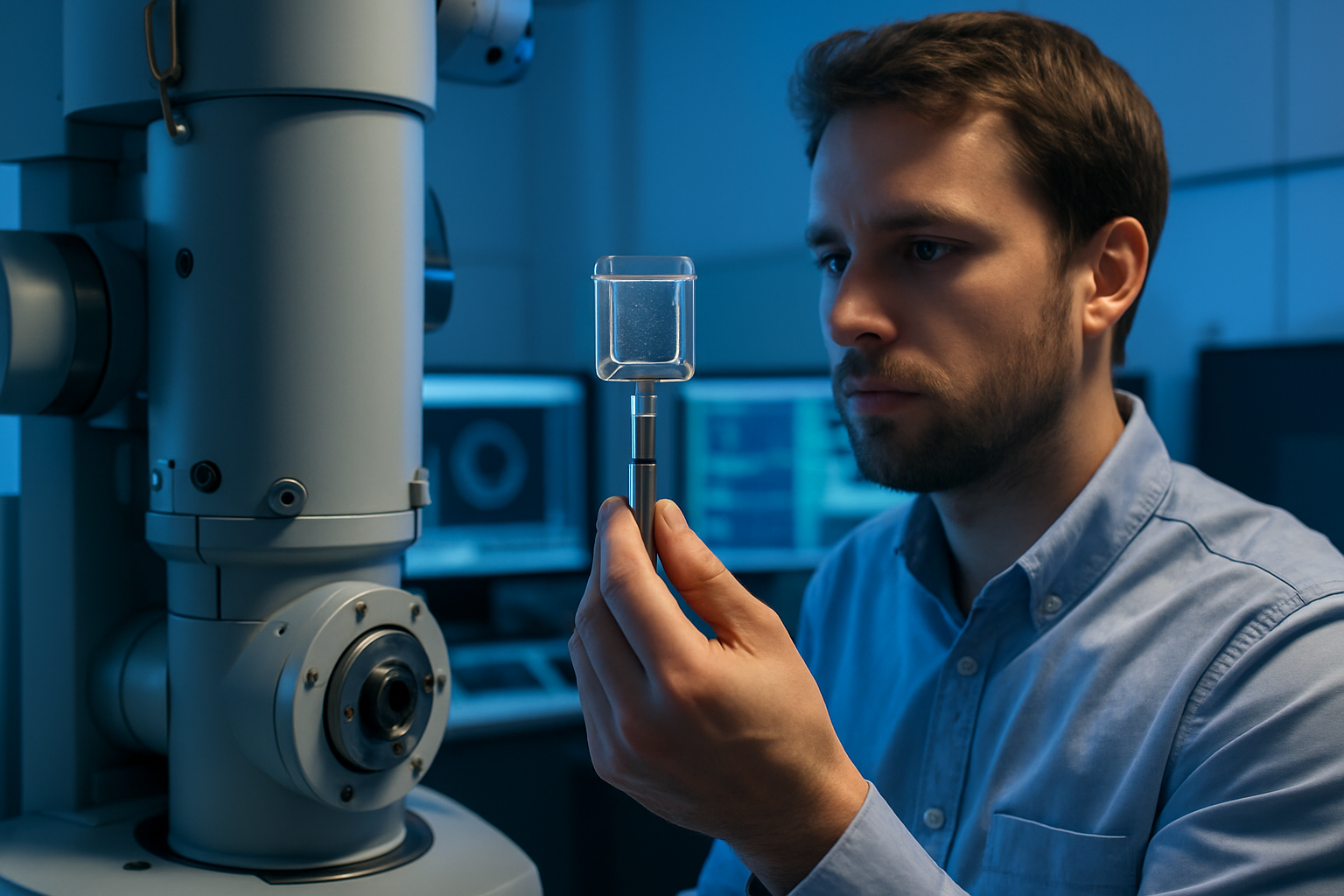
Researchers at the University of Manchester say they have used graphene-based “nano-aquariums” to capture atomic-resolution video of individual gold atoms moving in liquid, a technical advance that could give scientists a far clearer view of chemistry at the solid-liquid boundary. The team says the method works in organic solvents as well as water, widening the range of processes that can be studied at the atomic scale.
Main Development
The study, reported on April 2, 2026, describes a technique built around graphene cells that trap tiny amounts of liquid between ultra-thin carbon layers. That setup allowed the researchers to observe gold atoms in motion with enough precision to record their behavior as they interacted with a surface and surrounding liquid.
According to the University of Manchester-led team, the approach is the first to deliver atomic-resolution imaging of this kind across a broad range of non-aqueous solvents. That matters because many important chemical reactions in energy storage, catalysis and materials processing take place in liquids other than water.
Industry Context
Graphene has long been promoted as a platform material because it is thin, strong and highly conductive. In research settings, those same properties make it useful as a nearly transparent enclosure for experiments that would otherwise be too difficult to observe directly.
Until now, high-resolution liquid microscopy has been largely limited by the difficulty of keeping samples stable and visible at the same time. Extending that capability into organic solvents could open a broader set of experiments for labs studying how atoms, ions and molecules behave under realistic operating conditions.
Strategic Importance
The practical value of the advance is not the image itself but the measurement window it creates. Better visibility at the atomic level can help researchers test how candidate materials age, react or reorganize in environments relevant to batteries, catalysts and other clean-energy systems.
That could reduce guesswork in early-stage materials development, where small changes at a surface can determine whether a compound works in the lab or fails in a real device.
What Comes Next
The Manchester team’s result is still a research milestone rather than a commercial product, but it gives graphene another role beyond the usual electronics narrative. For now, the key takeaway is simple: scientists have found a way to watch liquid-phase atomic behavior with a level of detail that was previously out of reach.
Source Reference
Primary source: Phys.org / University of Manchester
Source date: 2026-04-02T00:00:00Z
Reference: Read original source