Solidion Technology Launches Graphene-Based Space Battery to Power Extreme-Climate Missions
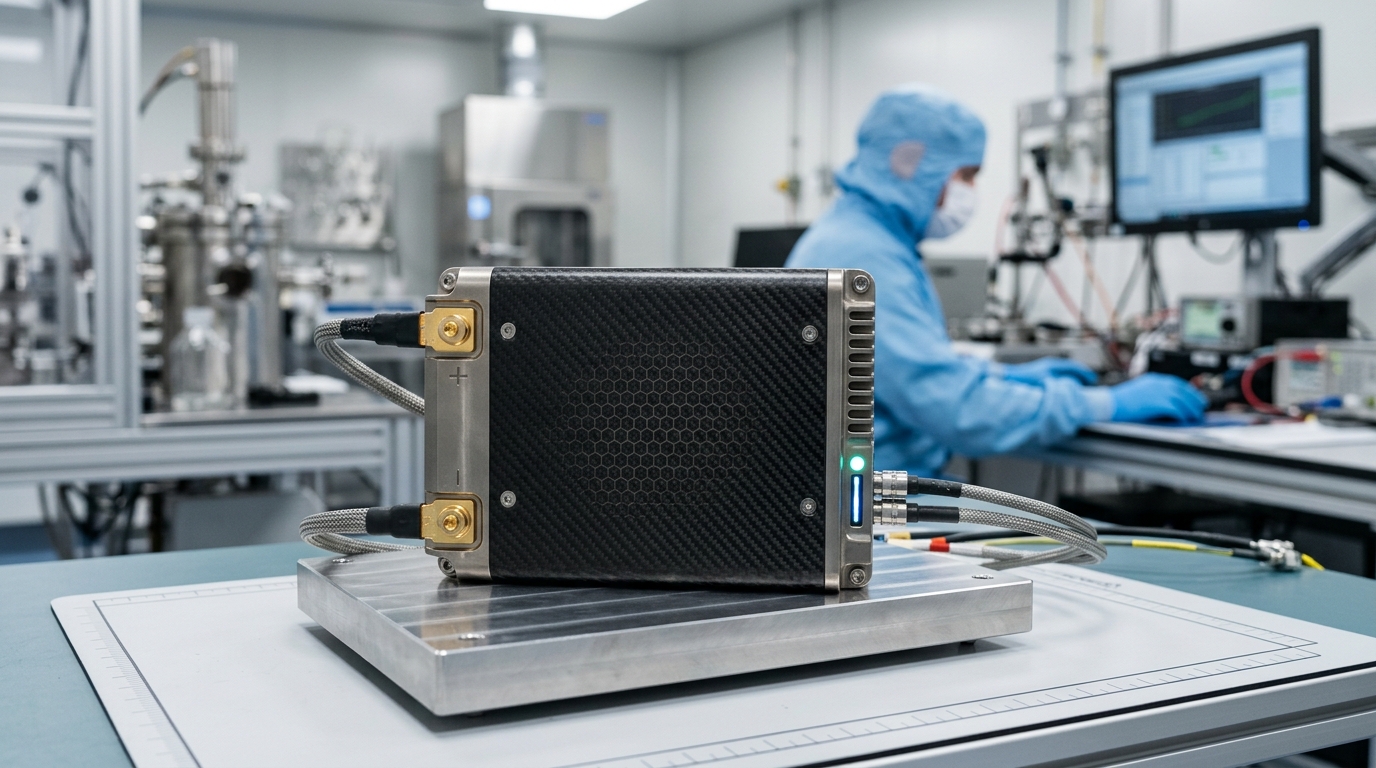
On June 4, 2026, Solidion Technology Inc. announced a major technological milestone with the launch of its patented Generation Extreme-Climate Battery (Gen-ECB) platform. This advanced energy storage technology leverages the unique properties of graphene to provide reliable power in the most hostile environments, specifically targeting the rapidly expanding commercial space sector, orbital artificial intelligence data centers, and lunar infrastructure.
The announcement triggered an immediate reaction on Wall Street, with the company’s stock (NASDAQ: STI) skyrocketing as investors recognized the commercial potential of a battery that can withstand the severe temperature swings and radiation of space.
Thermal Regulation in the Vacuum of Space
Traditional lithium-ion batteries struggle in extreme environments. They operate efficiently only within a narrow temperature window, usually between -20°C and 40°C. In the vacuum of space, temperatures can plunge to near absolute zero or spike under direct solar radiation. To prevent capacity loss or catastrophic thermal runaway, spacecraft have traditionally relied on heavy, complex thermal management systems that add significant weight and cost to launches.
Solidion Technology’s Gen-ECB platform addresses this bottleneck by utilizing the exceptional thermal conductivity and radiation resistance of graphene. The material acts as an active thermal regulator within the battery cells. It rapidly dissipates heat to prevent thermal runaway when temperatures climb and can draw warmth from external sources, such as solar panels, to maintain stable operations in extreme cold. This allows the battery system to operate reliably from −80°C to +60°C, with ongoing development aiming to expand this range even further.
Strategic Focus on the Space and Lunar Economy
The Gen-ECB platform is engineered to support next-generation space missions, including NASA’s Artemis program and SpaceX’s Starship operations. Reliable power is crucial for lunar rovers, surface habitats, and localized power grids, where systems must endure the two-week-long, freezing lunar night. Solidion’s graphene-based battery has already demonstrated tested performance exceeding 500 charge cycles at −40°C, establishing a vital durability benchmark.
Beyond lunar exploration, the technology is highly relevant for Low Earth Orbit (LEO) AI data centers and satellite constellations. As orbital computing demands grow, managing the thermal load of AI hardware in space becomes a critical challenge. Graphene-enhanced batteries provide a lightweight, high-energy-density solution that maximizes operational uptime without the payload penalty of heavy cooling systems.
Complementing the Gen-ECB, Solidion’s broader portfolio includes silicon-rich all-solid-state lithium-ion cells, anode-less lithium metal, and lithium-sulfur batteries designed to target energy densities of 380+ Wh/kg using non-flammable solid electrolytes.
Market Response and Intellectual Property Moat
Following the announcement, STI stock surged dramatically, experiencing an intraday rally of over 350% to reach a 52-week high. The market’s enthusiastic response reflects the growing transition from pure research and development to the commercial implementation of graphene technologies.
While Solidion recently marked a commercial milestone by reporting its first-ever quarterly revenue, the company’s long-term value proposition is heavily anchored in its massive intellectual property portfolio. Solidion holds more than 385 patents, which includes a strategic patent monetization agreement with Hilco Global that values its IP assets at approximately $750 million. By integrating graphene into its patented battery architectures, the company is positioning itself at the forefront of the commercial space boom and the next generation of extreme-climate energy storage.