IISc grows wafer-scale 2D magnetic films in push toward device-ready nanomaterials
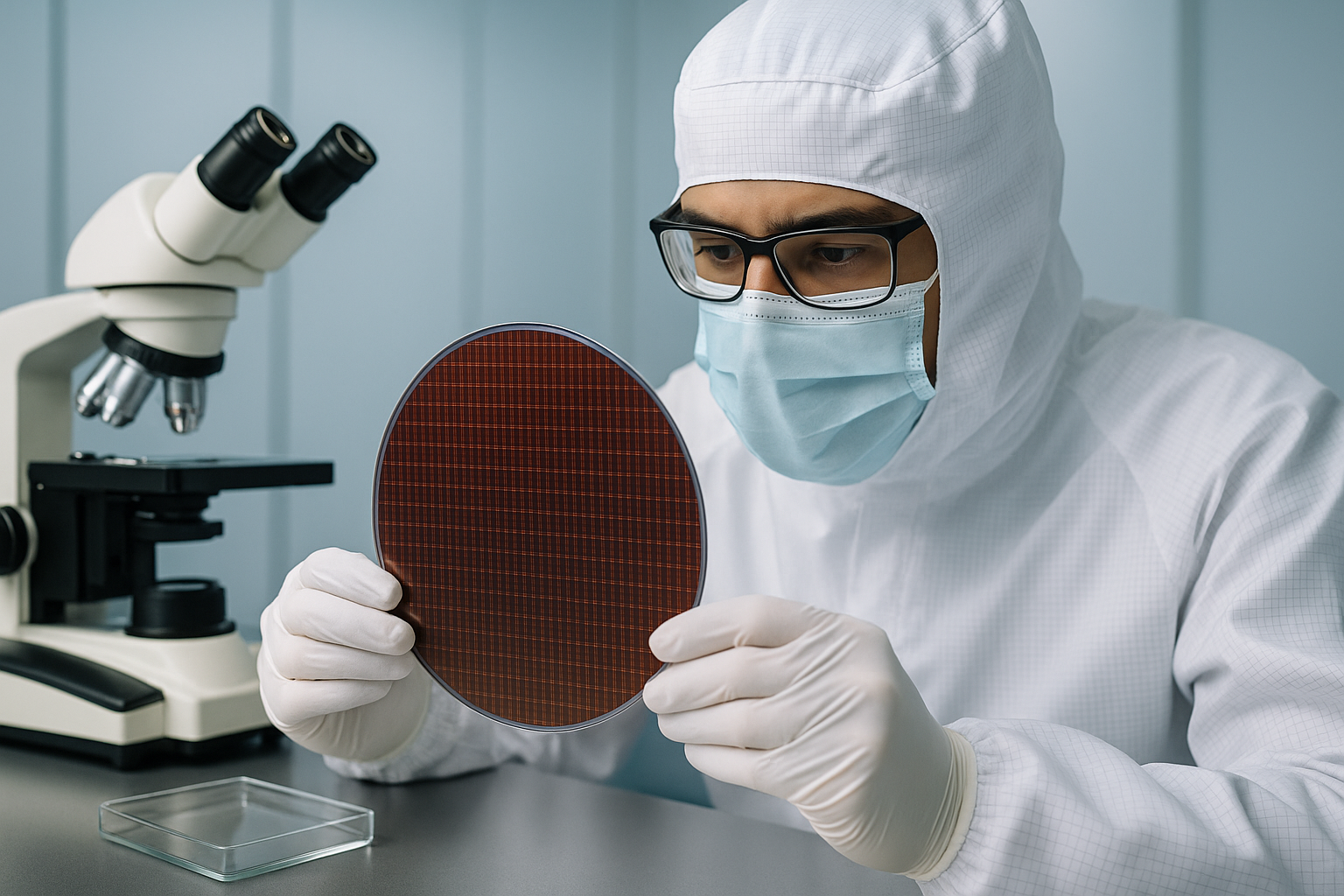
Researchers at the Indian Institute of Science have reported a method for growing centimeter-scale films of a 2D magnetic material, chromium chloride, using a tailored vapor deposition process that reduces defects and improves crystal alignment. The work, published on April 19, 2026, addresses one of the field’s persistent manufacturing problems: how to move beyond micrometer-sized flakes and into formats suitable for electronic integration.
Centimeter-scale chromium chloride films replace lab-only flakes
The team said the new process produced high-quality 2D magnetic CrCl3 over wafer-scale areas, rather than the tiny exfoliated pieces that have dominated earlier research. The group used physical vapor transport deposition, then refined the growth environment to limit oxygen and moisture, cut unwanted radiative heating and push carrier gas flow well beyond conventional settings.
Those changes helped the researchers form smoother, more ordered films on synthetic mica, which they identified as the best substrate among the options they tested. The films could also be transferred to other substrates, an important step if the material is to be used in chips or other electronic platforms.
Why wafer-scale growth changes the commercialization case
For 2D magnetic materials, scale has been the sticking point. A material that performs well in a microscope image is not yet a manufacturing platform if it only exists as a fragile flake. Wafer-scale growth makes the material more relevant to spintronic components, sensors and memory concepts that depend on uniformity across large areas.
The researchers said the same workflow should be adaptable to other air-sensitive or light-sensitive materials, which broadens the potential value beyond chromium chloride alone. That matters because the commercial path for many nanomaterials depends less on headline performance than on whether the material can be grown reproducibly and handled without destroying the structure that gives it its properties.
Substrate choice and gas flow turned out to be decisive
The team combined experiments with simulations to understand why the method worked. Their modeling suggested that synthetic mica supports easier diffusion and more ordered chain formation during growth, helping the film develop the structure needed for magnetic performance. The researchers also found that higher-than-usual carrier gas flow contributed to coalesced films with less surface roughness.
That combination of substrate engineering, atmosphere control and process tuning is the kind of detail that often separates a promising nanomaterial from a scalable one. In this case, the advance is less about a new compound than about a new manufacturing route that makes an existing compound more usable.
A small material advance with a large device ambition
The broader significance is that wafer-scale 2D magnetic materials remain a hard engineering target, and this result shows a credible path around one of the central bottlenecks. If the process holds up in broader testing, it could give device designers a more realistic starting point for integrating atomically thin magnetic layers into future electronics.
For now, the key milestone is not a finished product but a fabrication proof point: a magnetic nanomaterial once limited to tiny flakes has been grown in a form that looks far more compatible with manufacturing.
Source: Phys.org / Indian Institute of Science
Date: 2026-04-19