NIMS unveils pinax, a provenance system for materials discovery workflows
Japan’s National Institute for Materials Science has introduced pinax, a new provenance management system designed to track materials discovery workflows end to end, including the machine-learning steps and decision-making that often sit behind a final result. The platform was published on April 22, 2026, in Science and Technology of Advanced Materials: Methods, and arrives as research groups push harder to use AI and computational tools to accelerate materials development.
pinax records the path to a materials result
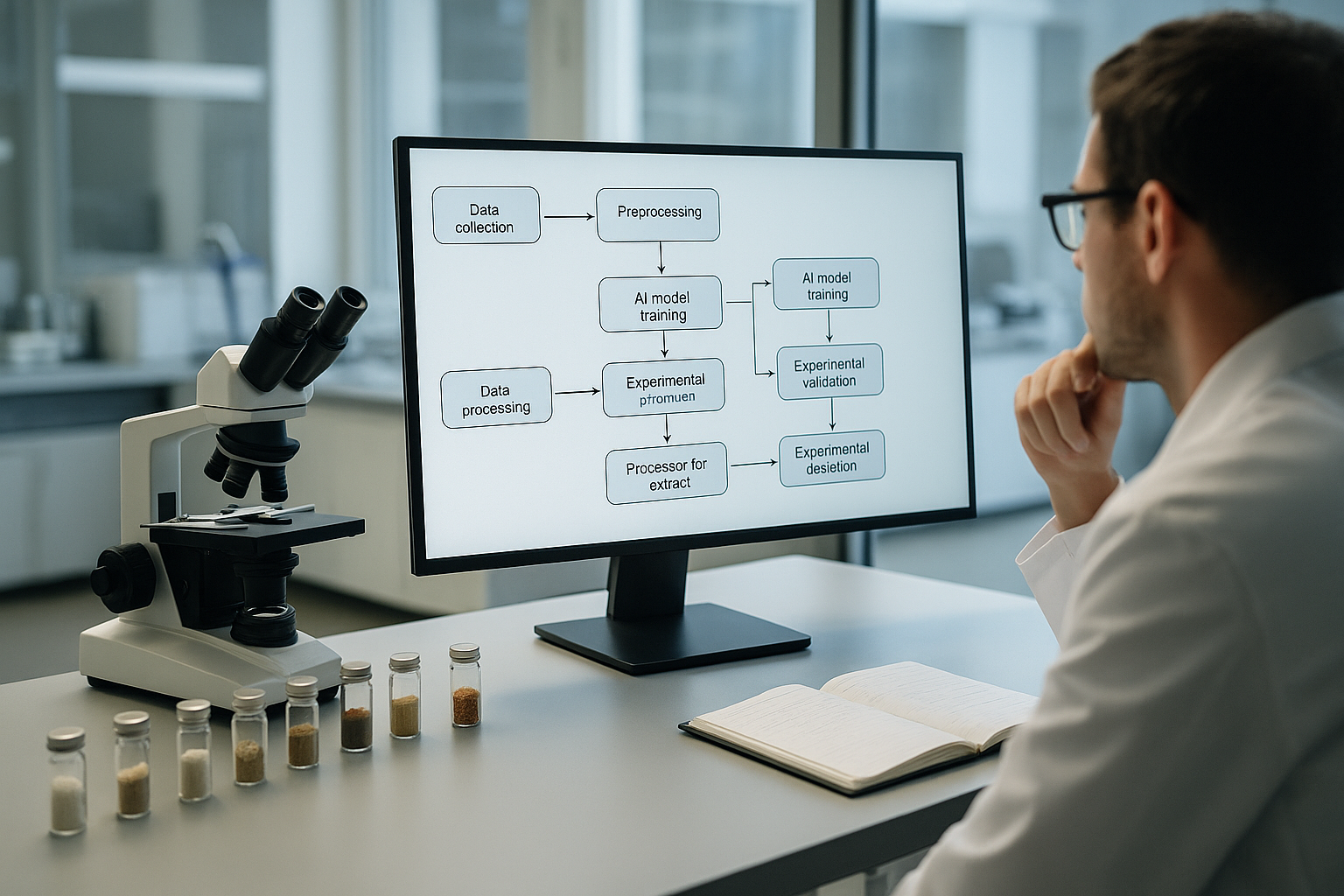
Unlike a conventional lab notebook or dataset repository, pinax is built to preserve the chain of reasoning in a materials project. That means it is meant to capture the data, model outputs and workflow history that lead researchers from an initial idea to a candidate material, not just the final measurement or simulation.
That distinction matters in materials science, where a promising result may depend on many iterations of screening, synthesis and modeling. As the field leans more heavily on automated and data-driven methods, the ability to trace how a conclusion was reached becomes a practical requirement rather than an administrative extra.
Why provenance matters for AI-assisted discovery
The immediate value of a system like pinax is reproducibility. If a model recommends a new formulation or a synthesis path, other researchers need to know which data shaped that recommendation, which steps were discarded and where assumptions entered the process. Without that record, promising results can be difficult to verify or reuse.
For materials teams working across institutions or moving toward industrial scale-up, provenance also reduces the friction that often slows collaboration. A shared audit trail can make it easier to compare workflows, reproduce hits and identify which parts of a discovery pipeline are reliable enough to transfer into a manufacturing environment.
What changes for materials labs now
The practical shift is that provenance becomes part of the research infrastructure, not an afterthought. If adopted widely, systems like pinax could make it easier to manage large volumes of experimental and computational data while keeping the rationale for each design choice attached to the record.
That could be especially useful in fast-moving areas such as battery materials, catalysts, semiconductors and other advanced materials programs where teams cycle through many candidate structures before finding one worth scaling. In those settings, a clearer process record can shorten the time between a lab finding and a decision to pursue it further.
A small but important step toward more auditable materials science
Pinax does not represent a new material itself, but it targets a growing bottleneck in how advanced materials are discovered. As research groups use more machine learning and generate more complex datasets, the systems that document how those results were produced may become as important as the models that generated them.
For now, the development is notable less for a single performance claim than for the infrastructure it adds to the field: a way to make advanced materials discovery more traceable, shareable and ready for the next stage of development.
Source: Phys.org / National Institute for Materials Science
Date: 2026-04-22