SAIC puts semi-solid-state battery materials into production models in 2026
SAIC said on April 3, 2026, that it will begin fitting production vehicles with semi-solid-state battery packs this year, one of the clearest signs yet that next-generation battery materials are moving out of pilot programs and into real manufacturing lines. The announcement ties a chemistry once treated as a laboratory milestone to an actual commercial rollout, even as full solid-state batteries remain further off.
SAIC’s April 3 rollout pushes semi-solid-state packs into volume vehicles
The Chinese automaker said the packs will be used across production models from multiple brands, giving the technology a broader path than a one-off prototype or limited demonstration fleet. That matters because battery materials only become strategically important when they can be produced, integrated and qualified at scale under automotive supply constraints.
SAIC kept its target of 2027 for full solid-state cells, but the 2026 semi-solid-state deployment is the nearer-term news. It suggests the company is comfortable enough with the material stack and pack architecture to move from development language to model-year planning.
Why semi-solid-state battery materials matter right now
Semi-solid-state systems sit between conventional liquid-electrolyte lithium-ion batteries and fully solid-state designs. In practice, that means the electrolyte and interface materials must balance conductivity, stability and manufacturability while preserving the safety and range benefits automakers want.
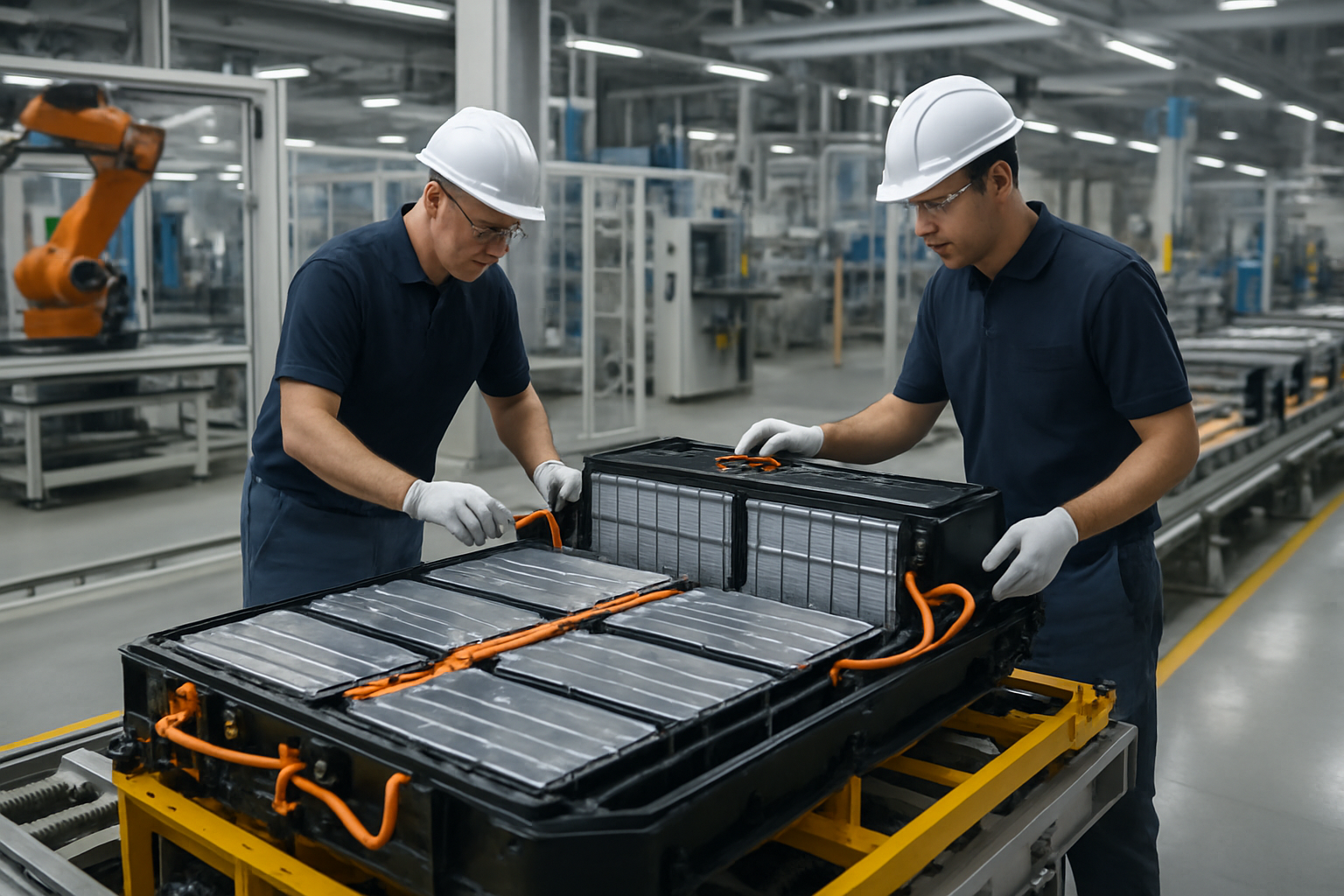
For suppliers, the milestone is less about a single chemistry label than about process control. Materials performance now has to hold up across coating, drying, cell assembly and pack integration, where small defects can turn into warranty risk or production bottlenecks.
What the 2026 production step says about commercialization
The move also reflects how quickly battery competition is shifting from chemistry claims to industrial execution. Automakers are under pressure to improve range, charging and thermal behavior without waiting for a perfect all-solid-state solution that is still working through scale-up hurdles.
By putting semi-solid-state packs into production vehicles in 2026, SAIC is effectively using an intermediate material system as a bridge to next-generation performance. The practical test now is whether that bridge can support high-volume output, stable supply chains and consistent cell quality across multiple nameplates.
The immediate benchmark for battery materials suppliers
The next benchmark is not a press-event prototype but sustained factory output. If SAIC’s rollout proceeds as planned, battery materials suppliers will need to prove that the chemistry can be manufactured repeatedly, priced competitively and integrated without disrupting line throughput.
That is the real significance of the announcement: battery materials are no longer being judged only on lab metrics. They are being judged on whether they can survive automotive production, and in 2026 SAIC is making that test public.
Source: Automotive Manufacturing Solutions
Date: 2026-04-03