Envision starts 790 Ah battery-cell production as it launches 12.5 MWh storage system
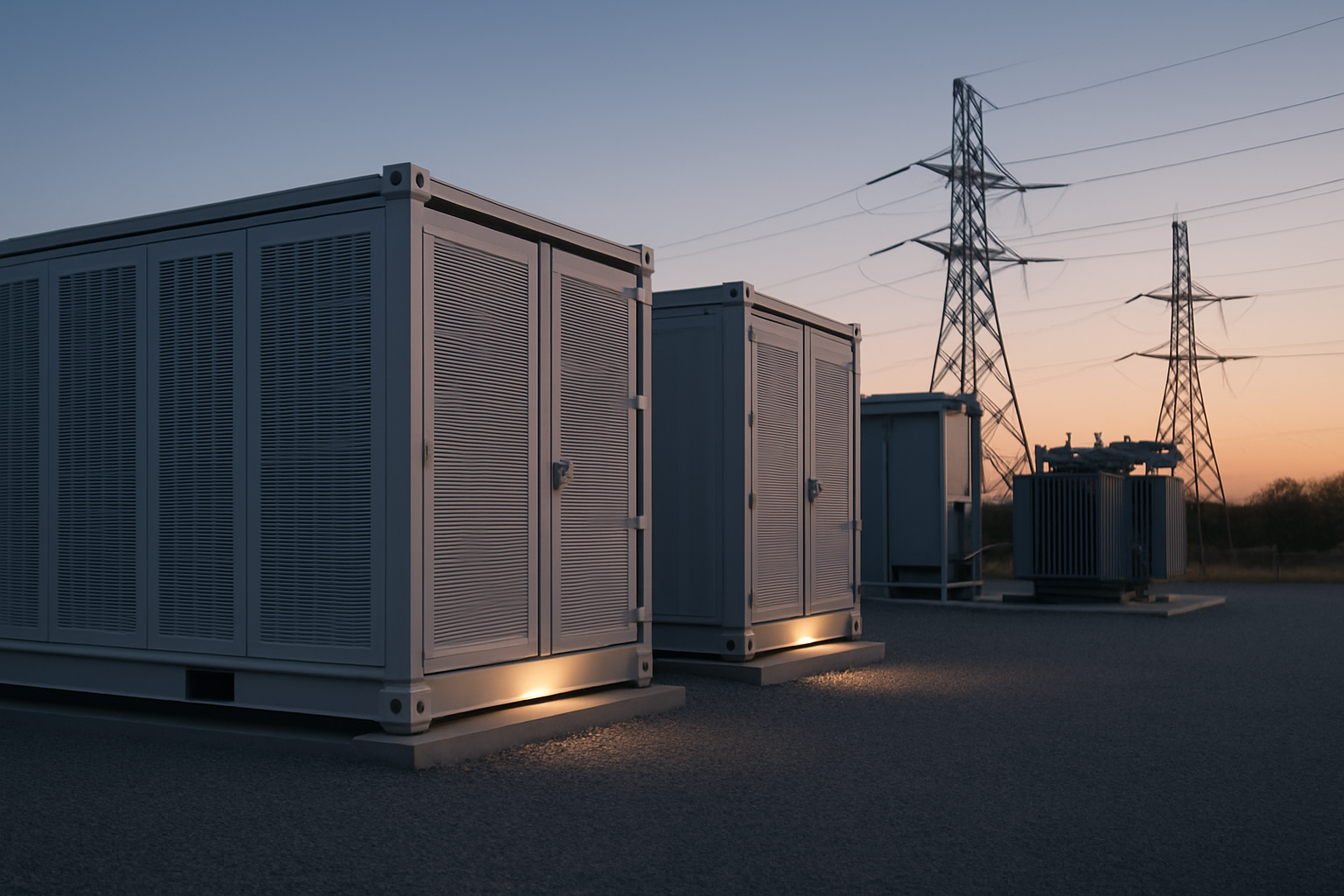
Envision has launched a 12.5 MWh battery energy storage system and said its 790 Ah lithium iron phosphate cell has entered production, giving the company a concrete commercial step in the race toward larger-format grid batteries. The announcement, made at ESIE 2026 in Beijing on April 9, places the new cell and system squarely in the market rather than the lab.
Envision ties a 790 Ah cell to a 12.5 MWh platform
The company said the EN 12.5 MWh system combines battery cells, power conversion hardware, battery and energy management systems, supervisory control and data acquisition tools, and power trading software. Envision described the package as part of an AI-driven energy systems approach, with the 790 Ah LFP cell at its center.
Envision said the cell is now in production and cited energy density above 440 Wh/L, more than 15,000 cycles of cycle life, calendar life of up to 30 years, and cell-level round-trip efficiency of 96%. Those figures, if sustained at scale, would make the platform relevant for long-duration utility storage projects that depend on dense packaging and long service life.
Why the production start matters for grid storage buyers
For utilities and developers, the significance is not just the size of the battery block. A larger cell format can reduce pack complexity, component count, and installation overhead if manufacturers can hold performance, safety, and thermal management within acceptable limits. That matters most in large projects where lifetime cost and dispatch reliability often matter more than headline capacity.
The launch also signals that the industry’s move toward ultra-large cells is no longer limited to prototypes and trade-show concepts. Commercial production suggests suppliers are trying to align cell manufacturing, system integration, and software control around a single package that can be deployed at grid scale.
What Envision is signaling with the 790 Ah format
Envision has framed the release as part of an AI energy systems strategy, which reflects a wider trend in storage toward integrating hardware with software that can manage dispatch, trading, and operational constraints. The company’s emphasis on cell life, efficiency, and density suggests it is targeting utility-scale customers that need long-duration assets with predictable degradation profiles.
The immediate test will be whether the new system can move from launch-stage claims to repeatable deliveries. In a market where storage economics depend heavily on manufacturing consistency and operating life, production start is the first meaningful proof point.
Source: pv magazine International / ESS News
Date: 2026-04-09