Researchers map graphene’s hidden moiré landscape in a fresh advance for 2D materials
Scientists have reported a new way to visualize the moiré potential in rhombohedral graphene superlattices, a measurement advance that could make one of the most closely watched classes of advanced materials easier to study and engineer. The result, published in April 2026, does not introduce a commercial product, but it gives researchers a clearer tool for probing how atom-thin graphene structures behave at the nanoscale.
Nature Materials result sharpens the view inside graphene superlattices
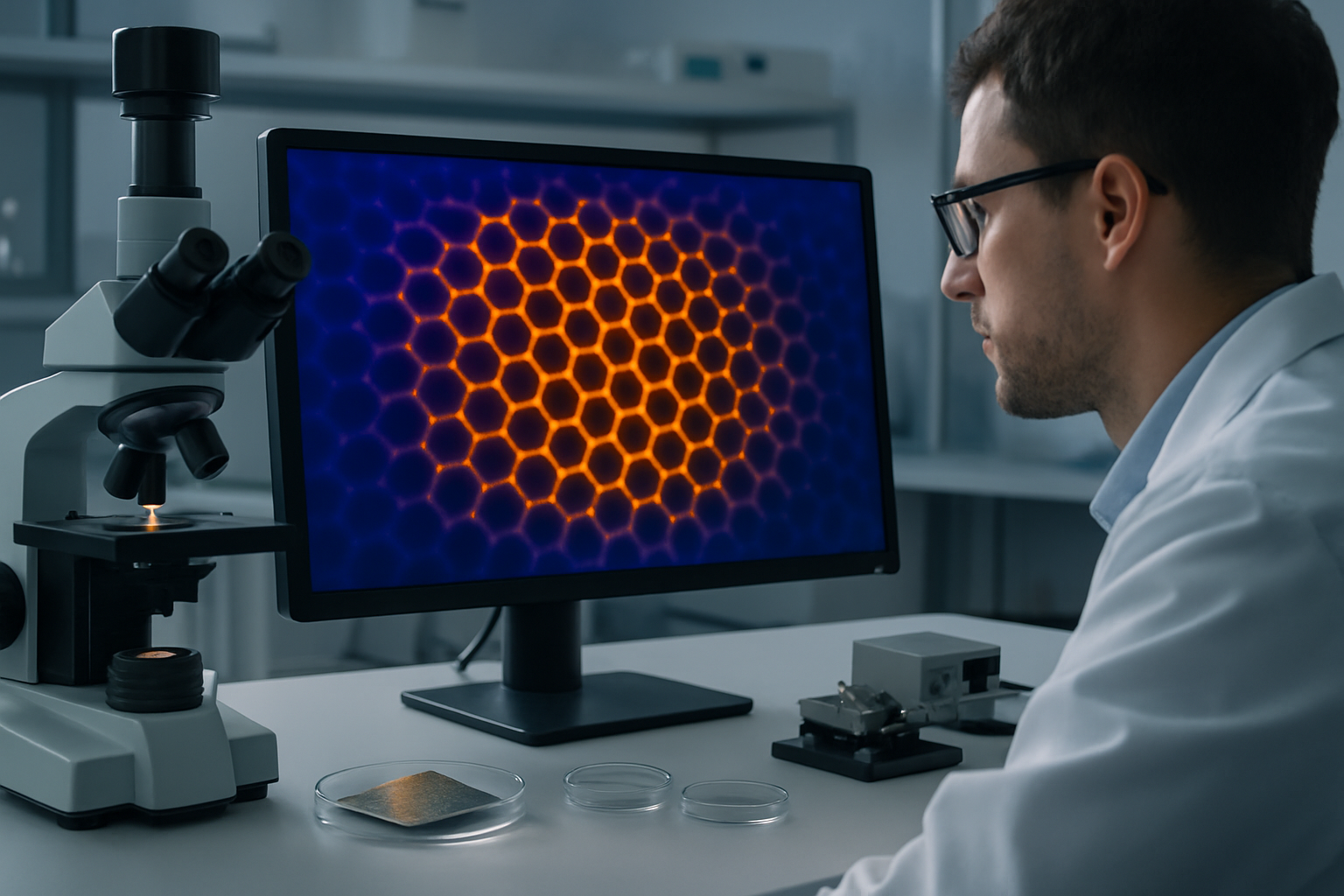
The key development is a direct visualization of the moiré potential in rhombohedral graphene superlattices. Moiré patterns, created when atom-thin layers are stacked with slight twists or offsets, can produce unusual electronic behavior that is hard to measure cleanly. A better view of that landscape gives researchers more leverage to study how the material’s electronic states form and interact.
That matters because graphene superlattices sit at the center of a large body of work on 2D materials, quantum transport and next-generation electronics. When the internal potential landscape is better resolved, scientists can more precisely connect structure with performance instead of inferring it indirectly from device behavior.
Why this measurement step matters now
This is the kind of advance that tends to shape the next round of materials work rather than create an immediate product headline. More precise imaging and interpretation tools can shorten the path from curiosity-driven physics to device engineering, especially in fields where tiny structural changes can strongly affect conductivity, mobility or correlated-electron behavior.
For advanced materials teams, the practical value is in reducing uncertainty. If researchers can better see how the moiré potential is organized, they can make more informed choices about layer alignment, stacking order and fabrication methods in future experiments.
What it adds to the 2D materials toolkit
Graphene remains a benchmark material because it combines atomic thickness with high electrical performance and strong manufacturability potential. But many of the most interesting effects in graphene-based systems appear only when the material is arranged in carefully controlled stacks, which makes characterization as important as synthesis.
Against that backdrop, a sharper read on the moiré potential is useful even before any device reaches the market. It improves the basic map researchers use to navigate an area that could inform low-power electronics, sensors and other atom-thin components if the underlying materials can be tuned consistently at scale.
The latest result is therefore less about a finished product than about better control over a highly sensitive materials system, and that kind of control is often what determines whether an advanced material stays confined to the lab or moves toward engineering use.
Source: Nature Materials
Date: 2026-04-01