Graphene Thermal Interface Materials: Solving the Heat Problem in High-Power Electronics
As microprocessors and AI-driven hardware become increasingly powerful, managing heat has become a primary bottleneck for performance and longevity. Graphene-enhanced thermal interface materials (TIMs) are emerging as a critical solution, utilizing the exceptional thermal conductivity of graphene to bridge the microscopic gaps between chips and cooling systems.
This development is crucial because traditional materials are struggling to keep pace with the massive thermal output of next-generation processors. While research is advancing rapidly, availability and performance can vary significantly depending on the specific application, manufacturer, and the concentration of graphene used within the composite material. Understanding these differences is essential for hardware developers and industry stakeholders.
Key Takeaways
- Superior Conductivity: Graphene provides significantly higher thermal conductivity compared to standard silicone or metal-oxide based TIMs.
- Performance Bottlenecks: Effective heat transfer is vital for maintaining high clock speeds in AI accelerators and high-performance server hardware.
- Scalability Challenges: While highly efficient, integrating graphene into mass-produced industrial TIMs requires precise manufacturing processes to ensure consistency.
- Material Innovation: Ongoing research focuses on optimizing graphene alignment and dispersion to maximize thermal pathways.
How Graphene Improves Thermal Management
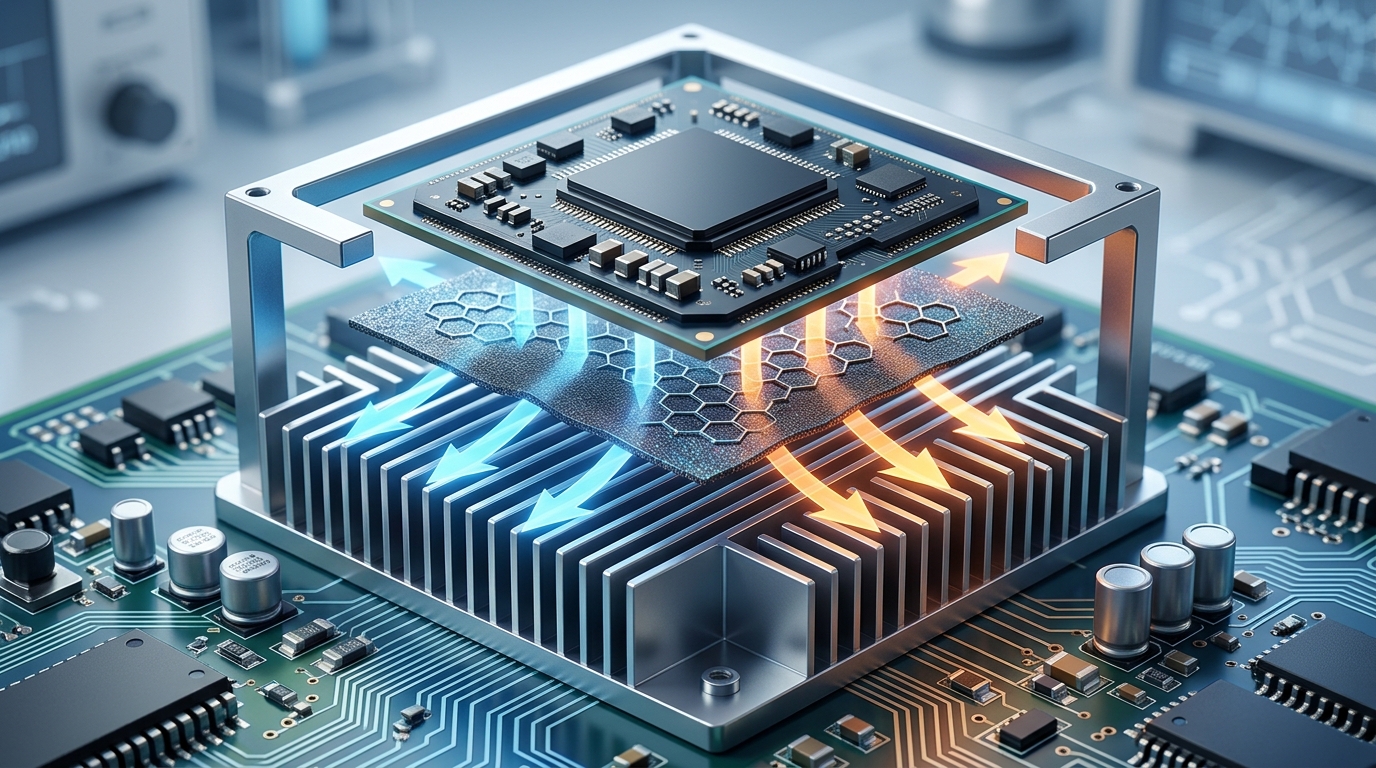
At the atomic scale, surfaces that appear flat are actually filled with microscopic peaks and valleys. When a heat sink is placed on a processor, these gaps trap air, which is an excellent insulator and a poor conductor of heat. Standard TIMs fill these gaps, but they often lack the high thermal conductivity required for modern, ultra-hot chips.
Graphene, a single layer of carbon atoms arranged in a hexagonal lattice, possesses unmatched intrinsic thermal conductivity. When integrated into a grease, pad, or film, graphene flakes create highly efficient thermal pathways, allowing heat to escape the semiconductor surface and migrate to the cooling hardware much faster than conventional materials allow.
Benefits for Semiconductor Applications
The primary advantage of these materials is their potential to maintain lower operating temperatures under intense computational loads. This is particularly relevant for:
- AI Data Centers: Reducing thermal throttling in GPUs and NPUs, allowing for sustained peak performance.
- Mobile Devices: Managing high-density heat in thin-form-factor smartphones and tablets.
- Automotive Electronics: Ensuring reliability in critical vehicle control units that operate in challenging temperature environments.
Performance and Material Limitations
Despite the promise, industry adoption is balanced by technical considerations. Not all graphene-enhanced materials perform equally. The manufacturing method—whether using graphene nanoplatelets, graphene oxide, or CVD-grown graphene—drastically alters the performance profile. Additionally, as material concentration increases, the material’s viscosity or thickness can change, creating application challenges during high-speed electronics assembly.
What to Watch Next
The industry is currently moving from laboratory validation to pilot-scale commercial integration. Stakeholders should monitor new product announcements from major thermal management material suppliers, as these firms are increasingly filing patents for graphene-based composites. The key metric to watch in 2026 and beyond is the stabilization of production costs, which will determine how quickly this technology moves from high-end specialized hardware to consumer-grade computing components.
Frequently Asked Questions
Why is graphene better than traditional thermal paste?
Graphene has a much higher intrinsic thermal conductivity than traditional metal-oxide particles, allowing for more efficient heat transfer across the interface.
Are graphene TIMs conductive to electricity?
Pure graphene is electrically conductive, which can be a risk for sensitive electronics. Most commercial graphene-enhanced TIMs are engineered to be electrically insulating to prevent short circuits.
When will these materials be standard in all computers?
While graphene-enhanced solutions are appearing in high-performance and enterprise hardware today, widespread adoption in budget-tier consumer electronics depends on manufacturing scalability and cost reduction.
Editorial Disclaimer
This article is provided for educational and informational purposes only. Details can change over time, so readers should verify important information with official sources, qualified professionals, manufacturers, publishers, or relevant authorities before making decisions.