GMG says its graphene aluminium-ion battery now stores twice as much energy in latest test update
Graphene Manufacturing Group said on April 15, 2026, that its graphene aluminium-ion battery program has reached a new test result of 49 Wh/kg in six-minute charging mode, up from 26 Wh/kg in the company’s December 2025 update. The improvement gives the Australian clean-tech company a more credible path toward customer testing, even as the cells remain at an early development stage.
GMG’s April 15 battery update
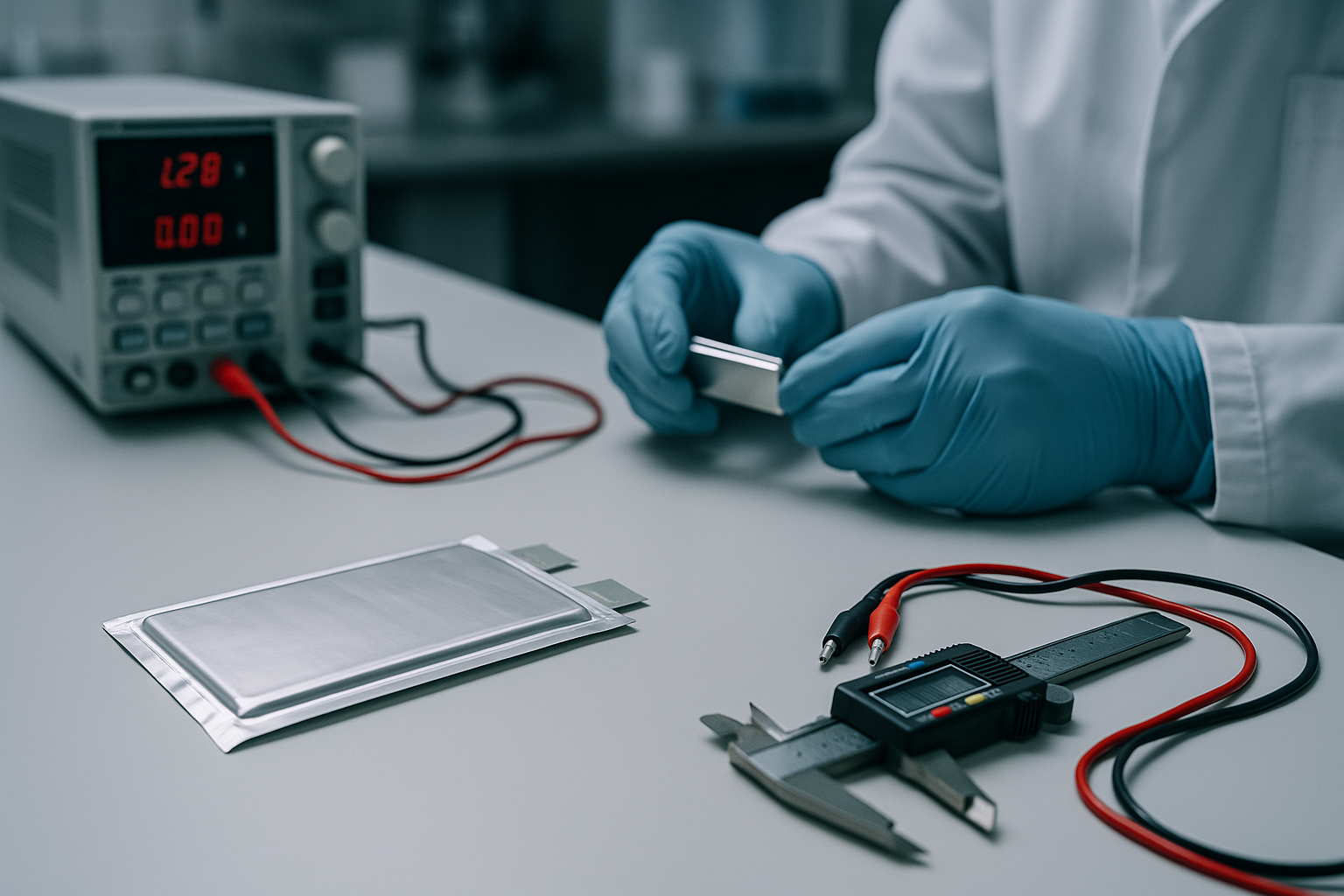
The latest data point comes from pouch cells tested with the Battery Innovation Center, which GMG says also reached 58 Wh/kg when charged over one hour. In the six-minute case, the company said the cells achieved 62% capacity in 3.2 minutes and held performance over hundreds of cycles at that charge rate.
GMG said the technology remains at battery technology readiness level 4, meaning the work is still centered on laboratory validation rather than commercial deployment. The company said it is continuing to optimize electrochemical behavior for pouch cells and expects the program to move further along through additional collaboration and testing.
Why the chemistry matters
Graphene aluminium-ion batteries are being developed as a fast-charging alternative to conventional lithium-ion cells, with aluminium foil used for both the cathode and anode substrate rather than copper. GMG says that design lowers cost and weight while avoiding lithium and copper, two materials that define much of today’s battery manufacturing supply chain.
The technical challenge is straightforward to describe and hard to solve: batteries that charge very quickly often give up energy density, cycle life or both. GMG’s update suggests its cell architecture is improving on that trade-off, though the company is still far from proving the technology at full commercial scale.
Customer testing still lies ahead
GMG said it has already submitted an additional patent application covering the latest developments in the cell design, including a chloride-free, noncorrosive hybrid electrolyte. The company also said it expects to send sample cells to partners for testing in early 2026, a step that would move the program from internal validation toward practical evaluation by potential customers.
Even with the progress, GMG’s own timeline remains measured. The company says further development will be needed to reach its longer-term targets of more than 150 Wh/kg at one-hour charge and more than 75 Wh/kg at six-minute charge, figures that would make the cells more relevant for vehicles, specialty equipment and other high-power applications.
A faster path to commercial batteries, but not a finished one
For now, the significance of the April 15 result is not that graphene batteries have arrived, but that one of the more visible commercial programs in the field continues to improve on a measurable technical target. In a segment where many claims are still stuck at the concept stage, GMG’s latest update offers an actual test result, a defined readiness level and a stated next step toward partner evaluation.
Source: Nasdaq / Newsfile news release for Graphene Manufacturing Group
Date: 2025-12-15