Graphene Membranes: Scaling High-Efficiency Desalination for Water Security
Engineers are increasingly turning to graphene-enhanced membranes to solve the inherent energy-intensity problems plaguing modern desalination facilities. As global water scarcity demands more robust treatment solutions, the ability of these atomic-thin materials to allow water molecules to pass while blocking salts and contaminants is moving from laboratory curiosity to pilot-scale testing.
The core shift here involves transitioning from traditional polymer-based reverse osmosis membranes to graphene-based alternatives that offer significantly higher permeability. While these technologies are still undergoing rigorous long-term durability testing, they represent a potential pivot point for lowering the overall electricity consumption required to produce potable water from seawater.
Key Takeaways
- High Permeability: Graphene structures allow for faster water flux compared to current industry standards.
- Selectivity: Precise pore engineering enables the filtration of smaller contaminants, including microplastics and heavy metals.
- Energy Efficiency: Reduced pressure requirements can potentially lower the operational costs of large-scale desalination plants.
- Scaling Hurdles: Moving from small-scale testing to industrial-grade, large-area membrane manufacturing remains the primary engineering challenge.
Mechanics of Molecular Sieving
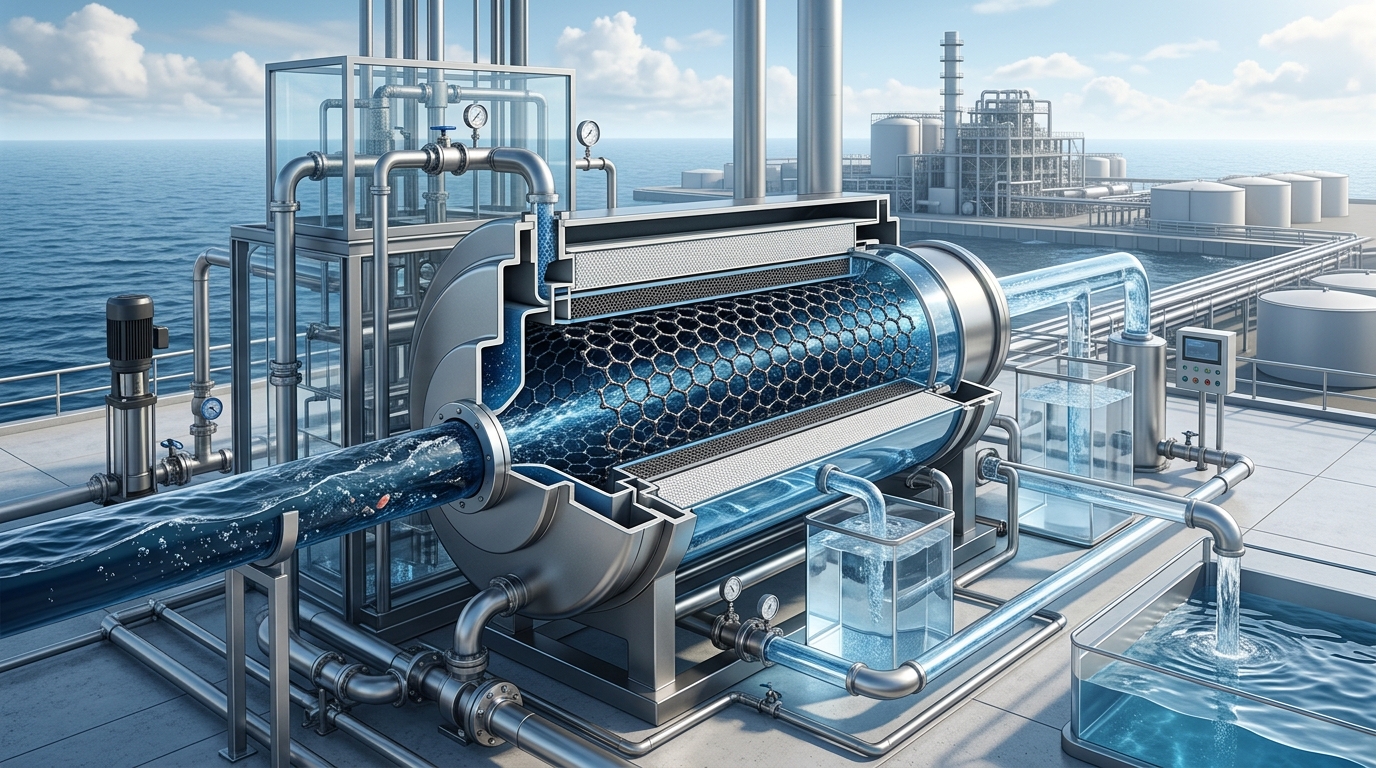
At the center of this innovation is the structural integrity of graphene and its derivative, graphene oxide. Unlike conventional membranes that rely on a dense, sponge-like matrix, graphene membranes utilize precisely controlled nanopores or inter-layer spacing to act as a molecular sieve. By tuning these apertures to the size of a water molecule, developers can create a barrier that effectively strips seawater of salt ions with far less hydraulic pressure than older methods.
Transitioning to Industrial Scale
The industry is currently focused on the transition from lab-grown graphene patches to large, continuous sheets that can handle the high-pressure environments of industrial desalination. Recent efforts involve depositing graphene layers onto standard support substrates, creating a composite material that balances the mechanical strength of traditional polymers with the extreme filtering capabilities of carbon nanotechnology.
Benefits for Global Water Infrastructure
Adopting this technology could fundamentally alter the cost-benefit analysis for coastal regions relying on seawater desalination. Beyond energy savings, these membranes often exhibit higher resistance to chemical degradation and biofouling—a common issue where organic matter clogs traditional filters, leading to frequent and costly maintenance cycles.
Frequently Asked Questions
How do graphene membranes differ from standard reverse osmosis filters?
Standard filters rely on thickness and pressure to push water through a dense polymer. Graphene membranes are essentially one-atom-thick, allowing water to flow with much less resistance while using precise hole sizes to filter out salt and impurities.
Are these filters currently available for home use?
Currently, graphene-enhanced water technology is primarily targeted at industrial and municipal scale applications. While commercialized consumer filters exist, they often differ significantly from the high-tech desalination membranes used in large-scale infrastructure.
What is the lifespan of a graphene-based water filter?
Durability remains a core research focus. While graphene is incredibly strong, maintaining the integrity of microscopic pores over thousands of hours of high-pressure operation is a critical metric that researchers are continuously improving.
Editorial Disclaimer
This article is provided for educational and informational purposes only. Details can change over time, so readers should verify important information with official sources, qualified professionals, manufacturers, publishers, or relevant authorities before making decisions.