
Graphene in Construction: Is It Finally Ready for Mainstream Concrete?
The integration of graphene into structural concrete has long been touted as a revolutionary development, promising significantly stronger, more durable, and lower-carbon building projects. As the construction industry faces mounting pressure to improve material efficiency, the question of whether this nanomaterial is ready for widespread deployment remains a key point of discussion for engineers and developers alike.
While experimental results and small-scale trials have shown undeniable promise, moving from laboratory settings to commercial construction sites involves complex challenges. Understanding the current status of this technology requires separating established material properties from the logistical realities of mass-market, high-volume production in the global construction sector.
Key Takeaways
- Material Potential: Graphene’s high tensile strength and surface area can theoretically reinforce the cement matrix, potentially allowing for reduced cement usage.
- Performance Gains: Early tests indicate improvements in compressive strength and reduced permeability, which can extend the lifespan of reinforced structures.
- Scaling Challenges: Dispersing graphene evenly within large concrete batches remains a technical and cost-intensive hurdle for ready-mix suppliers.
- Standardization Needs: Widespread adoption is currently limited by the lack of universally accepted building codes and long-term standardized testing for graphene-enhanced concrete.
How Graphene Modifies Concrete
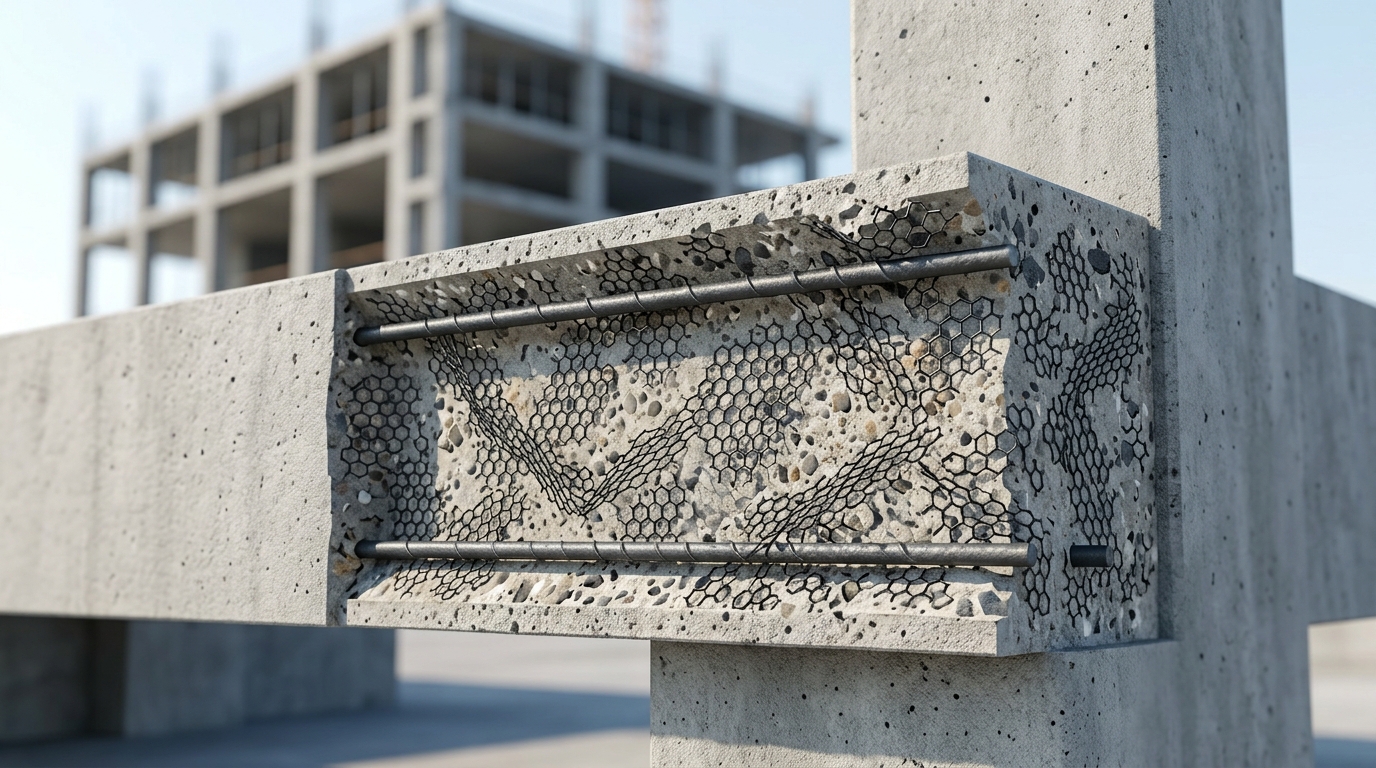
At the microscopic level, concrete is a porous material. When graphene nanoplatelets or graphene oxide are effectively introduced into the concrete mix, they act as a nano-scale reinforcement. By filling the gaps within the cement hydrate structure, graphene can block the pathways that normally allow water and corrosive agents to penetrate the concrete, leading to enhanced durability.
Additionally, the material’s interaction with the hydration process can help create a more dense, compact matrix. This increased density is often what engineers point to when discussing the potential for using less cement—a crucial benefit for projects aiming to lower their total carbon footprint.
Current Performance Metrics and Expectations
While exact performance improvements vary wildly based on the type of graphene used, dosage, and the overall mix design, the industry is closely watching specific performance indicators. It is vital to note that these metrics are typically derived from controlled studies, and results in real-world, variable environmental conditions may differ.
| Performance Area | Potential Benefit |
|---|---|
| Compressive Strength | Potential for increased load-bearing capacity. |
| Permeability | Reduced water ingress protects internal steel reinforcement. |
| Material Volume | Potential for thin-wall construction or reduced cement usage. |
Barriers to Widespread Adoption
The primary barrier is not the material’s inherent strength, but the challenge of industrial-scale processing. Achieving a uniform, stable dispersion of graphene in thousands of gallons of concrete is significantly harder than doing so in a lab beaker. If the graphene clumps, it can actually create weak spots in the structure rather than reinforcing it.
Furthermore, cost-to-performance ratio remains a hurdle. For many standard construction projects, the added cost of high-quality graphene must be offset by significant savings in raw material volume or drastically extended structure maintenance cycles. Until these economic trade-offs are clearly defined, its use remains niche.
Frequently Asked Questions
Is graphene concrete available everywhere?
No, it is currently not a standard, off-the-shelf product. It is primarily used in specialized projects or through specific partnerships with material technology firms.
Does graphene make concrete waterproof?
Graphene significantly reduces permeability, making it much more resistant to water ingress and chemical attacks, but it is not typically categorized as a waterproof sealant on its own.
How does this affect building codes?
Because structural concrete is governed by strict safety regulations, widespread adoption requires extensive, long-term testing to ensure that graphene-enhanced mixes meet safety and durability certifications required by regional authorities.
Editorial Disclaimer
This article is provided for educational and informational purposes only. Details can change over time, so readers should verify important information with official sources, qualified professionals, manufacturers, publishers, or relevant authorities before making decisions.