
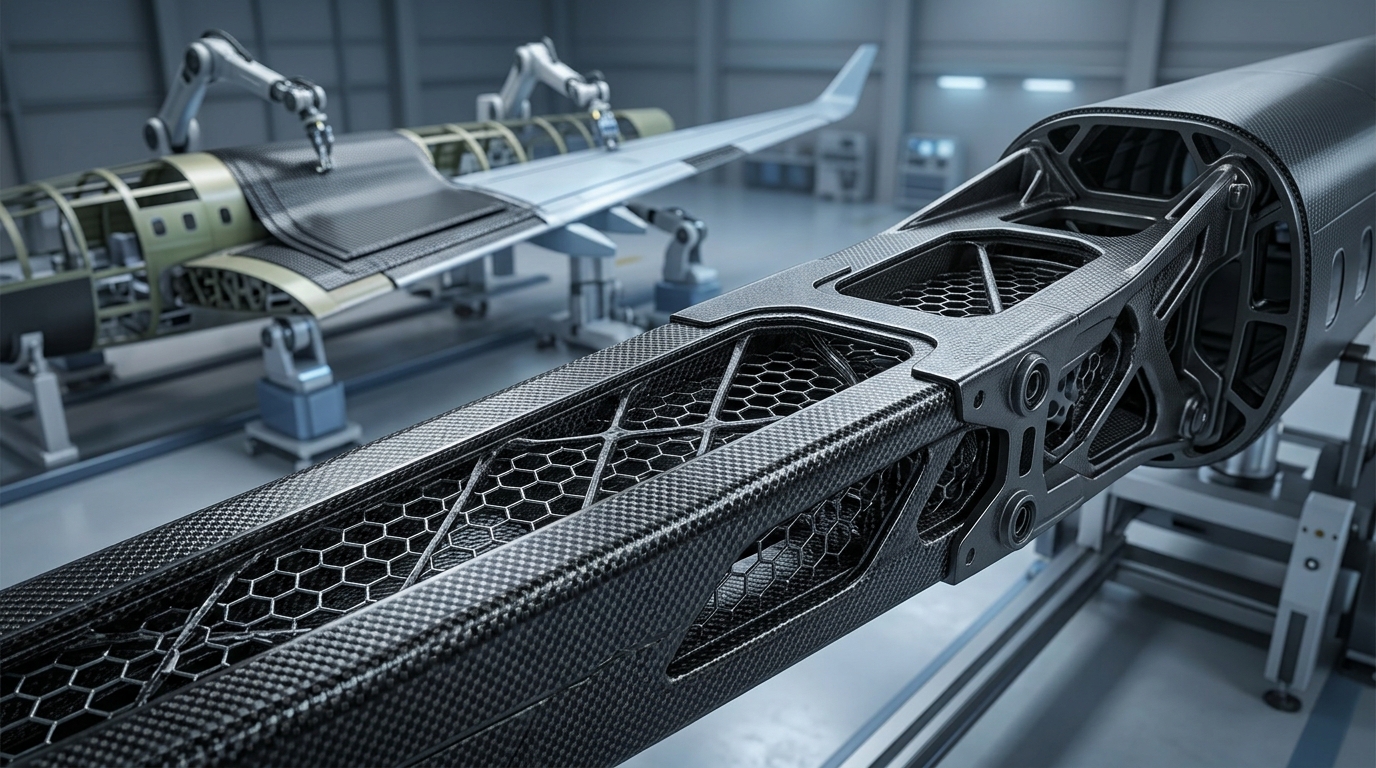
Engineering Challenges for Graphene-Enhanced Aerospace Components
The pursuit of lighter, stronger airframes has pushed graphene to the forefront of aerospace research. While the material’s theoretical strength-to-weight ratio is unmatched, moving from laboratory samples to load-bearing aerospace structures involves significant engineering complexities that go beyond simple material properties.
Current interest, particularly from defense organizations, centers on whether carbon-based nanomaterials can maintain their structural integrity under the extreme cyclical loading and harsh environmental conditions typical of flight. Engineering teams are now focusing on how to scale production without introducing the defects that often weaken these advanced composites.
Key Takeaways
- Weight Reduction: Potential for significant mass savings in primary and secondary airframe components.
- Structural Integrity: Maintaining uniformity across large-scale parts remains a primary technical hurdle.
- Environmental Durability: Research is currently validating how these materials withstand thermal cycling and atmospheric exposure.
- Regulatory Barriers: Aerospace certification requires extensive, time-intensive testing for new composite materials.
From Nanoscale to Airframe Scale
The primary difficulty in using graphene for aerospace applications is the scale-up challenge. Creating a high-quality sheet of graphene is vastly different from producing the kilograms or tonnes of material required to reinforce the wings or fuselage of a military aircraft. In industrial settings, the manufacturing process must ensure that the graphene is perfectly dispersed within a polymer matrix to avoid creating brittle points that could fail under stress.
Testing for Flight Readiness
Aerospace structures undergo rigorous validation before being approved for flight. This includes testing for fatigue, impact resistance, and lightning strike protection. While graphene shows promise in enhancing electrical conductivity—which is vital for managing static and lightning energy—the industry must prove that the material does not compromise the overall fracture toughness of the structural resin systems currently used in carbon-fiber composites.
| Feature | Aerospace Requirement |
|---|---|
| Strength-to-Weight | High priority for fuel efficiency and payload. |
| Dispersal Uniformity | Critical for avoiding structural hot spots. |
| Thermal Resilience | Essential for operation in high-altitude/space conditions. |
Strategic Industry Outlook
Defense logistics and aerospace manufacturing sectors are actively evaluating how to integrate these materials into existing supply chains. The shift is moving from purely experimental phases toward feasibility studies for non-primary structures, such as interior fairings or non-pressurized panels. As manufacturing processes improve, the industry is looking for consistent, standardized grades of graphene that meet the strict material specifications required for flight-certified parts.
Frequently Asked Questions
Why is graphene considered for aerospace use?
Graphene is valued for its exceptional mechanical strength and low density, which could lead to lighter aircraft components that improve fuel efficiency and performance.
What are the biggest risks for these materials?
The primary risks include inconsistencies in large-scale production, difficulties in ensuring uniform dispersion within composites, and the long-term certification processes required for safety-critical parts.
Is graphene currently flying on commercial aircraft?
While experimental components and small-scale testing exist, graphene is not yet widely used in primary load-bearing structural elements of commercial passenger aircraft due to the rigorous safety and certification standards.
Editorial Disclaimer
This article is provided for educational and informational purposes only. Details can change over time, so readers should verify important information with official sources, qualified professionals, manufacturers, publishers, or relevant authorities before making decisions.