GMG says its graphene aluminium-ion battery has doubled energy density in April update
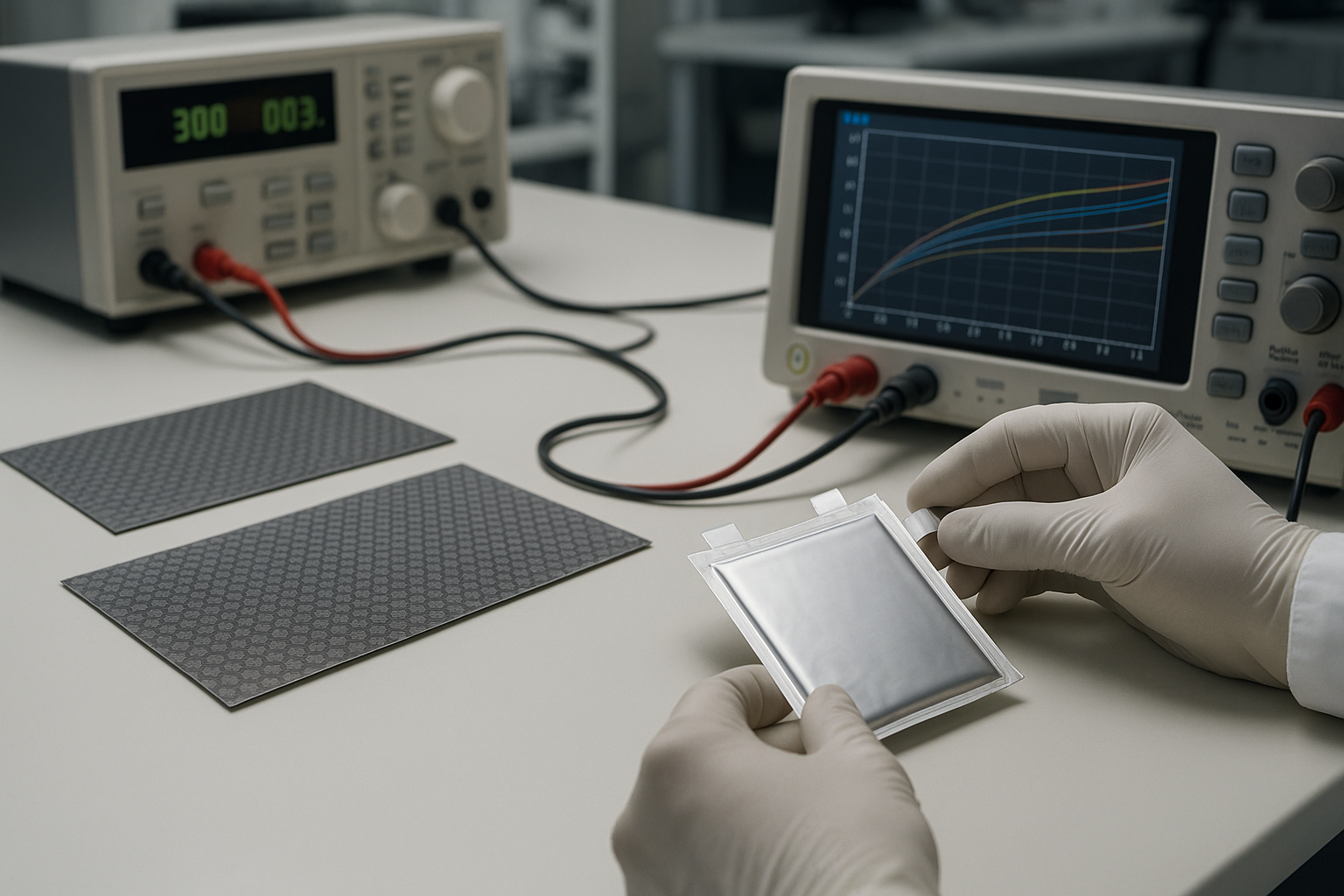
Graphene Manufacturing Group said on April 15, 2026, that its graphene aluminium-ion battery cells doubled their energy density to 49 Wh/kg from 26 Wh/kg in December 2025, a step the company says moves the program closer to customer testing and eventual small-scale production. The update centers on the latest performance of GMG’s G+A CELLS, a graphene aluminium-ion chemistry being developed with the University of Queensland, Rio Tinto and the Battery Innovation Center of Indiana.
Energy density rises while six-minute charging holds
GMG said the cells maintained performance over hundreds of cycles at a six-minute charge rate and reached 101 Wh/kg when charged over 60 minutes. The company said the latest results also lifted nominal voltage to about 3.2 volts, compared with 3.0 volts in its prior update.
The company is targeting heavy mobile equipment as its first major use case, and says the battery now meets much of the specification it has been working toward: under-six-minute charging, more than 100 Wh/kg after one hour of charging and a lithium-free design.
Commercialization is still early, but the roadmap is clearer
Despite the gains, GMG said the battery remains at technology readiness level 4, meaning it is still in development rather than market release. The next steps include cycle-life testing to 10,000 cycles, temperature testing, safety validation and work on whether the pack can operate without a thermal management system.
GMG said it expects to test cells with customers in 2026 and move to small commercial production in 2027 with partner support. The company also said it has filed an additional patent application covering the latest electrolyte and electrode work.
Why the material change matters
GMG says the cells use a new chloride-free, non-corrosive hybrid electrolyte and aluminium foil on both cathode and anode substrates, which it says reduces cost and weight versus copper-based designs used in many lithium and sodium-ion batteries. The company says those design choices could help it compete against lithium titanate oxide batteries, a niche but established chemistry valued for fast charging and long cycle life.
For now, the significance is less about an immediate product launch than about a more credible bridge from laboratory performance to manufacturing planning. If GMG can preserve the fast-charge behavior while lifting energy density further, the chemistry could become more relevant for fleets, industrial equipment and other applications where downtime is expensive.
Source: Newsfile Corp. / Graphene Manufacturing Group Ltd.
Date: 2026-04-15T07:30:00-04:00