
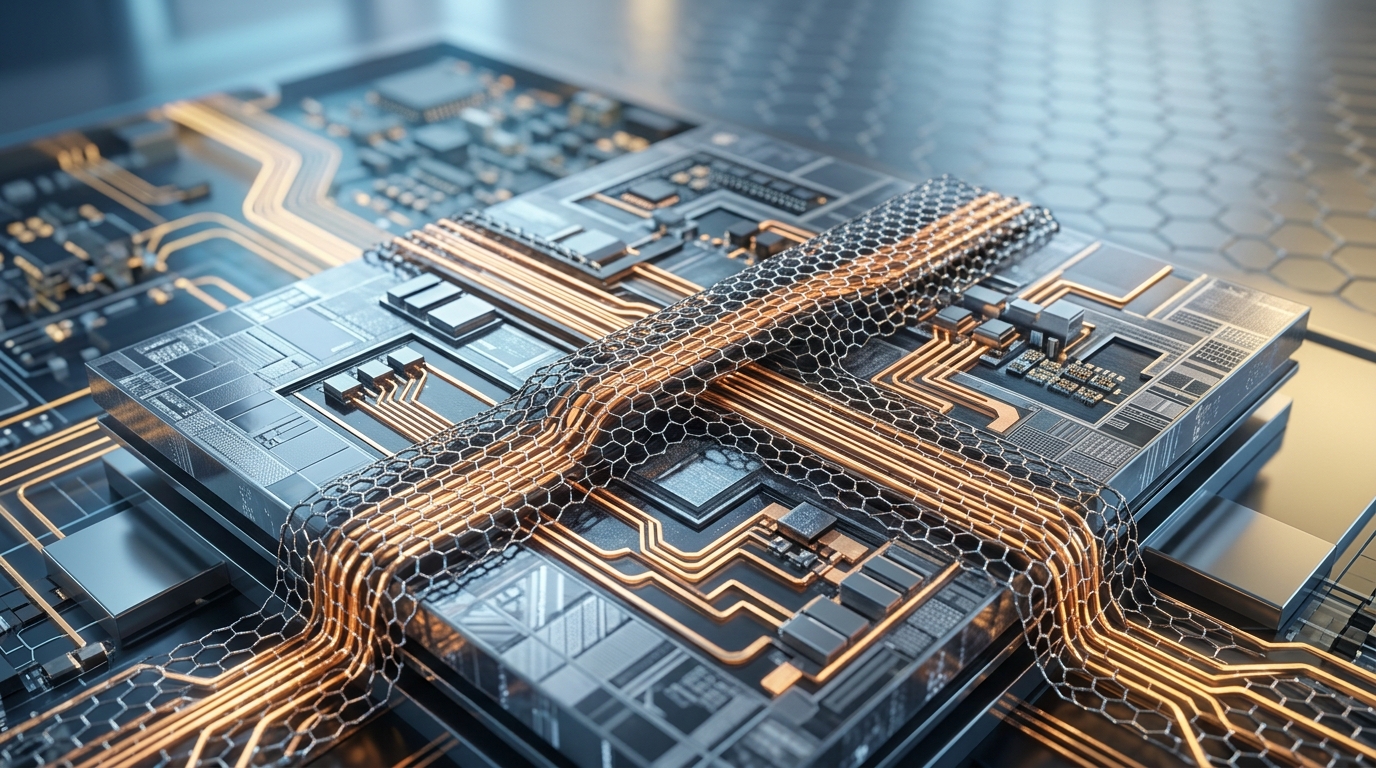
Beyond Copper: Is Graphene the Key to Next-Generation Semiconductor Interconnects?
As semiconductor manufacturers push toward smaller, faster, and more efficient chip architectures, graphene is increasingly viewed as a critical candidate for replacing traditional copper interconnects. In the race to maintain Moore’s Law, the physical limitations of copper at nanometer scales have become a bottleneck for performance and heat dissipation.
Recent industry research indicates that while copper has long been the standard due to its conductivity, it faces significant challenges as device features shrink below 7 nanometers. Graphene’s exceptional electrical conductivity and superior thermal management properties offer a potential alternative, though significant manufacturing and integration hurdles remain before commercial adoption at scale.
Key Takeaways
- Copper Limitations: At smaller scales, copper suffers from increased resistivity and susceptibility to electromigration, which can lead to chip failure.
- Thermal Management: Graphene’s high thermal conductivity helps dissipate heat in tightly packed chip designs, preventing overheating in high-performance AI processors.
- Manufacturing Hurdles: The primary challenge is the scalable, high-quality, and cost-effective growth of graphene directly onto silicon-compatible substrates.
- Hybrid Future: Experts suggest a transition phase where graphene might be used in hybrid structures alongside metallic components rather than a wholesale immediate replacement.
Why Copper Struggles at the Nanoscale
Copper wiring (interconnects) is the lifeblood of modern processors, carrying signals between millions of transistors. However, as the width of these wires reaches the nanometer level, electrons begin to scatter off the sides of the wire. This scattering increases electrical resistance, leading to energy loss, signal delay, and intense heat production. Furthermore, copper is prone to electromigration, where the flow of electrons literally moves atoms in the wire, eventually causing short circuits or open circuits that end the chip’s lifespan.
Potential Benefits of Graphene
Graphene introduces a fundamentally different physical environment for electron transport. Because it is a two-dimensional material consisting of a single layer of carbon atoms, it offers unique advantages:
| Feature | Benefit to Semiconductors |
|---|---|
| Conductivity | High electron mobility enables faster signal transmission. |
| Thermal Conductivity | Highly efficient heat spreader to manage local hotspots. |
| Physical Robustness | Immune to traditional electromigration issues found in metals. |
The Path to Commercialization
The semiconductor industry is notoriously conservative regarding new materials. Introducing graphene requires changing standard CMOS manufacturing processes. The current focus of researchers is on Chemical Vapor Deposition (CVD) methods that can grow graphene directly on silicon wafers without damaging existing components. Additionally, ensuring consistent quality across large-diameter wafers (such as 300mm) is a prerequisite for any industrial-scale integration.
Frequently Asked Questions
Is graphene currently used in commercial CPUs?
No, graphene is currently in the research and development phase regarding semiconductor interconnects. Most commercial applications today are limited to thermal management films or experimental sensor designs.
What is the biggest barrier to graphene chips?
The primary barrier is the ability to mass-produce high-quality, defect-free graphene consistently on existing semiconductor manufacturing lines without significantly increasing costs or introducing impurities.
Does graphene replace silicon?
Graphene is generally discussed as a supplement to silicon or as a replacement for metal interconnects, rather than replacing the silicon transistor itself entirely. It is a complementary material that addresses specific performance bottlenecks.
Editorial Disclaimer
This article is provided for educational and informational purposes only. Details can change over time, so readers should verify important information with official sources, qualified professionals, manufacturers, publishers, or relevant authorities before making decisions.