How energy storage works: the simple explanation behind batteries, grids and backup power
Energy storage works by taking electricity when it is available, converting it into a form that can be held, and then turning it back into power when demand rises or supply drops. That basic idea applies whether the system is a home battery, a utility-scale grid installation, a pumped-hydro site or a thermal storage tank. The difference is not the principle. It is the medium.
Electricity has to be converted before it can be stored
Electricity itself is hard to stockpile directly, so energy storage systems usually move it into another state. In a battery, that state is chemical energy. In pumped hydro, it becomes gravitational potential energy as water is moved uphill. In thermal storage, it is heat kept in a material or fluid until it is needed.
When the system charges, it absorbs electricity from the grid, a solar array, a wind plant or another source. When it discharges, it reverses that process and sends electricity back out. The charger and the discharge path are built around electronics, valves, pumps or heat exchangers that control how fast the energy moves.
Battery storage is the most familiar model
Most readers encounter energy storage through batteries, and the operating logic is straightforward. Inside a battery, ions move between two electrodes through an electrolyte. During charging, that movement is forced in one direction. During discharge, it runs back and creates an electric current.
This is why batteries are useful for short-duration backup, daily solar shifting and fast grid support. They respond quickly, can be placed close to the load and are relatively easy to automate. Their limits are also clear: capacity fades over time, performance changes with temperature, and the stored energy eventually has to be replaced by another charging cycle.
Grid storage is about timing, not just capacity
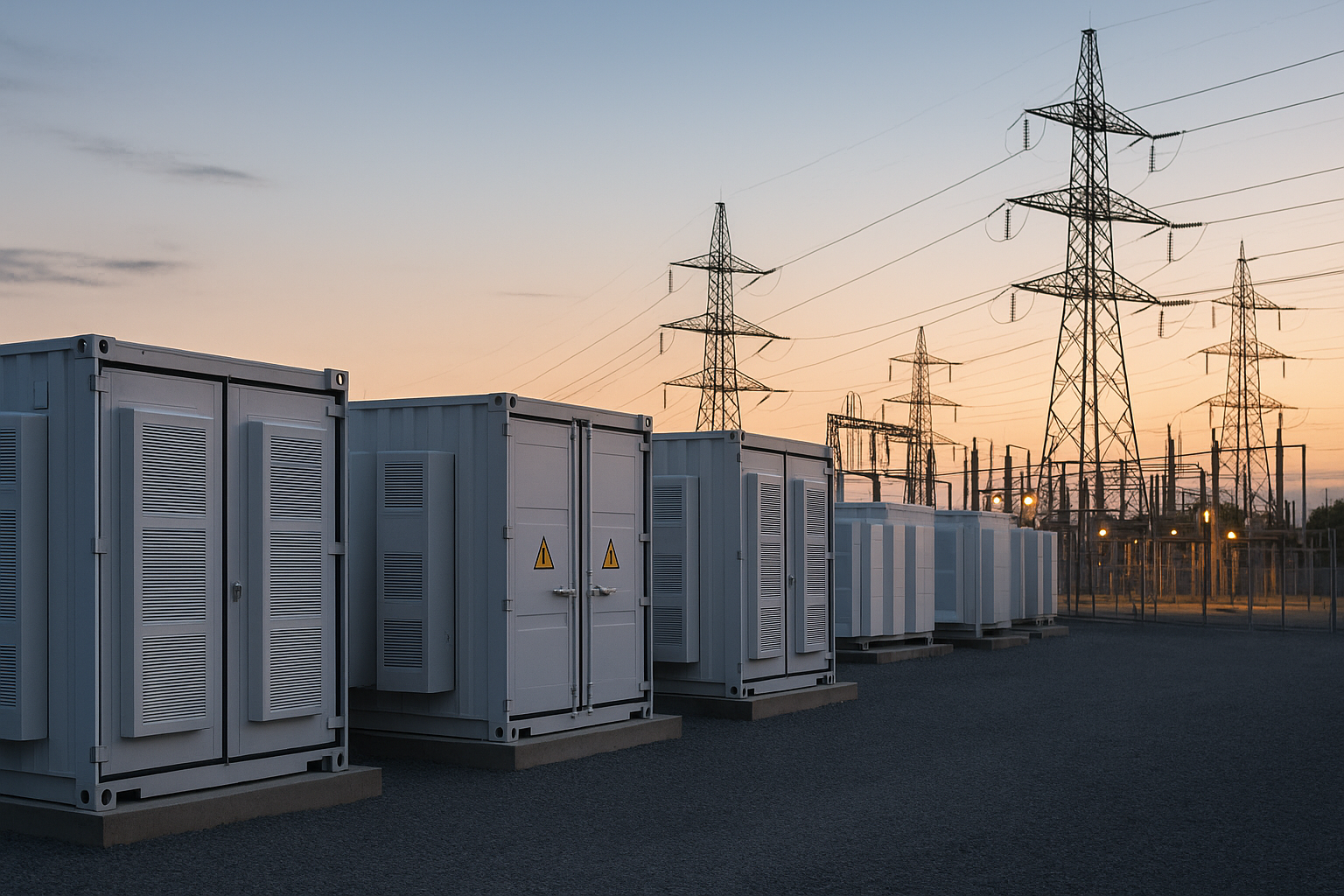
At utility scale, energy storage is usually less about keeping lights on for days and more about balancing the grid over minutes or hours. A storage system can absorb excess solar output at midday and release it in the evening, or it can smooth sudden changes in wind generation and frequency on the network.
That timing function matters because power systems have to match supply and demand almost continuously. Storage helps reduce curtailment, limits stress on peaking plants and gives grid operators another tool when transmission is congested or generation ramps faster than expected.
Not all storage is chemical
Energy storage is a broad category, and the technology choice depends on how long energy must be held and how quickly it must be delivered. Pumped hydro is still one of the most established large-scale approaches because it can store a lot of energy for long periods. Thermal storage is useful when a facility needs heat, cooling or steam rather than electricity alone. Mechanical systems, including flywheels and compressed-air designs, rely on motion or pressure instead of chemistry.
Each format trades off cost, response speed, site requirements and duration. A battery may be compact and fast, but it is not always the cheapest option for very long storage periods. A pumped-hydro site may last decades, but it needs the right geography. Thermal systems can be efficient for industrial heat, but they do not solve every electricity problem.
Why energy storage matters for homes, businesses and power systems
For homeowners, energy storage can mean backup during outages, better use of rooftop solar and lower exposure to peak electricity prices. For businesses, it can keep operations stable during short disruptions and help manage demand charges. For utilities, it supports renewable integration, grid reliability and reserve planning.
The practical question is usually not whether storage works. It is which type works for the job. Short-duration battery systems are best when speed matters. Long-duration systems matter when the grid needs energy later, not just a rapid burst now. That is why storage has become a design choice in almost every serious power-planning conversation.