High-density energy storage systems are batteries and long-duration storage designs built to hold more energy in less space
High-density energy storage systems are technologies designed to store more usable energy in a smaller physical footprint or lower weight than conventional options. In practice, that usually means advanced batteries, battery packs, or other storage systems that deliver high energy density without making installation, transport, or packaging impractical.
What high-density energy storage systems actually do
The core idea is simple: increase how much energy can be stored per unit of volume or mass. That can make a system smaller for the same runtime, lighter for mobile use, or easier to fit into constrained sites such as vehicles, ships, factories, or dense urban buildings.
Energy density is usually discussed in two ways. Gravimetric energy density measures energy per kilogram. Volumetric energy density measures energy per liter or cubic meter. A system can score well on one and not the other, which is why the best choice depends on whether weight or space is the bigger constraint.
Why the term matters for EVs, grid storage, and data centers
In electric vehicles, higher energy density can extend driving range without adding as much weight. In portable electronics and aerospace applications, that can be the difference between a workable design and one that is too heavy or too bulky.
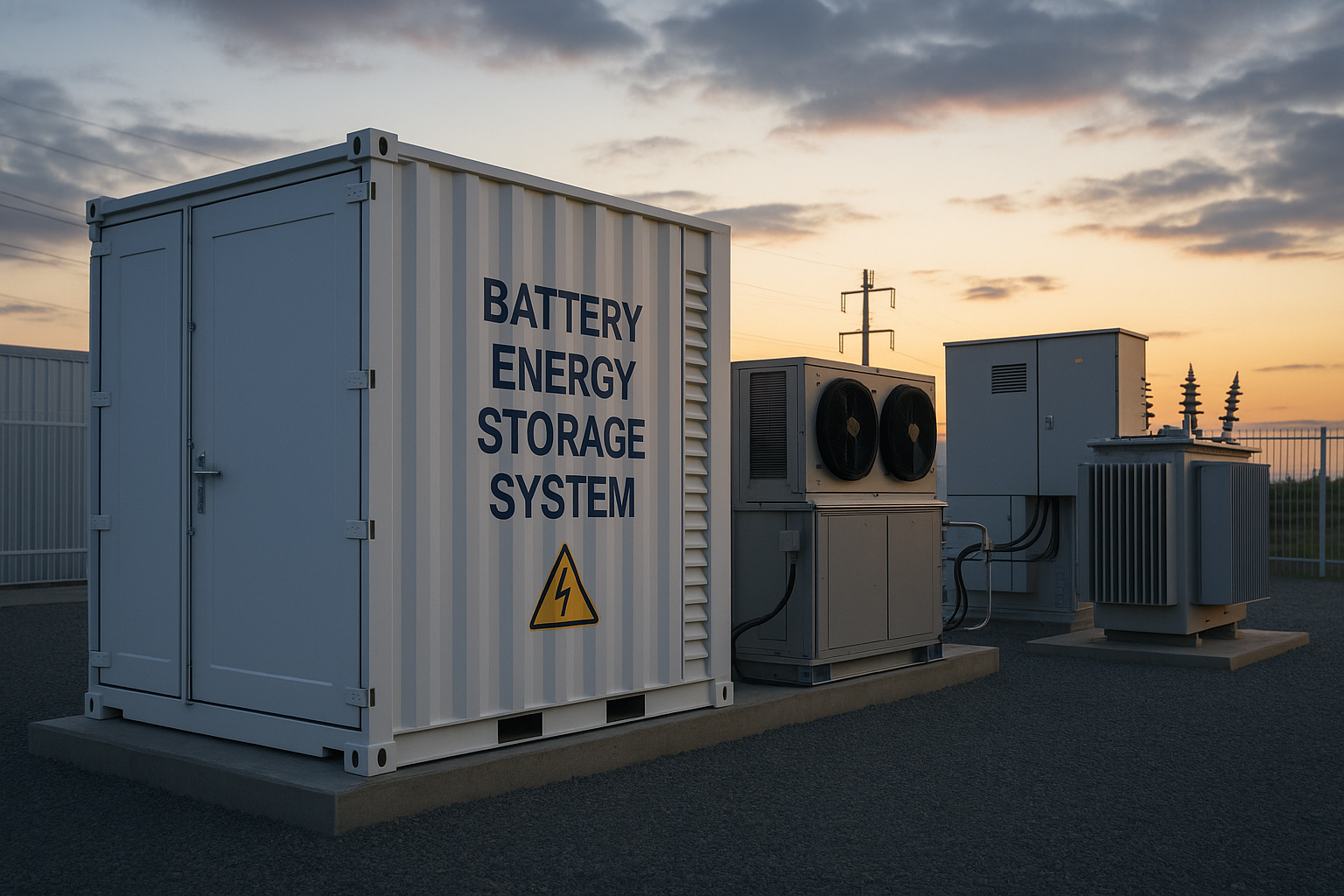
For grid storage, the term matters in a different way. Utility projects often care less about weight than about land use, container count, balance of system costs, and how much energy can be installed on a constrained site. A denser system can reduce the footprint of a project even when total capacity stays the same.
Data centers are becoming another important use case. Operators want backup and peak-shaving systems that can deliver more energy in less rack, room, or yard space. That makes high-density storage attractive where floor space, cooling, and electrical integration are already under pressure.
The technologies most often linked to higher energy density
Lithium-ion remains the benchmark for many commercial systems because it combines relatively high energy density with mature manufacturing. Within that category, different chemistries trade off range, cost, life, power output, and safety.
Beyond standard lithium-ion, industry attention has shifted to several alternatives and upgrades, including silicon-rich anodes, solid-state concepts, sodium-ion for lower-cost stationary use, and emerging chemistries that aim to improve either the amount of energy stored or the packaging efficiency of the system.
Not every promising material becomes a commercial product. Some technologies offer strong lab results but face challenges in cycle life, thermal stability, manufacturability, or cost. For buyers, the key question is not only how dense the chemistry looks on paper but whether the complete system can be built, shipped, cooled, and maintained at scale.
How to judge whether a storage system is truly high-density
Energy density alone does not tell the full story. A practical review should also look at cycle life, charging speed, safety behavior, usable capacity, operating temperature range, and total installed cost. A very dense system that degrades quickly or requires complex thermal management may be less useful than a slightly larger but more durable one.
Commercial buyers should also separate cell-level performance from pack-level or system-level performance. A battery cell may look impressive in a test report, but once it is assembled into modules, racks, or containers, real-world density can fall because of casing, wiring, cooling, and fire-suppression hardware.
That distinction matters most when comparing product claims. The important number is usually the one that matches the actual use case: cell, module, pack, container, or site.
What readers should watch as the market matures
High-density energy storage systems are moving from a purely technical metric to a procurement filter. Buyers want smaller footprints, lighter systems, and higher energy per installed dollar, but they also want predictable performance over years of operation.
The most useful next step is to compare any system against the problem it is meant to solve. If the constraint is space, weight, or transport, density matters immediately. If the constraint is cost per cycle, safety compliance, or long service life, energy density is only one part of the decision.