CATL says sodium-ion batteries are ready for mass production in 2026 as battery materials shift beyond lithium
Contemporary Amperex Technology Co. Ltd. said on April 21, 2026, that sodium-ion batteries are ready for mass production this year, putting one of the battery industry’s most closely watched alternative chemistries back in the commercial frame. The announcement matters because sodium-ion cells use a different materials stack from conventional lithium-ion batteries and could ease dependence on lithium, copper and some graphite-intensive supply chains if the technology holds up in mass manufacturing.
CATL’s April 21 technology event puts sodium-ion materials in play
At its Super Technology Day in Beijing, CATL said its sodium-ion platform had cleared the core manufacturing problems that had delayed wider rollout. The company framed the chemistry as part of a multi-chemistry strategy rather than a replacement for lithium-ion, but the timing is notable: mass production is now slated for 2026, not an open-ended future date.
The materials significance is straightforward. Sodium-ion batteries generally rely on sodium-based cathodes and hard-carbon anodes, and they can use aluminum current collectors in places where lithium-ion cells often depend on copper. That combination could reduce exposure to some of the most price-sensitive battery inputs, especially if production scales into stationary storage and lower-cost mobility segments.
Why the chemistry shift matters for supply chains
Battery materials have become as much a supply-chain story as a performance story. Lithium-ion growth has tightened demand for lithium, nickel, graphite and copper, while grid storage and electric-vehicle programs continue to expand. A commercially credible sodium-ion line would not eliminate those pressures, but it could widen the industry’s material options at a moment when manufacturers are looking for chemistry choices that are less vulnerable to bottlenecks.
That is especially relevant for applications where cost, safety and calendar life can matter more than maximum energy density. Sodium-ion batteries are generally viewed as less energy-dense than leading lithium-ion chemistries, which has kept them out of the premium EV conversation. But they are attractive for energy storage systems, certain two-wheelers, and fleet or urban vehicles where lower-cost materials can outweigh the penalty in pack weight or range.
Commercial scale, not lab scale, is now the test
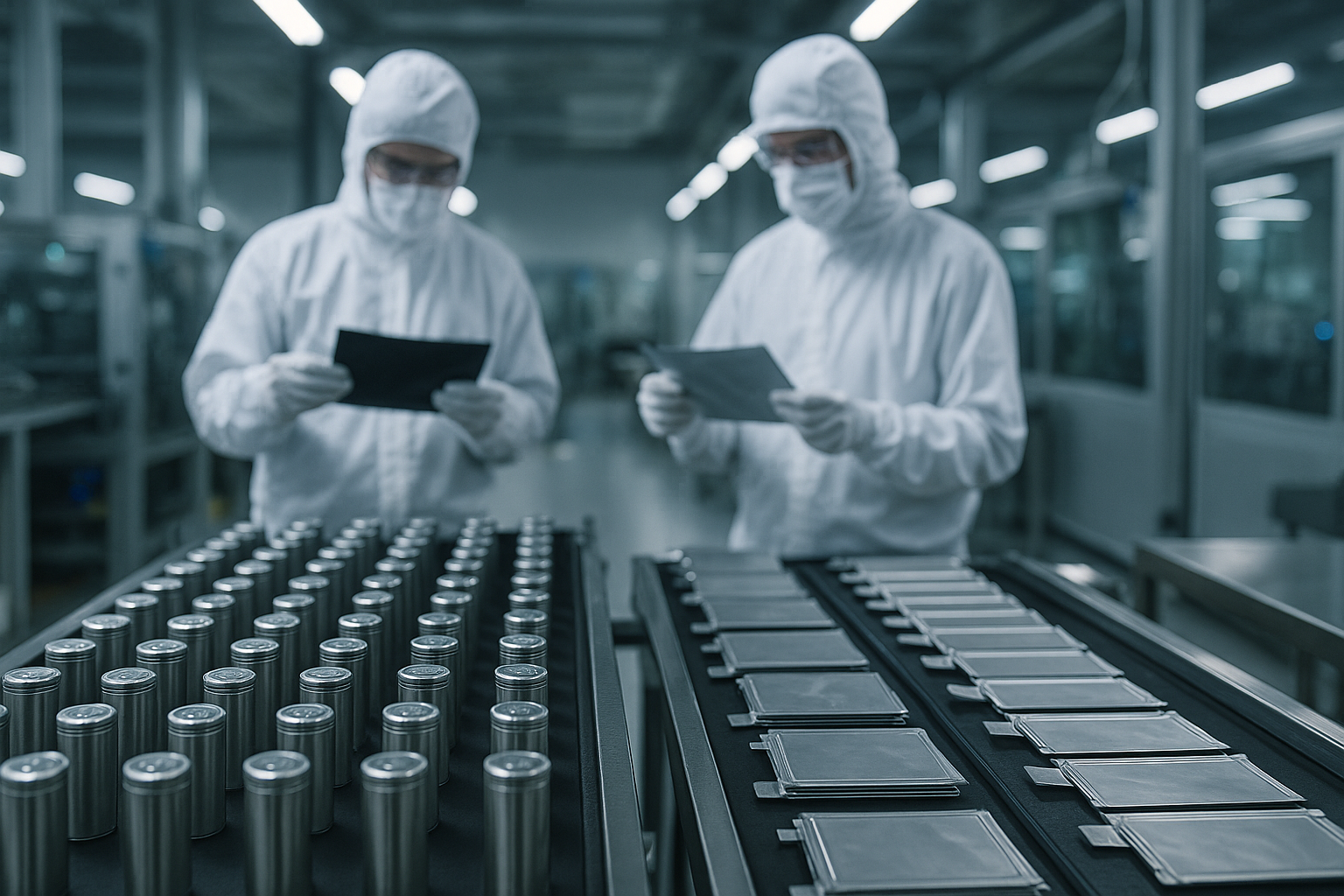
The most important change is not a new lab result but CATL’s claim that the remaining barriers are manufacturing ones the company has already addressed. That shifts the question from whether sodium-ion chemistry can work in principle to whether it can be produced consistently, at yield, and with acceptable cycle life across large volumes of cells.
For battery makers and their suppliers, that means the real test now moves into equipment compatibility, moisture control, electrode processing, formation protocols and long-run quality control. Those are the details that determine whether a materials breakthrough becomes a procurement decision.
A broader battery portfolio, not a single winner
CATL presented sodium-ion as one part of a broader mix that also included updated lithium-based products. That reflects the direction of the market: battery makers are not converging on one chemistry, but on a portfolio of chemistries aimed at different price points and use cases. Sodium-ion is now close enough to scale that it can no longer be treated as a speculative side project.
The next proof point will be whether commercial shipments can begin on the company’s stated timetable and whether customers accept the performance trade-offs in exchange for lower-cost, more abundant materials. For the battery materials sector, that is the point at which a chemistry story becomes an industrial one.
Source: CATL Super Technology Day coverage / Energy-Storage News
Date: 2026-04-20