Oak Ridge team uses machine learning to rebuild fusion-grade tungsten microstructures
Oak Ridge National Laboratory researchers have developed a generative machine-learning workflow that learns the statistical fingerprints of damaged tungsten and produces synthetic microstructures for fusion-material testing. Published on April 15, 2026, the study is aimed at one of the hardest problems in fusion engineering: how to evaluate plasma-facing components when real-world damage data are sparse, expensive to collect and difficult to reproduce.
Oak Ridge trains AI on tungsten crack patterns
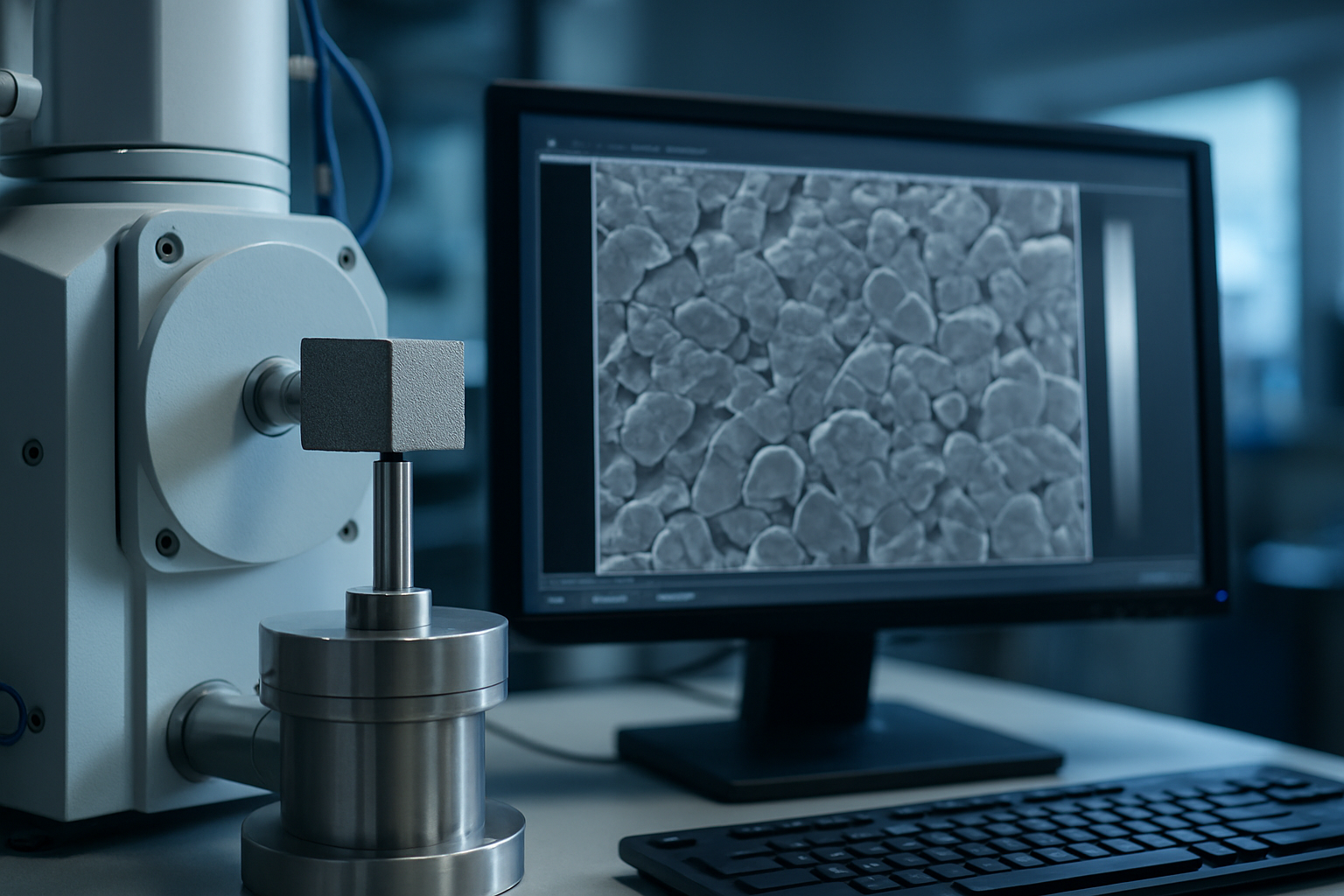
The workflow is built around tungsten, the metal widely used in plasma-facing components because it can withstand extreme heat and harsh operating conditions. Instead of generating stylized images, the model is trained to reproduce the microstructural signatures of real damage, including crack patterns and other features that matter for performance and lifetime.
That matters because fusion reactors will depend on materials that can survive repeated exposure to intense plasma without failing early. By generating new microstructures that are statistically consistent with measured samples, the model gives researchers a way to expand the dataset without waiting for every possible experiment to be run in the lab.
Virtual experiments could narrow the fusion testing bottleneck
The study says the synthetic samples can be used to fill gaps in experimental records and support “virtual experiments” that help assess how fusion components might behave over time. In practical terms, that could make it easier to screen material designs before committing to costly fabrication and irradiation campaigns.
For reactor developers, the immediate value is not a finished commercial material but a faster validation loop. If the workflow holds up across broader test cases, it could shorten the cycle between material design, qualification and component testing for future fusion systems.
Why the timing matters for fusion materials
Fusion programs are moving from basic science toward engineering questions about durability, maintenance and component life. Materials work has become a central constraint, especially for the parts that sit closest to the plasma and absorb the greatest thermal and mechanical stress.
The Oak Ridge approach does not replace experiments, but it may change how much experimental evidence is needed before engineers can make decisions with confidence. For a field where testing is slow and every failure is costly, that is a meaningful shift.
Source: phys.org / Oak Ridge National Laboratory
Date: 2026-04-15