Flint puts paper battery cells into production as battery materials shift beyond lithium
Flint says its cellulose-based paper battery technology has entered production, marking a move from lab-scale development to manufactured cells for pilot deployments and customer programs. The announcement is a notable commercialization step in a battery materials market that still depends heavily on lithium, nickel, cobalt and lead.
Flint’s paper battery reaches manufacturing stage
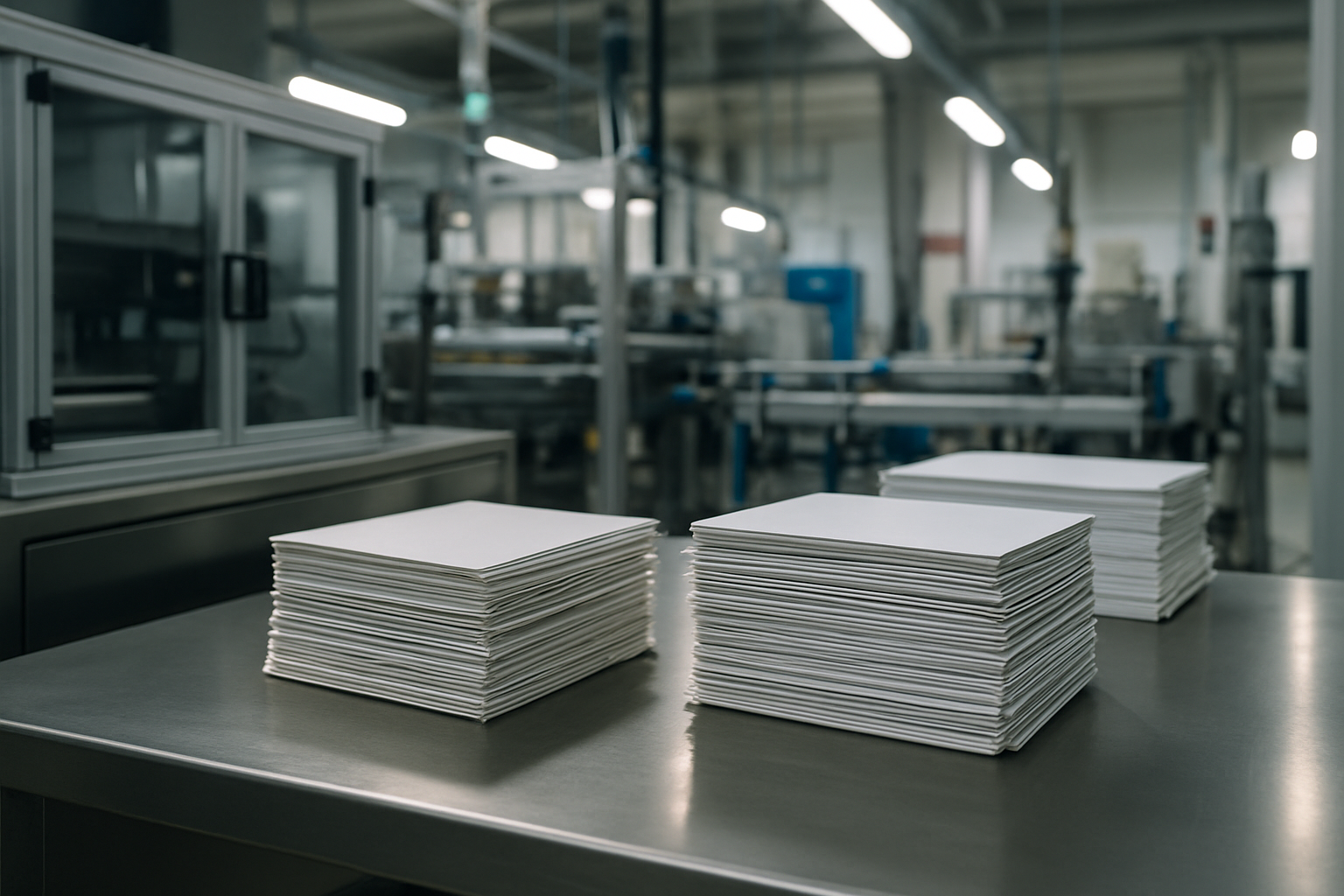
The Singapore-based company said on April 2, 2026, that its paper battery platform is now in production. That puts the technology beyond proof-of-concept work and into a stage where cells can be built for early customer use, which is usually the first real test of consistency, yield and supply-chain readiness.
Flint describes the batteries as cellulose-based, biodegradable and PFAS-free. It also says the design reduces reliance on traditional battery materials such as lithium, nickel, cobalt and lead. Those claims point to a materials strategy aimed at simplifying chemistry and easing end-of-life concerns, though the practical scale and performance limits will ultimately determine how far the platform can go.
Why the chemistry matters now
Battery materials are under pressure from multiple directions at once: cost, critical-mineral security, regulation and recycling. A cell architecture that uses fewer constrained inputs has obvious appeal, especially if it can be manufactured reliably enough for pilot deployments. That is the key hurdle now, not just the novelty of the chemistry.
If Flint can translate the new production phase into repeatable commercial output, the technology could become relevant in applications where sustainability, form factor or disposal requirements matter more than the highest possible energy density. For the wider industry, the move is another sign that battery materials innovation is no longer limited to incremental tweaks inside lithium-ion.
What the production milestone does and does not prove
Entering production does not, by itself, establish a mass-market battery. It does, however, indicate that the company believes the process is ready for manufactured cells rather than isolated prototypes. That distinction matters because many materials platforms look promising in the lab but struggle with manufacturability, uniformity or cost once they are scaled.
Flint’s next test will be whether the cells can meet customer requirements in real programs and whether the company can maintain production quality as volumes rise. For now, the significance is straightforward: a battery materials company is claiming a transition from development to manufacturing in a field where that jump is often the hardest one to make.
Source: PR Newswire
Date: 2026-04-02