GMG says its graphene-aluminium battery has doubled energy density to 49 Wh/kg
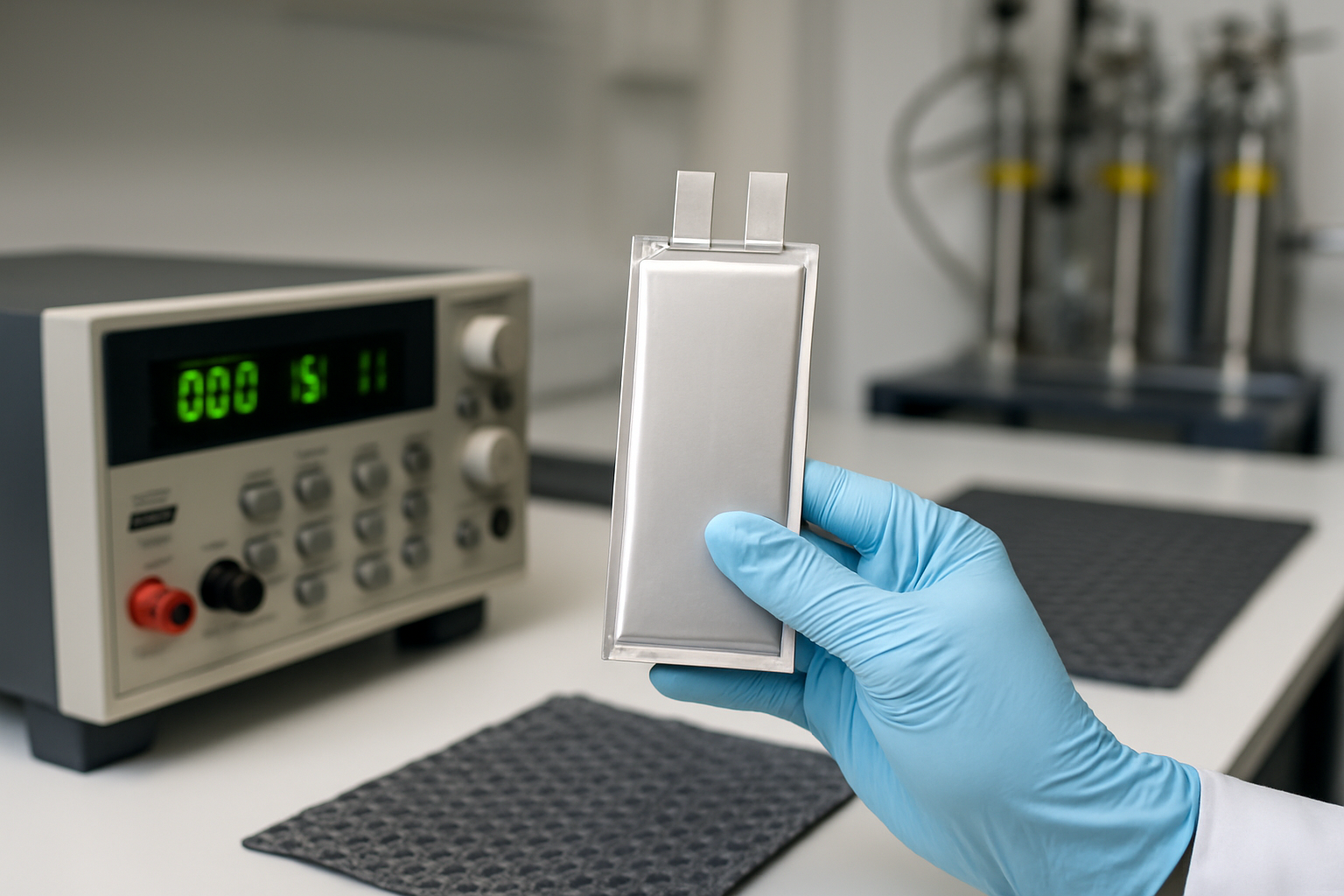
Graphene Manufacturing Group says its graphene-aluminium-ion battery program has reached a new development threshold, with pouch cells now testing at 49 Wh/kg, roughly double the 26 Wh/kg the company reported in December 2025. The update is the clearest sign yet that the company’s fast-charging graphene battery remains on a path toward commercial evaluation rather than staying at the lab stage.
GMG lifts its graphene-aluminium-ion pouch cells to 49 Wh/kg
The company said the latest performance results came from battery innovation center testing and kept the cell architecture aimed at a six-minute charge. GMG described the increase as a significant step up from its December 2025 announcement, when it said the technology had reached 26 Wh/kg.
GMG also said the current cells remain in pouch format and are still being optimized in the laboratory. The company’s battery technology readiness level remains at 4, which indicates a prototype system being validated in a controlled environment rather than a production-ready product.
Customer testing is now slated for 2026
GMG said the next stage is customer testing in 2026, followed by small commercial production in 2027 with support from partners, including the Battery Innovation Center. That timeline matters because it shifts the story from material promise to a defined industrial roadmap.
The company said it believes the cell chemistry could eventually reach more than 160 Wh/kg when charged over one hour, and more than 80 Wh/kg at a six-minute charge, if further work on the cathode, anode, electrolyte and component weights proves successful. Those are company projections, not independently verified field results.
Why the new result matters for fast-charging storage
GMG is positioning the battery for heavy mobile equipment and other use cases that value high power density and rapid charging. The company also said it expects a plastic pack design, rather than a metal case, because it believes the cells will not need a thermal management system or the same fireproofing precautions associated with conventional lithium-ion packs.
That claim, if borne out in broader testing, could affect pack cost, weight and complexity. For now, the more immediate significance is narrower but concrete: GMG has shown another measurable performance jump in a chemistry it is trying to move into partner-led manufacturing and customer trials.
Source: Nasdaq / Newsfile Corp. release from Graphene Manufacturing Group Ltd.
Date: 2026-04-15