
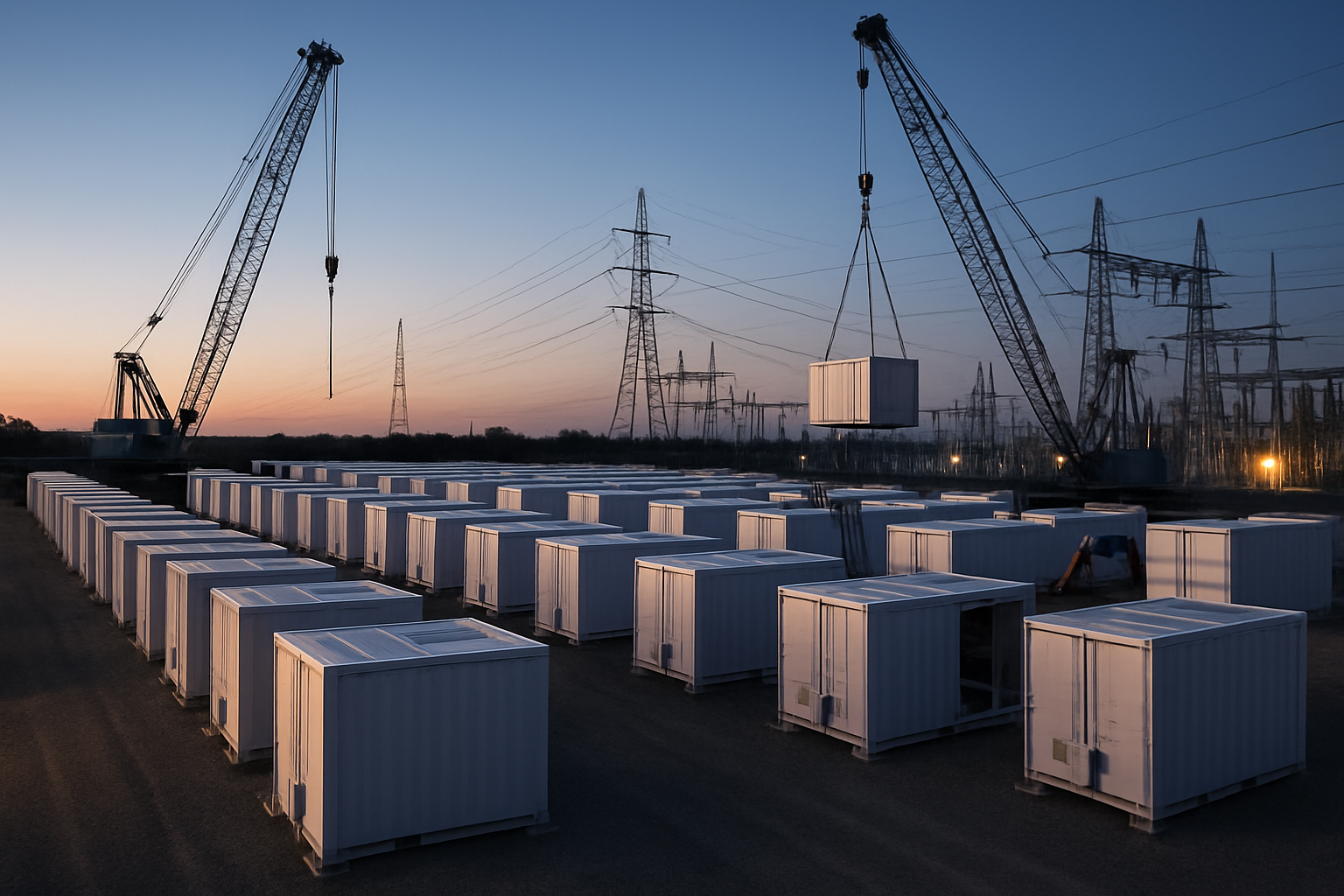
Energy storage prices split as U.S. developers favor larger grid projects
Battery storage pricing in the U.S. is moving in two directions at once. A new market report published on April 7, 2026, says utility-scale systems continued to get cheaper in the first quarter, while distribution-scale pricing largely flattened, reflecting a supply chain increasingly oriented toward larger projects tied to data centers and independent power producers.
Utility-scale battery systems post deeper price drops
According to the report from Anza Renewables, utility-scale storage system prices have fallen as much as 8.6% since November 2025 and 20.9% since May 2025. The firm said the decline was strongest in the market segment serving large grid-connected projects, where developers continue to pursue multi-hour batteries for utility procurement and merchant power opportunities.
The report said distribution-scale prices, by contrast, have been mostly unchanged since November, even though they remain lower than they were in May 2025. Anza said the gap reflects a shift in supplier attention toward larger configurations, leaving smaller commercial and distributed projects with tighter availability in some cases.
Data-center demand is reshaping the battery pipeline
Anza attributed part of the divergence to battery developers supporting larger projects for data-center and independent power producer customers. That matters because it suggests the current pricing environment is being set less by generic demand growth and more by where suppliers can place product fastest and at the largest scale.
The report also noted that U.S. energy storage deployments hit a record in 2025, with 18.9 GW and 51 GWh installed across customer segments. Utility-scale installations accounted for 16 GW and 47.3 GWh, reinforcing how heavily the market has tilted toward grid-scale projects.
Policy and manufacturing shifts could reshape 2026 costs
Even with the recent declines, Anza said prices may stabilize or edge higher in the coming months because lithium carbonate prices are rising and China reduced value-added tax rebates on April 1, 2026. The firm also pointed to domestic manufacturing expansion and new federal sourcing guidance as factors that could soften some of that pressure.
The larger question is whether the current pricing split becomes the new normal. For utilities, independent power producers and large commercial buyers, the immediate signal is that the economics for grid-scale storage remain strong even as smaller systems face a less predictable cost path.
Source: Utility Dive
Date: 2026-04-07