Penn State’s all-polymer capacitor hits a commercialization milestone with a patent filing
Penn State researchers have filed a patent on a new all-polymer nanocomposite capacitor that the team says can store four times more energy while withstanding higher heat than conventional designs. The development, published in Nature on February 18, 2026, is now moving toward commercialization rather than remaining a purely academic result.
Penn State files patent on plastic-based energy storage
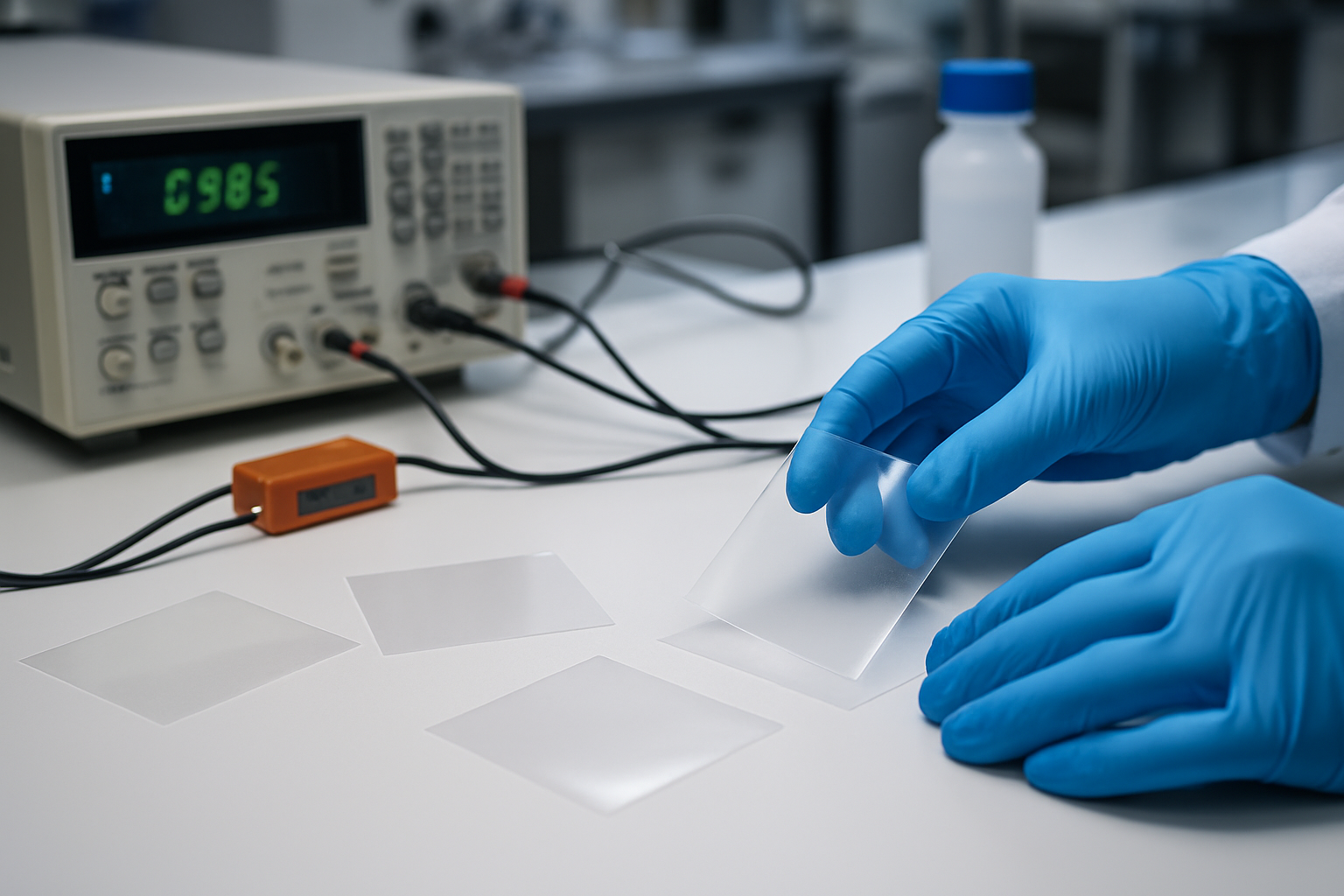
The material combines commercially available plastics into a polymer capacitor designed for high-performance electronics and other energy-storage applications. According to the researchers, the process is simple enough to support large-scale production, and the team says the device could either deliver four times the power or be reduced to one-fourth of its size while maintaining the original energy output.
The group says the patent filing is intended to protect the technology as it moves toward market development. That matters because polymer capacitors sit in applications that value rapid bursts of power, including systems where weight, volume and thermal stability are all tightly constrained.
Why the heat tolerance matters for power electronics
Energy-storage materials often face a tradeoff between performance and operating temperature. In this case, the appeal is not only the reported gain in energy density but also the prospect of a capacitor that can handle more heat without sacrificing its dielectric performance.
That combination could be relevant for compact electronics, transportation systems and other environments where thermal stress can limit reliability. The researchers described the approach as cost-effective because it uses inexpensive, commercially available dielectrics rather than rare or exotic inputs.
From Nature paper to market path
The technical work was supported by the Office of Naval Research, the U.S. National Science Foundation, Axalta Coating Systems and Penn State’s Harvey F. Brush Chair endowment. The paper’s publication in Nature gives the result a strong research footing, but the more immediate news is that the group is now trying to move the material out of the lab and into a product pathway.
For materials science, that shift is often the hardest step. A patent filing does not guarantee deployment, but it is a clear signal that the team sees a realistic route toward manufacturing and application testing rather than a one-off demonstration.
Source: EurekAlert! / Penn State
Date: 2026-02-18