Graphene Scientists Report Electron Flow That Defies a Core Physics Law
Researchers in India and Japan say they have observed a rare quantum fluid in ultraclean graphene, a result reported on April 15, 2026, that shows heat and electrical transport can decouple in a way that standard metal physics does not predict. The finding places graphene back at the center of fundamental condensed-matter research, but with a possible path toward more sensitive quantum devices.
Ultraclean graphene reaches the Dirac fluid regime
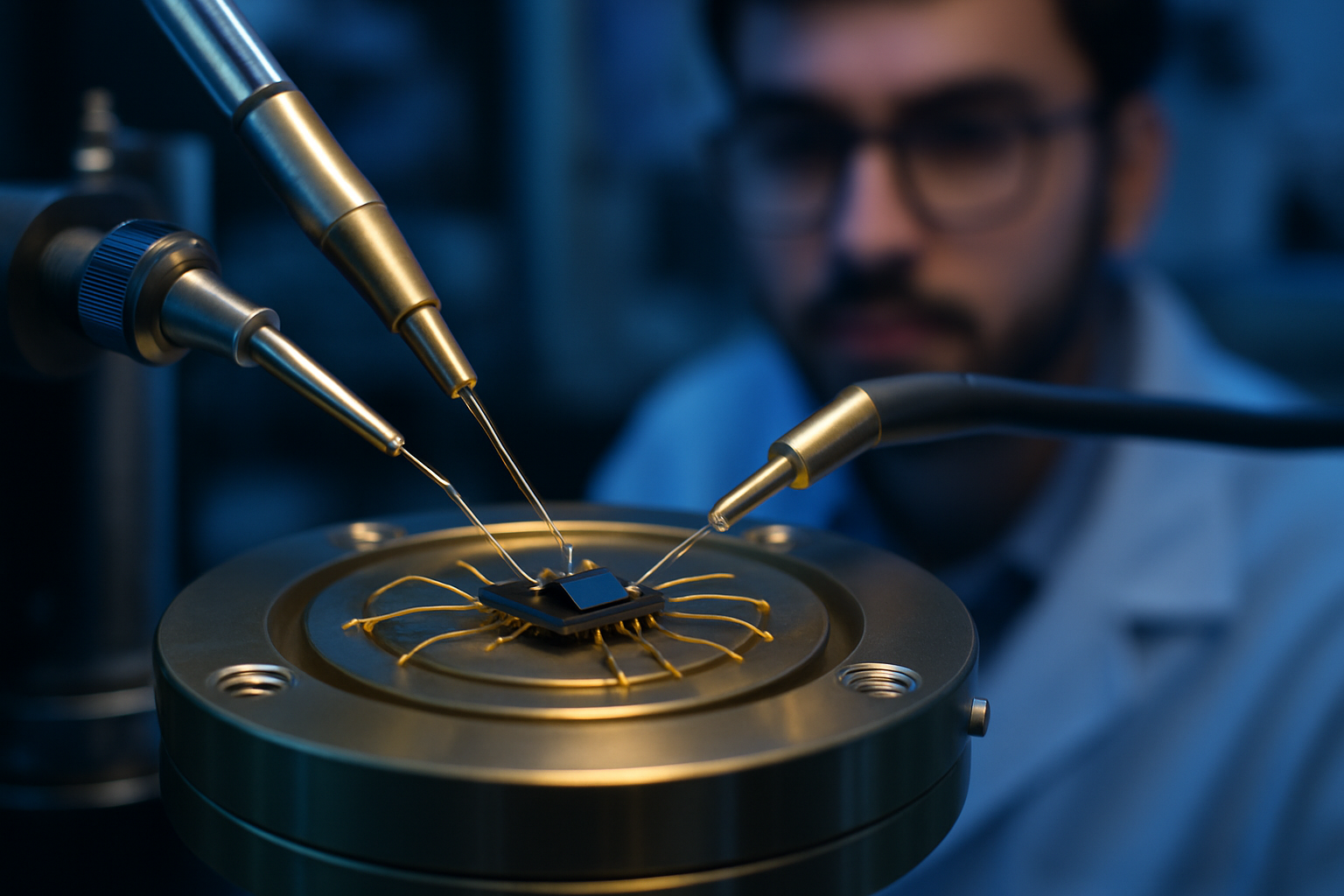
The team, working at the Indian Institute of Science with collaborators at Japan’s National Institute for Materials Science, said it identified a Dirac fluid in graphene by making exceptionally clean samples and measuring how they conduct heat and electricity. At the Dirac point, electrons stop behaving like isolated particles and move collectively, more like a liquid than a conventional current.
That collective behavior is what makes the result notable. The study says the material did not follow the usual expectation that thermal and electrical conductivity rise and fall together. Instead, the two moved in opposite directions under the measured conditions.
A direct challenge to a long-standing transport rule
According to the report, the observations deviate from the Wiedemann-Franz law, which links heat and charge transport in metals. The researchers said the mismatch exceeded 200 times at low temperatures, a striking separation that points to a transport regime dominated by quantum interactions rather than ordinary metallic behavior.
The work also suggests the behavior is not random. The reported conductance follows a universal constant tied to the quantum of conductance, which gives the finding technical weight beyond a single unusual measurement.
Why the result matters beyond basic physics
Graphene has already spent years in the lab and in early-stage product development, but this study is about a different kind of value: a material platform that can expose physics usually associated with extreme environments. The authors say the same effect could help researchers probe high-energy phenomena in a tabletop setting, including questions linked to quantum thermodynamics and collective electron flow.
The more immediate commercial relevance is narrower. The paper says a Dirac fluid in graphene may support highly sensitive quantum sensors capable of detecting faint electrical signals and magnetic fields. That is still a research implication, not a product claim, but it gives the result a plausible route toward applications where control over ultra-low-noise transport matters.
What the April 15 paper adds to graphene research
The new study, titled “Universality in quantum critical flow of charge and heat in ultraclean graphene,” adds a fresh experimental layer to a field that continues to produce both industrial and fundamental advances. In this case, the news is not a manufacturing milestone or a commercial launch. It is a laboratory result showing that under the right conditions, graphene can behave in a way that sharpens rather than settles the physics debate around electron flow.
Source: ScienceDaily / Indian Institute of Science (IISc)
Date: 2026-04-15