
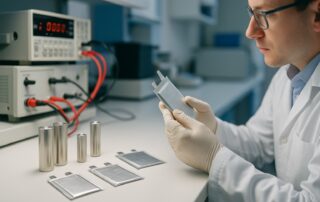
GMG says graphene battery energy density has doubled in push toward 2027 production
Graphene Manufacturing Group said April 15, 2026, that its six-minute-charging graphene aluminum-ion battery cells reached 49 Wh/kg, doubling the company’s December 2025 figure and sharpening the path toward customer testing in 2026 and small commercial production in 2027.
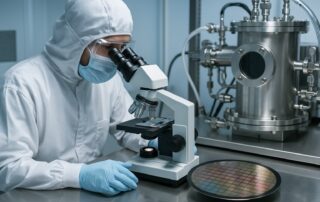
Adisyn says it has made a low-temperature graphene layer for semiconductor interconnects
Adisyn said on April 20, 2026, that it had demonstrated a continuous graphene layer on a 1-centimeter coupon using industrial atomic layer deposition equipment, a result the company says is designed to fit semiconductor manufacturing limits rather than force a new process flow.

GMG lands U.S. media push as graphene thermal-management products move toward broader visibility
Graphene Manufacturing Group has signed a multi-network media deal to promote its graphene production platform and energy-efficiency products, including thermal-management applications aimed at HVAC and data centers.
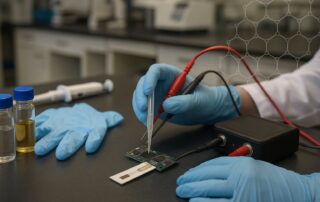
Oregon State team pairs reduced graphene oxide with oxide chemistry for faster food testing
Oregon State University researchers reported an electrochemical sensor that uses reduced graphene oxide in a nanocomposite designed to speed up food-quality testing. The device was built to detect theobromine in drinks and chocolate milk, pointing to a practical route for lower-cost screening outside conventional labs.

Group14 says its South Korea silicon battery material plant has started EV-scale production
Group14 Technologies said its new Sangju, South Korea factory has begun EV-scale production of its silicon battery material SCC55, a milestone the company says can support up to 2,000 metric tons a year as silicon-anode adoption widens in commercial battery programs.

Northwestern team scales high-entropy alloy nanoparticle design to millions of particles
A Northwestern University-led team has reported a synthesis method that can tune both the composition and surface structure of high-entropy alloy nanoparticles, then scale the process to millions of particles on a chip. The advance could make it easier to identify catalysts for clean hydrogen, energy storage and other chemical processes.