
Graphene sensor prototype powers temperature readings without a battery in Arkansas-Michigan test

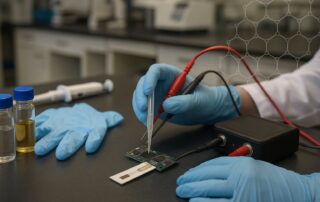
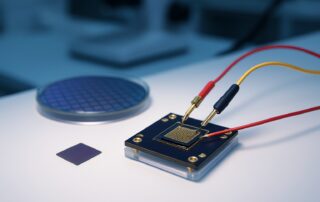
Researchers at the University of Arkansas and the University of Michigan say they have demonstrated the first ultra-low-power temperature sensor powered by graphene-based solar cells, a battery-free design that could reduce maintenance in remote monitoring and wearable devices.

By |2026-04-24T05:16:14+00:00April 24th, 2026|News|

Drexel turns MXene into nanoscrolls in a push to make 2D nanomaterials more usable

Researchers at Drexel University say they have developed a scalable method for turning MXene, a conductive 2D nanomaterial, into nanoscrolls that could improve ion transport in batteries, sensors and wearable devices. The work, reported March 31, 2026, in Advanced Materials, also suggests a route to more accessible, room-temperature processing of flexible conductive films.

By |2026-04-17T01:47:49+00:00April 17th, 2026|News|

Penn State graphene sensors cut liquid drift as research pushes toward commercial use

Penn State researchers have reported a graphene-based field-effect transistor design that delivers up to 20 times more sensitivity and up to 15 times less signal drift in liquids, a technical advance aimed at making graphene sensors more usable in biosensing and environmental monitoring.

By |2026-04-14T01:06:33+00:00April 14th, 2026|News|

Cambridge researchers build graphene-based artificial skin that can sense slip and shear in real time

Researchers at the University of Cambridge have reported a graphene-based tactile sensor that reads pressure, shear and slip simultaneously, giving robots a more human-like sense of touch and improving control in fragile-object handling.

By |2026-04-13T01:04:43+00:00April 13th, 2026|News|
Go to Top