
MIT says it can grow moiré crystals at scale, opening a cleaner route for 2D quantum materials
MIT researchers say they have developed a chemical growth method that can produce high-quality moiré crystals in large numbers, potentially replacing the slow, manual assembly process that has dominated two-dimensional materials work for more than a decade. The study, published in Nature and highlighted by MIT on April 3, 2026, frames the advance as a practical step toward making moiré-based electronic materials more reproducible and easier to scale.
MIT’s chemical route for moiré crystals
Instead of peeling and stacking atomically thin layers by hand, the MIT team says its approach uses chemical synthesis to grow moiré superlattices directly into the material. In the lab’s telling, that shift matters because it could allow tens of thousands of devices to be assembled in a way that is far more consistent than current one-off fabrication.
The work centers on atomically thin two-dimensional materials such as graphene, which have become the starting point for moiré systems when layers are twisted or combined with closely related materials. MIT said the new method produces naturally grown moiré materials that are nearly perfect and highly reproducible, a key requirement if the field wants to move beyond physics demonstrations and toward usable devices.
Why the bottleneck has mattered for 2D electronics
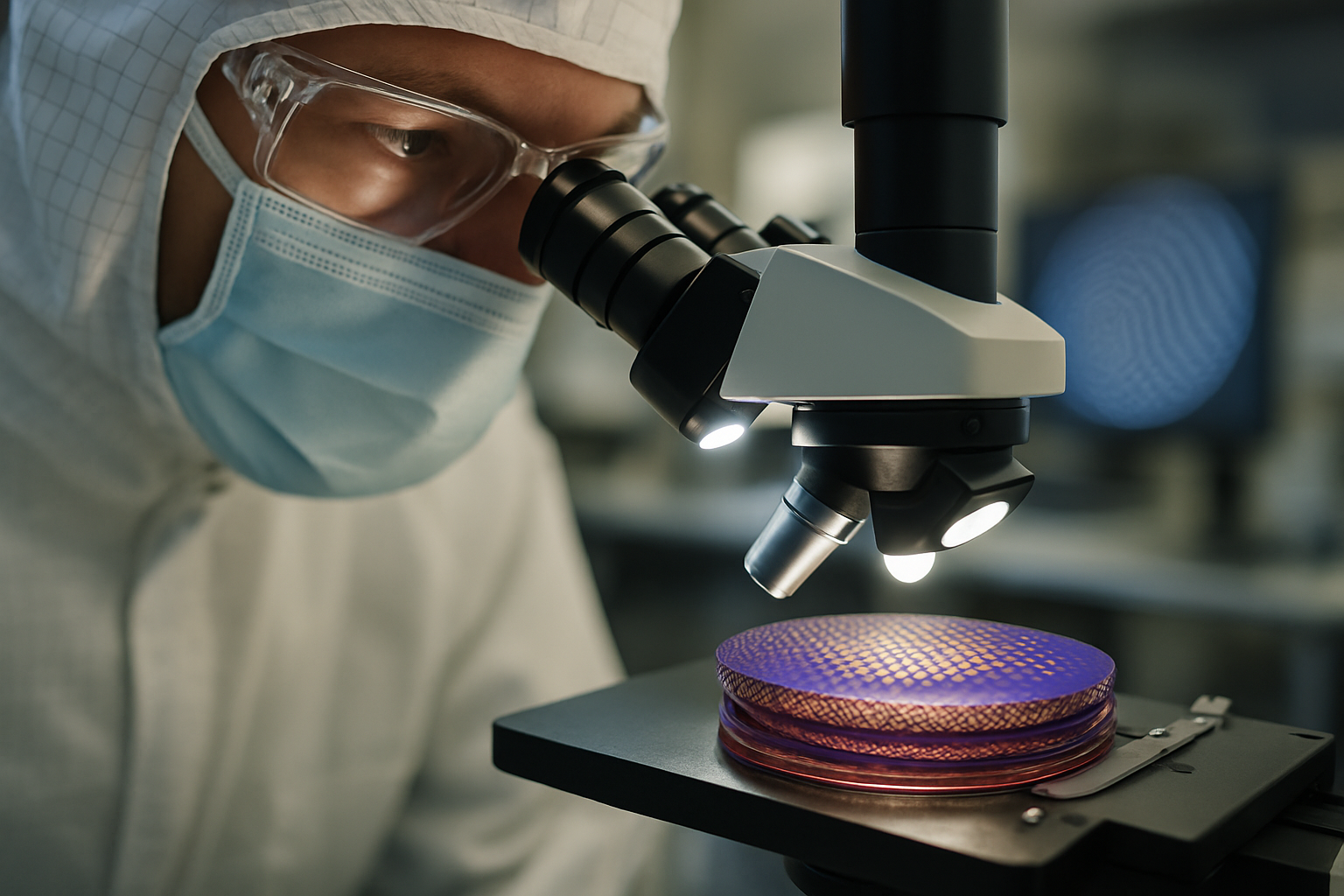
For years, moiré materials have been built one sample at a time using microscope-guided transfers, polymers and precise twist angles. That process can produce remarkable phenomena, including superconductivity and fractional electronic behavior, but it is labor-intensive and difficult to standardize. MIT’s claim is important because it attacks the manufacturing problem directly, not just the physics.
The researchers also reported that electrons in these crystals can behave as if they are moving through a synthetic fourth dimension, an effect measured in quantum oscillations under strong magnetic fields. That result is the scientific hook, but the operational news is the growth method itself: if the synthesis proves robust, it could reduce a major friction point for future quantum and nanoscale electronics work.
What changes if the method holds up
The near-term impact is likely to be research-side rather than commercial. Still, a scalable and reproducible route to moiré crystals gives laboratories a better shot at testing higher-dimensional superconductivity and topological states without relying on bespoke hand-built samples. It also gives materials scientists a more realistic path to compare performance across many devices rather than treating each one as a special case.
MIT acknowledged that there are still major obstacles before the approach can be turned into technology, but the significance of the finding lies in its proof of concept. The field has spent years exploring what atomically thin materials can do; this work suggests the next constraint may be how they are made.
Source: MIT News
Date: 2026-04-03