ESA flight test shows graphene aerogels can be driven by laser light in microgravity
Graphene aerogels took a sharp step toward space hardware relevance this week, after researchers reported that the ultralight material accelerated rapidly when struck by laser light during a parabolic-flight experiment in microgravity. The work, published in Advanced Science and reported on April 7, suggests a possible path to propellant-free propulsion systems for future satellites and solar-sail concepts.
Laser pulses moved the graphene aerogels in zero gravity
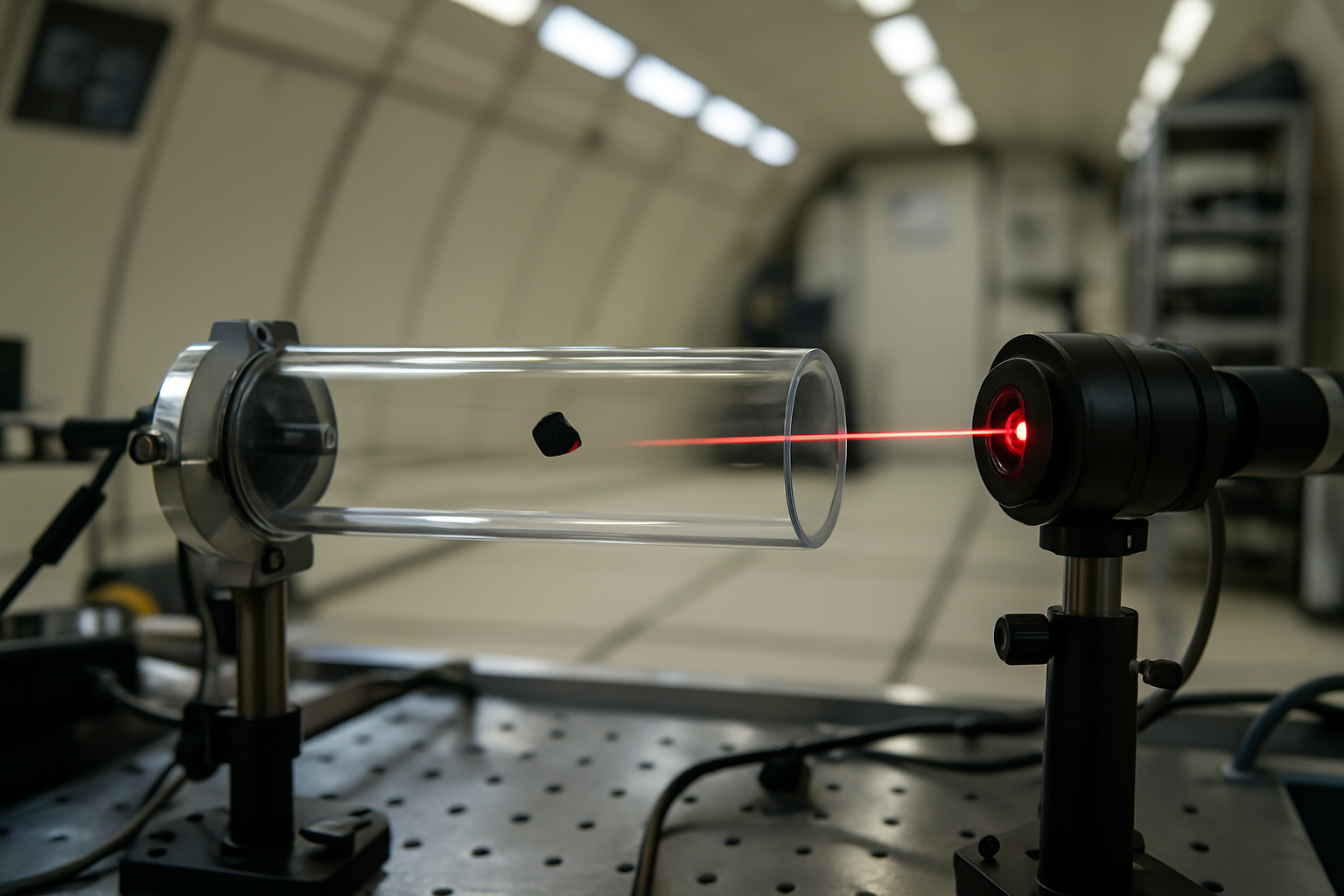
The experiment was carried out during ESA’s 86th parabolic-flight campaign in May 2025, where an international team exposed small graphene aerogel samples to a continuous laser inside a vacuum chamber. According to the report, the samples barely moved under Earth gravity conditions, but in microgravity they shot forward almost instantly, with the main acceleration phase lasting about 30 milliseconds.
The researchers also reported that stronger laser pulses produced greater acceleration, giving them a way to tune the motion. That control is important because any practical propulsion concept for spacecraft would need repeatability, not just a one-off demonstration.
Why graphene aerogels matter for future spacecraft systems
Graphene aerogels combine graphene’s electrical conductivity with an aerogel’s extremely low density and porous structure. In this test, that combination translated into a material that responded strongly to light in space-like conditions, at least at the laboratory scale.
The practical appeal is straightforward: if light can provide enough thrust or directional control, spacecraft could reduce dependence on stored propellant. That could free up mass and volume for payloads and extend mission duration, especially for small satellites where every gram matters.
What the study says about commercialization
The result is still fundamental research, not a flight-ready propulsion system. But it is a concrete validation step for a long-discussed idea: that advanced 2D materials can interact with light in ways that are useful for space engineering. ESA said it is already exploring the broader potential of 2D materials through its Enable topical team.
The study was led by researchers at Université Libre de Bruxelles and Khalifa University, with ESA support, and was published as Light-Driven Propulsion of Graphene Aerogels in Microgravity in Advanced Science. The next hurdle is translating the effect from a short parabolic-flight test into a controllable, durable system that can operate on orbit.
Source: Phys.org / European Space Agency
Date: 2026-04-07