Noon Energy says its 100-hour battery has now run at scale, targeting long-duration storage for data centers and grids
Noon Energy says it has successfully operated a scaled-up long-duration energy storage system for thousands of hours, a milestone the company says puts its modular battery closer to real-world deployment. The startup’s reversible solid oxide fuel cell system has delivered more than 100 hours of storage, and in some tests more than 200 hours, according to the company.
Noon Energy’s containerized system clears a scale-up test
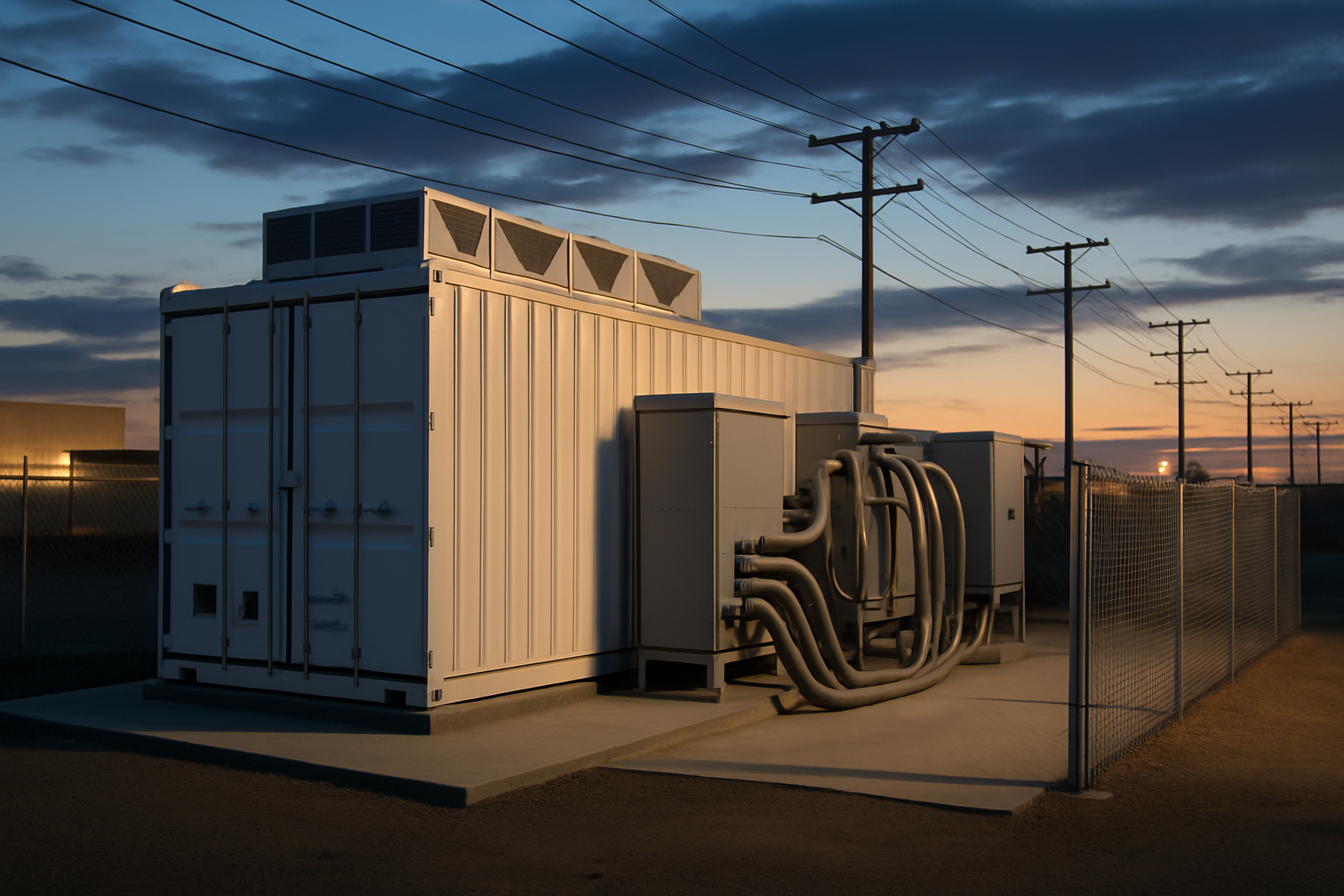
The company says the demonstration system is fully containerized and modular, and that it is now operating with support from the California Energy Commission. Noon Energy describes the platform as a rechargeable carbon-based battery that stores energy by converting carbon dioxide into a fuel and then converts it back to electricity during discharge.
That operating record matters because long-duration storage has remained one of the hardest categories to commercialize. Lithium-ion batteries are widely deployed, but they are generally optimized for shorter-duration use cases. Noon Energy is aiming at a different problem: keeping power available across multi-day gaps in renewable generation or during heavy demand at large facilities.
Why multi-day storage is drawing attention from data centers
The company is pitching the system for hyperscalers, data centers and other large electricity users that want more reliable on-site power. The appeal is straightforward: in a world where AI-driven data center demand is rising quickly, operators need storage that can smooth longer outages and longer renewable shortfalls, not just brief peaks.
Noon Energy says the system’s footprint is far smaller than alternatives such as flow batteries or pumped hydro, and that it uses a much smaller amount of critical materials than lithium-ion batteries. Those claims, if borne out at commercial scale, could make the technology attractive where land, supply chain exposure and duration all matter at once.
The commercialization question is now execution, not chemistry
The company says it has already built a larger commercial-scale system and expects commissioning soon. That shifts the story from lab validation toward installation, reliability and economics, which are the real gates for long-duration storage technologies trying to enter the market.
For energy storage developers, the broader significance is that the sector keeps moving beyond the two- to 10-hour battery format that dominates much of today’s deployment. If Noon Energy can turn its operating demo into a repeatable product, it would add another serious option for industrial users and grid planners looking for multi-day clean power.
Source: Electrek
Date: 2026-01-21