Scientists Show How Magnetic Waves Can Follow Graphene’s Math, Opening a New Path for Tiny Wireless Devices
Scientists at the University of Illinois say they have found an unexpected link between graphene and engineered magnetic materials, a result that could eventually help shrink microwave hardware used in wireless systems.
- The work was published in Physical Review X.
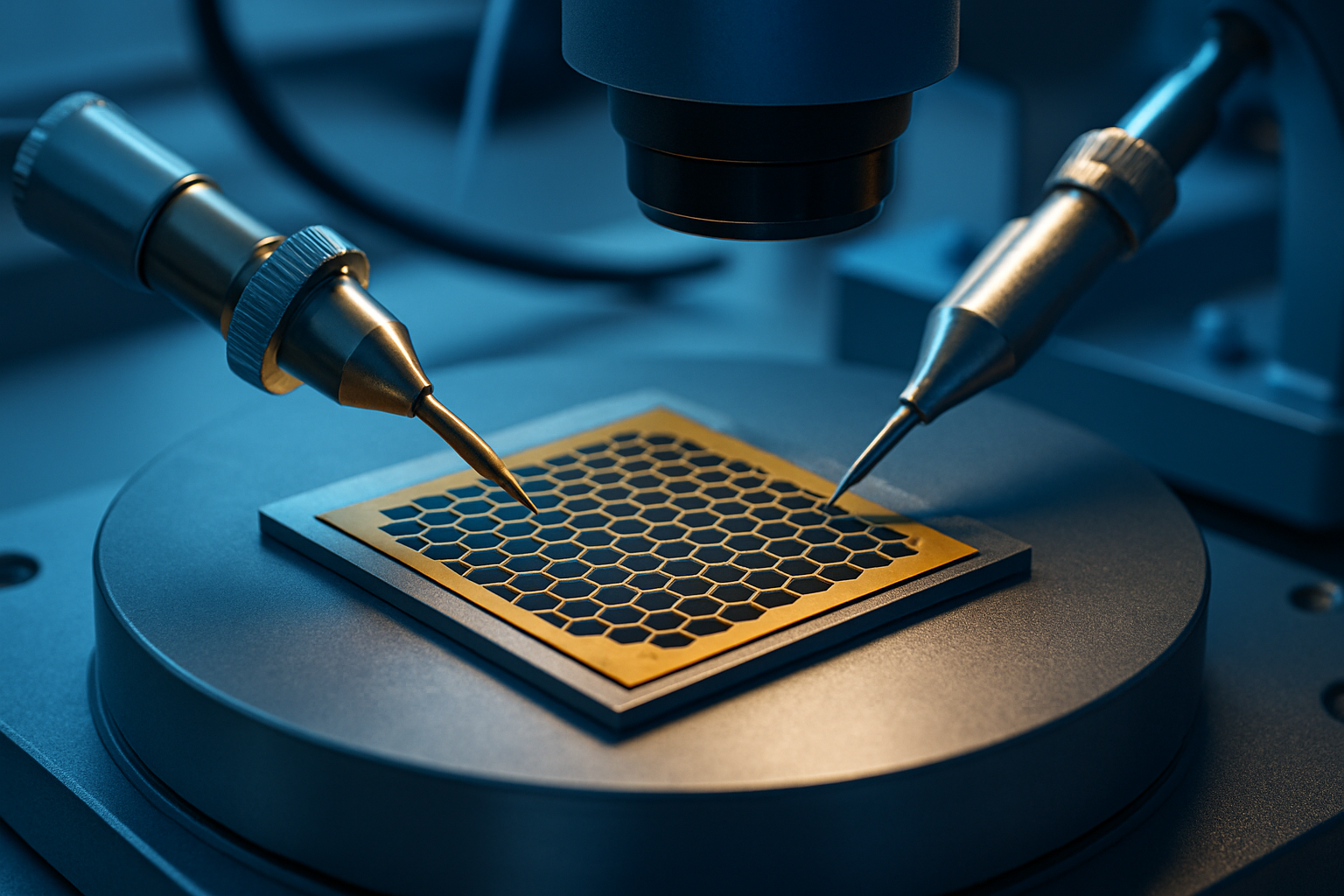
- Researchers modeled a magnetic film patterned with a hexagonal array of holes.
- The team says the setup follows the same mathematics as electrons in graphene.
- The finding could inform future microwave components, including circulators.
A graphene-like pattern in a magnetic film
In a study highlighted on March 8, 2026, by ScienceDaily from the University of Illinois Grainger College of Engineering, researchers described how a thin magnetic film with a graphene-inspired hexagonal pattern can produce spin waves that obey the same equations as graphene electrons.
The team said the structure was not meant to copy graphene exactly, but to test whether the material geometry could reproduce some of the same underlying physics. According to the report, the answer was yes.
Why the finding matters
The researchers reported that the system showed nine distinct energy bands, including behaviors resembling massless waves, localized states and topological effects. That matters because graphene has long served as a model for studying unusual electronic behavior, and this new work suggests the same mathematics may extend into magnetic systems.
The result may give physicists a new way to study complex magnetic materials and potentially design devices with more precise control over wave behavior.
Possible applications in microwave technology
Beyond the basic science, the team said the discovery could have practical value in microwave technology. One example mentioned in the report is a microwave circulator, a component that directs signals in one direction. These devices are often bulky, and the researchers suggested the magnonic system could help reduce them to micrometer scale.
The report also said the research group has filed a patent application covering its microwave device concepts.
What the study adds to graphene research
Graphene is often discussed as a material with unusual electronic properties, but this development shifts the focus to how its mathematics can inspire other systems. Rather than introducing a new graphene product, the work expands graphene’s influence as a physics model for engineered materials.
That makes the study notable for researchers tracking where graphene science is headed next: not just in carbon-based devices, but in how its behavior can be echoed in other advanced materials.
What to Watch
Next, the key question is whether the magnetic-film approach can move beyond theory and modeling into a practical prototype. Watch for follow-up studies on device performance, fabrication limits and whether the same graphene-like behavior can be reproduced in real-world microwave hardware.
Source Reference
Primary source: ScienceDaily / University of Illinois Grainger College of Engineering
Source date: 2026-03-08
Reference: Read original source