Cambridge researchers build graphene-based artificial skin that can sense slip and shear in real time
Researchers at the University of Cambridge have unveiled a graphene-enabled tactile sensor designed to give robots a more human-like sense of touch, with the ability to detect not just pressure but also shear force, slip and surface texture in real time. The work, published on March 5, 2026, moves graphene sensors beyond narrow lab demos and into a hardware problem that matters for robotic gripping, dexterous manipulation and prosthetics.
Graphene and liquid metal in a pyramid sensor stack
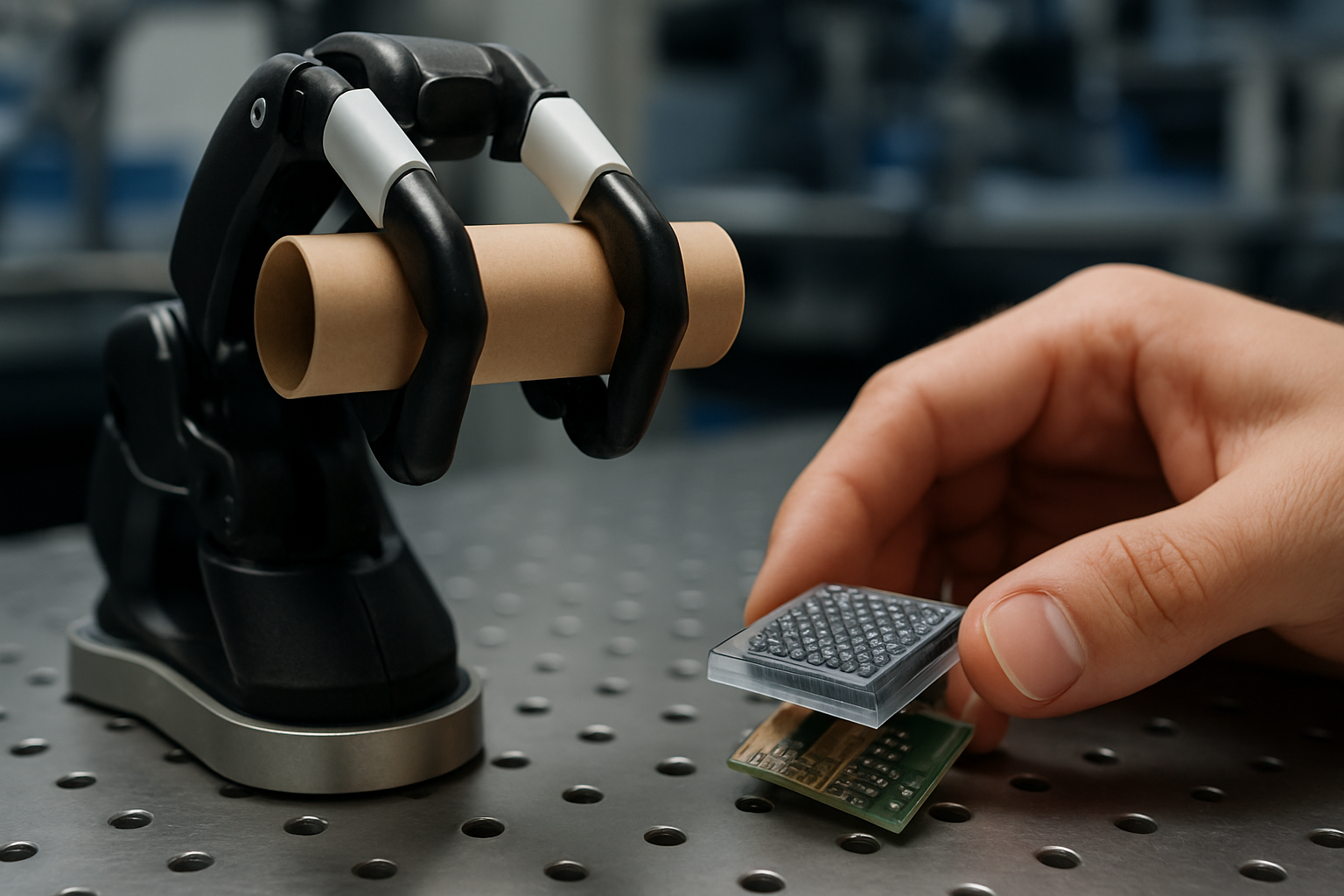
The sensor combines graphene with liquid metal composites in a miniature pyramid-shaped structure that concentrates stress at the tip and translates tiny changes in force into measurable electrical signals. According to the research team, the device can detect extremely small forces while still covering a broad measurement range, a balance that has been difficult for flexible tactile sensors to achieve.
The team says the design can reconstruct the full three-dimensional force vector from four electrodes beneath each pyramid, allowing the sensor to distinguish normal pressure from lateral forces and identify the onset of slipping.
Why slip detection changes the robotics use case
That distinction matters because robotic hands often fail not when they lift an object, but when they lose hold of it. A sensor that can register slip as it begins gives a gripper a chance to correct grip force in real time, rather than relying on preprogrammed assumptions about an object’s weight or surface properties.
In demonstrations described by the researchers, robotic grippers equipped with the sensor handled fragile items such as thin paper tubes without crushing them. The system also showed promise for microscale applications, where the team said arrays of the sensor could help identify the mass, geometry and material density of tiny metal spheres.
Pressure, shear and texture in one compact format
The Cambridge group says the sensor improves size and detection limits by roughly an order of magnitude compared with existing flexible tactile sensors. That is a notable engineering gain because tactile systems often trade sensitivity for durability, or resolution for manufacturability.
By using a compact multilayer structure rather than bulkier mechanical assemblies or optical setups, the design points toward lighter sensor arrays that could be embedded into robotic fingertips, surgical tools or prosthetic interfaces without adding substantial size or complexity.
From laboratory prototype to embedded touch hardware
The near-term significance is less about consumer robotics than about making tactile sensing dependable enough for controlled manipulation in industrial, medical and research settings. The sensor’s ability to detect slip in real time is the most operationally important feature in the report, because it directly addresses one of the main failure modes in robotic grasping.
The researchers also suggest the device could be miniaturized further, potentially below 50 micrometers, which would move it closer to the density of mechanoreceptors in human skin. If that scale can be retained outside the lab, graphene-based tactile sensing could become a practical building block for next-generation robotic hands rather than just a demonstration of material performance.
Source: University of Cambridge via TechXplore
Date: 2026-03-05