Penn State graphene transistor boosts liquid sensing stability in new biosensor design
Penn State researchers have reported a graphene-based transistor design that stayed stable in liquid-rich environments and made chemical and biological sensing up to 20 times more sensitive in lab tests. The work, published on March 17, 2026 in npj 2D Materials and Applications, targets one of the most persistent engineering problems in graphene biosensors: signal drift once devices are exposed to liquids.
Penn State’s dual-gated graphene device cuts drift in liquid settings
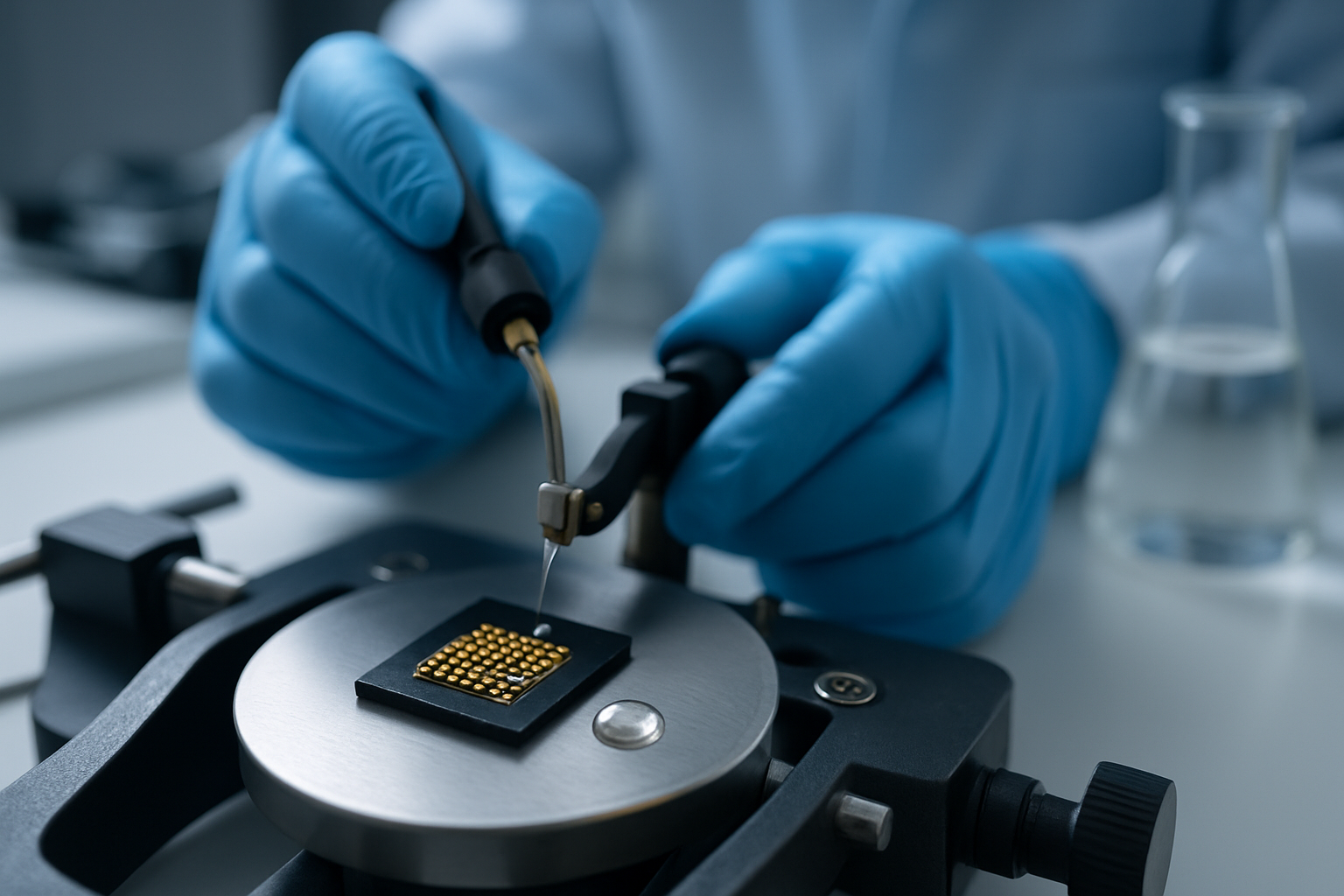
The team’s design uses an active dual-gated graphene transistor, combining an independent top gate with a locally patterned back gate and a solid-state HfO2 dielectric. According to the researchers, that architecture gave the device more control over charge modulation from both sides of the material, helping it hold a steadier baseline than conventional liquid-exposed field-effect transistors.
In the reported tests, sensors built with the new transistors were more responsive to signals including hazardous chemicals in water and dopamine levels than comparable devices using more standard transistor layouts. The results were described as low-noise, drift-stable and tunable, all three traits that matter when the sensor has to operate outside a dry laboratory setup.
Why the liquid stability matters for graphene sensors
Graphene has long drawn interest for biosensing because it is conductive, extremely thin and highly sensitive to its surroundings. But that same sensitivity can become a liability in fluids, where conventional devices often struggle to keep a stable readout. The Penn State result is important because it addresses performance in the environment where many real uses would happen: biological samples, wearable diagnostics and water monitoring.
The researchers said the compact system can be miniaturized, scaled and integrated into circuit-board and integrated-circuit formats. That makes the advance more than a materials result; it points toward a device architecture that could be engineered into practical sensing hardware if the lab performance holds in larger systems.
Potential path to portable diagnostics and water monitoring
If the design proves durable beyond the laboratory, it could support smaller diagnostic tools that track biomarkers in body fluids or detect contaminants in water with less signal degradation. The team also suggested the architecture may be adaptable to other two-dimensional materials, which could give engineers another route to tune sensitivity for specific sensing tasks.
For now, the key milestone is not a commercial launch but a more reliable graphene platform for liquid sensing, one of the places where the material’s promise has been hardest to translate into operating devices.
Source: Phys.org / Penn State University
Date: 2026-03-17