Graphene-Based Sensor Tracks Plant Hydration Without Harming Leaves
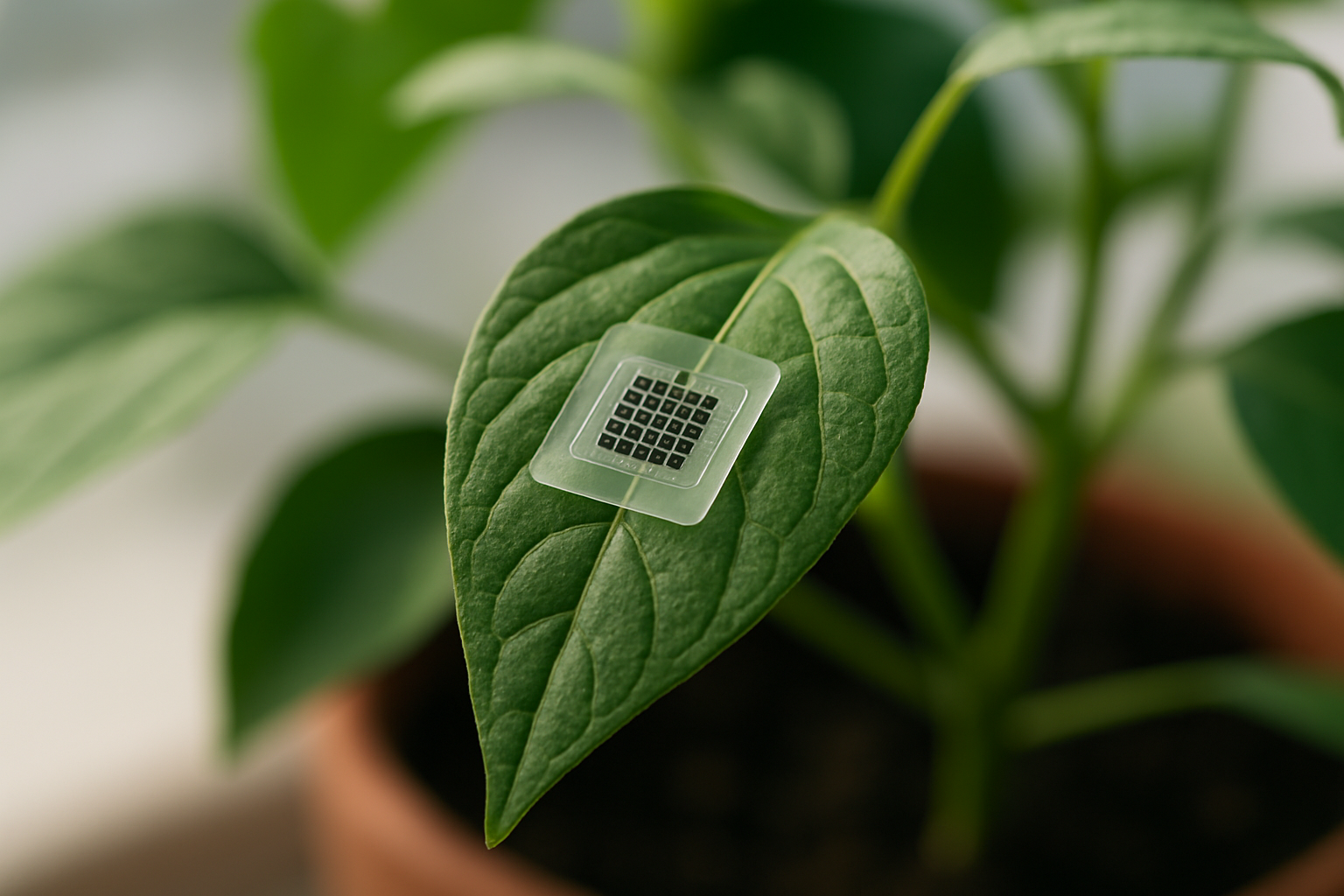
A University of Texas at Austin research team has developed a graphene-based electronic tattoo that measures leaf hydration in real time without damaging the plant. The approach could give growers and researchers a more direct way to monitor plant stress, water needs and wildfire risk.
- The sensor uses graphene because it is flexible and can conform to a leaf surface.
- It measures hydration without relying on dried or removed leaf samples.
- The work points to a practical agricultural and environmental use for graphene.
A softer way to read plant stress
The new device is designed as an ultra-flexible electronic tattoo that sticks to a leaf and tracks hydration levels while leaving the plant intact. Unlike methods that depend on indirect readings or damaged tissue, the graphene-based sensor is intended to measure changes on live leaves in place.
That matters because leaf hydration can be an early indicator of drought stress, crop health and broader ecosystem conditions.
Why graphene fits the task
Graphene’s thinness and flexibility make it a natural candidate for conforming to delicate biological surfaces. In this application, those properties help the sensor stay attached to a leaf while remaining light enough to avoid disrupting the plant’s normal function.
The result is a monitoring tool that aims to combine sensitivity with minimal interference, which is often the challenge in plant sensing.
Potential uses in farming and wildfire monitoring
The research suggests several possible uses, from precision agriculture to landscape-scale monitoring. Farmers could use such sensors to better time irrigation, while researchers could deploy them to track water stress across crops, forests or other vegetation.
The same kind of data could also help identify conditions that raise wildfire risk, especially in dry periods when plant hydration drops quickly.
What this means for graphene research
Graphene has long been discussed as a material with broad promise, but many applications have stayed in the lab. This development is notable because it shows a concrete, field-ready direction for the material in environmental sensing.
It also adds to a growing list of graphene-enabled devices being explored for electronics, biosensing and advanced monitoring systems.
What to Watch
Watch for follow-up data on how the leaf sensor performs outside controlled settings, including durability, calibration and accuracy across different plant species. It will also matter whether the technology can be scaled for larger agricultural or forestry deployments.
If the sensor proves reliable in the field, graphene could move further from a headline material and closer to a practical tool in precision agriculture and environmental surveillance.
Source Reference
Primary source: Phys.org / University of Texas at Austin
Source date: 2026-03-30
Reference: Read original source