Graphene X Men's Ops Everything Proof Pants
Technical apparel often forces a compromise between environmental shielding, mechanical durability, and user mobility. Heavy canvas pants resist tears but absorb water and restrict motion, while ultralight waterproof hardshells keep rain out but easily rip against granite or dense brush. The graphene x men’s ops everything proof pants represent an engineering effort to eliminate these traditional trade-offs by integrating an advanced allotrope of carbon into a technical garment.
By leveraging the unique structural, thermal, and mechanical characteristics of graphene, these trousers aim to provide multi-climate defense in a single tactical cut. Understanding how they work requires looking past commercial marketing to examine the material science, membrane construction, functional mechanics, and inherent physical limitations of graphene-enhanced textiles.
The Material Science: Integrating Graphene into Textiles
Graphene consists of a single layer of carbon atoms arranged in a two-dimensional carbon lattice with extraordinary intrinsic strength, thermal conductivity, and electrical mobility. However, weaving pure macroscopic sheets of single-layer graphene into flexible clothing is not technically viable. Instead, technical apparel uses microscopic graphene nanoplatelets or functionalized graphene oxide integrated into synthetic carrier polymers.
In the construction of the pants, this integration occurs primarily through two manufacturing pathways:
- Polymer Compounding: Nanoscale graphene flakes are blended into molten nylon or polyester chips prior to extrusion, dispersing throughout the synthetic filament yarn to increase structural tensile strength and abrasion resistance.
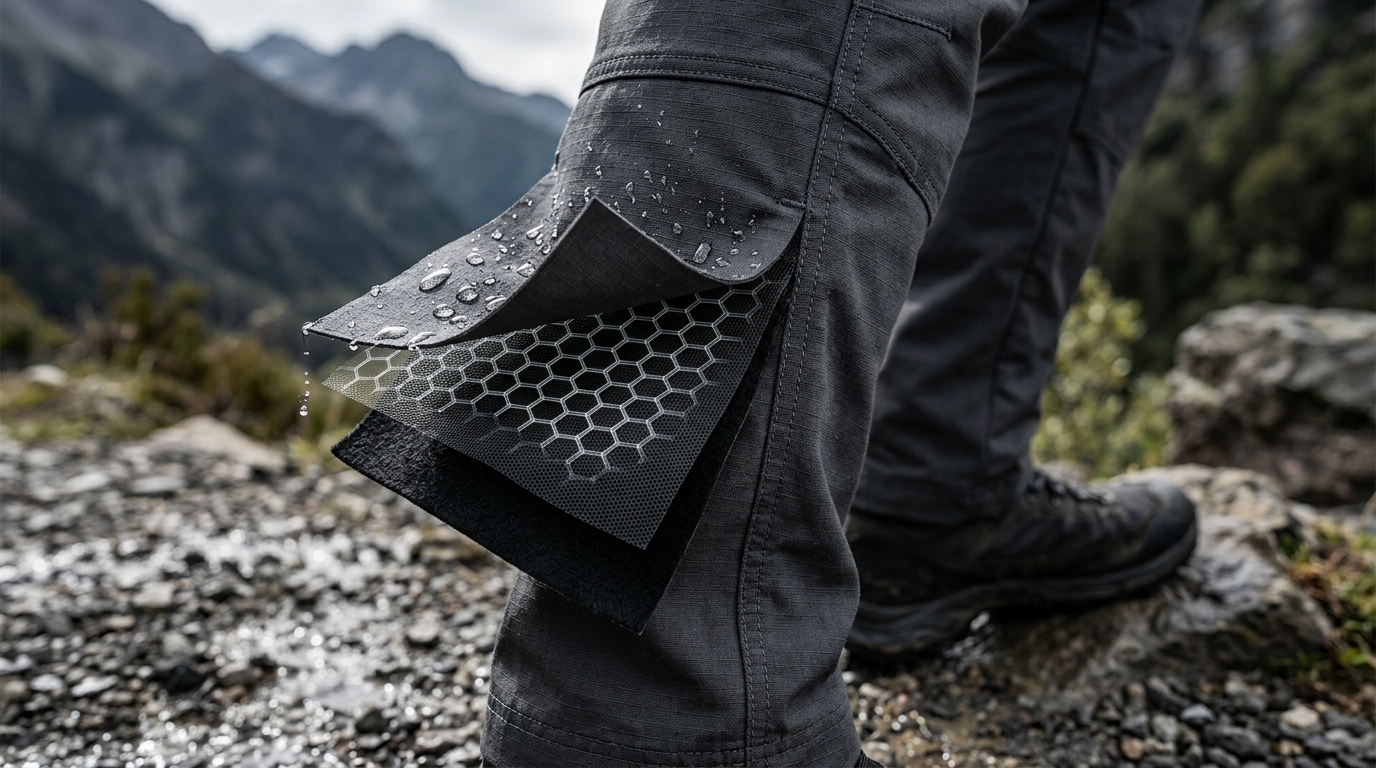
- Membrane Impregnation: Graphene is embedded directly into a microporous or monolithic polymer layer, creating an advanced polyurethane membrane integration that alters heat transfer, prevents water penetration, and repels static charge.
This composite architecture ensures that the microscopic properties of carbon nanomaterials translate into functional benefits at the human scale without compromising the flex, drape, or tactile comfort required in active wear.
Core Mechanisms and Performance Dynamics
1. Thermal Equalization
Human body heat is naturally uneven. The thighs, lower back, and groin produce significant heat during movement, while extremities and joint flex points cool down rapidly in cold weather. Standard synthetic fabrics trap this heat locally, leading to clamminess and sweat buildup.
Graphene possesses exceptionally high in-plane thermal conductivity. When integrated into the garment’s backing or membrane, it facilitates thermal equalization across the fabric plane. Instead of allowing localized hot spots to accumulate moisture beneath the shell, the fabric conducts excess thermal energy away from high-output zones toward cooler, unheated areas. This distribution smooths internal temperature spikes and enhances overall comfort across fluctuating metabolic rates.
2. Mechanical Durability and Tear Mitigation
Everyday trail and tactical pants rely on high-denier fibers or thick ripstop grids to resist abrasion. While effective, high-denier fabrics add substantial weight and stiffness. Graphene reinforcement improves mechanical shear resistance at the molecular level.
When the face fabric encounters abrasive surfaces such as abrasive rock, coarse brush, or metal edges, the dispersed graphene platelets help distribute localized shear stresses across a wider surface area. This mechanism increases resistance to scuffing, reduces fiber fibrillation, and prevents minor surface snags from propagating into catastrophic structural tears.
3. Waterproofing and Breathability Balance
The term “everything proof” centers largely on weather protection. The fabric stack incorporates a multi-layer laminate that pairs a water-repellent face with a specialized barrier layer:
- Liquid Barrier: The pants achieve a substantial hydrostatic head rating, typically exceeding 10,000 to 20,000 millimeters of water pressure, effectively blocking rain, snow, and wet soil.
- Vapor Permeability: The material maintains a high moisture vapor transmission rate, enabling perspiration vapor to escape through microscopic channels in the polymer matrix before it condenses into liquid inside the pant.
- Wind Resistance: The dense molecular layout of the laminate provides a total windbreak, preventing windchill from stripping away the insulating boundary layer of air around the legs.
4. Odor Reduction via Surface Interaction
Microbial proliferation in technical apparel occurs when sweat and dead skin cells get trapped in porous synthetic fibers, allowing bacteria to multiply and generate volatile organic compounds. Graphene surfaces demonstrate bacteriostatic contact inhibition. The microscopic edges of graphene platelets disrupt the cellular membranes of incoming microbes upon contact, inhibiting bacterial growth without relying on chemical biocide washes that rinse out over successive laundry cycles.
Functional Design Architecture of the OPS Platform
Material science is only as effective as the tailoring that houses it. The OPS platform pairs advanced fabric composites with functional ergonomic elements designed for demanding outdoor and field use.
Ergonomic Articulation and Load Distribution
Unlike rigid industrial workwear, these pants incorporate four-way stretch engineering. Articulated knee panels and a gusseted crotch allow deep squats, climbing steps, and high leg lifts without fabric binding or hem rise. The waistband is reinforced to support tool clips and heavy belt loads without sagging or pinching the iliac crest.
Tactical Storage and Hardware
Pocket placement focuses on accessibility while maintaining a streamlined profile when empty. Deep front hand pockets, secure zippered utility channels, and low-profile cargo bays are positioned to prevent stored contents from bouncing or slapping against the leg during running or scrambling. High-grade weatherproof zippers and bonded seams prevent water ingress through assembly joints.
Performance Comparison: Graphene Composite vs. Traditional Fabrics
| Feature / Metric | Graphene-Enhanced 3-Layer | Standard Hardshell (e.g., 3L Nylon) | Heavyweight Canvas / Poly-Cotton |
|---|---|---|---|
| Thermal Regulation | Active in-plane heat spreading | Passive barrier (prone to hot spots) | High insulation, poor heat distribution |
| Weather Protection | Fully waterproof & windproof | Fully waterproof & windproof | Water-resistant (requires wax/coatings) |
| Abrasion-to-Weight Ratio | Very high | Moderate | Low (requires heavy fabric weight) |
| Flexibility & Noise | Flexible, low-to-moderate swish | Stiff, distinct “crinkle” noise | Flexible after break-in, quiet |
Trade-Offs and Physical Limitations
Despite the advanced materials used in their construction, no technical garment is completely immune to physics. Understanding realistic constraints ensures appropriate use and expectations.
- Thermal Realism: Graphene distributes existing heat; it does not generate thermal energy or act as an active refrigeration unit. In sub-freezing conditions, thermal base layers remain necessary. In extreme desert heat, the fabric will eventually reach ambient equilibrium.
- Puncture vs. Abrasion: While the fabric provides exceptional surface shear and abrasion resistance, high-force direct punctures from sharp needles, barbed wire, or pointed nail points can still penetrate between yarn bundles.
- Membrane Humidity Limits: In high-humidity, tropical environments where external ambient moisture matches internal body humidity, breathability declines across all membrane-based technical shells due to the lack of a vapor pressure gradient.
Care, Maintenance, and Longevity
To preserve the graphene-infused membrane and exterior water-repellency over prolonged use, specialized care practices are required:
- Detergent Choice: Clean only with technical apparel washes or mild liquid soaps. Standard household detergents containing fabric softeners, enzymes, optical brighteners, or bleach will clog the membrane pores and break down the protective surface coatings.
- Washing Conditions: Machine wash cold on a gentle cycle. Fast spin cycles and harsh agitation can exert unnecessary mechanical stress on heat-taped seam bonds.
- Drying and DWR Reactivation: Tumble dry on low heat or line dry. A brief cycle of low tumble heat can help reactivate the durable water repellent (DWR) surface finish without damaging the bonded internal layers.
Final Assessment
The graphene x men’s ops everything proof pants illustrate how nanomaterial integration can transform functional outdoor clothing. By combining high-efficiency thermal distribution, robust abrasion resistance, and comprehensive weather sealing into an articulated package, the pants demonstrate that advanced carbon allotropes can provide tangible, measurable benefits in technical textile design.