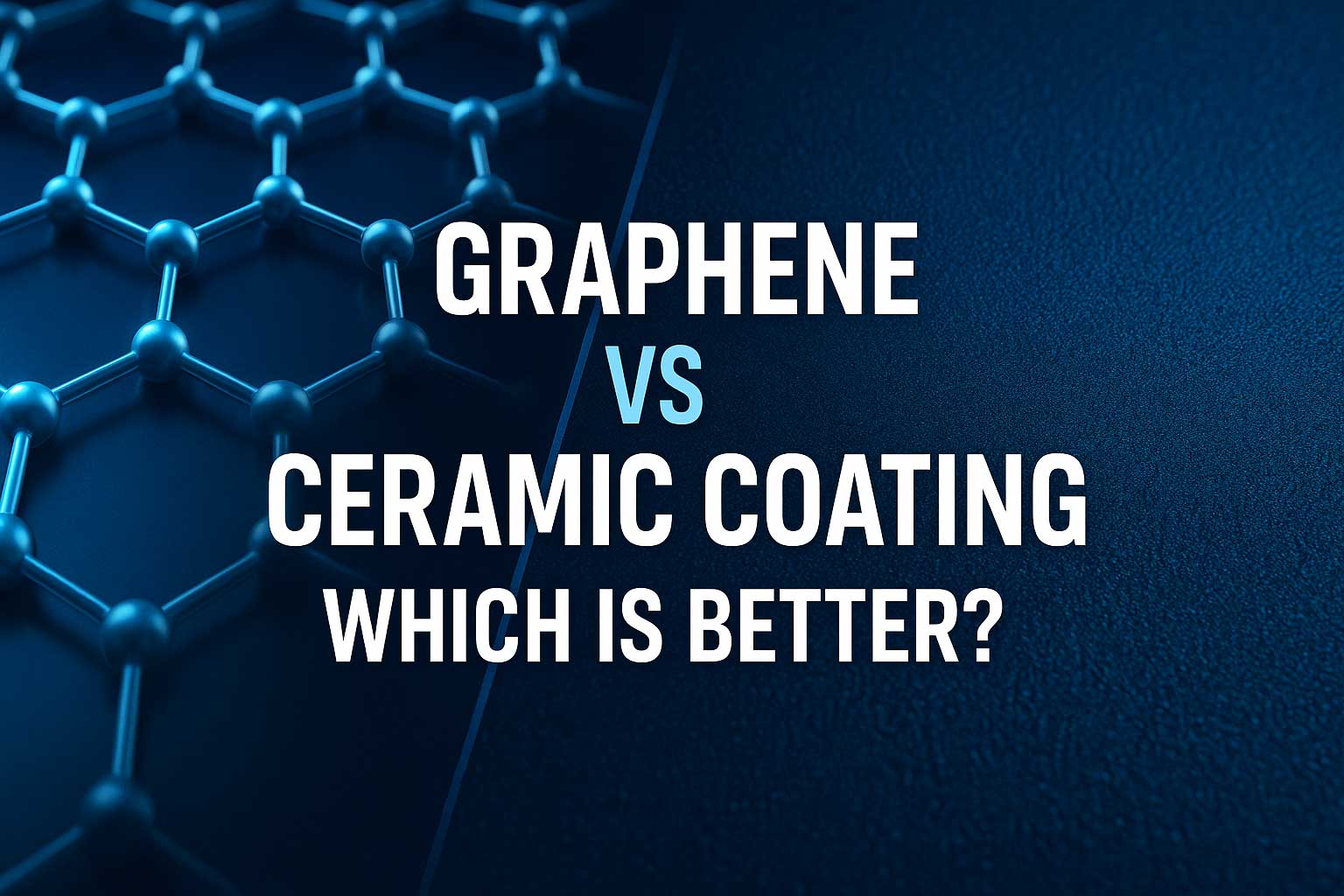
Graphene vs Ceramic Coating 2026: Which Is Better for Cars?
Graphene and ceramic coatings both aim to protect your car’s clear coat by adding a durable, transparent layer that boosts gloss, resists contamination, and makes washing easier.
The real question in 2026 isn’t “which is newer,” but which option matches your climate, washing habits, expectations, and budget.
This updated guide explains how each coating works, what benefits are realistic (and what’s mostly marketing), how long they last in practice, and how to pick the best option
for daily drivers, weekend cars, and harsh environments.
Last updated: December 30, 2025 • 8–12 min read • Not financial advice
Definition: What’s the Difference Between Graphene and Ceramic Coatings?
A ceramic coating is typically a silica-based (SiO₂) paint-protection layer designed to bond to your vehicle’s clear coat and create a hydrophobic, chemical-resistant surface.
A graphene coating is commonly a coating marketed as containing graphene or graphene-related carbon additives, positioned to improve slickness, reduce static, and help with water-spot behavior while still functioning like a modern coating system.
In real-world detailing, both categories overlap. Many “graphene coatings” are still silica-based coatings that include graphene-claim additives. That means the best way to compare them is by
performance (durability, maintenance, water behavior) rather than by the label alone.
Composition & Structure: What’s Actually on Your Paint?
1) Ceramic (SiO₂-based) coating structure
Ceramic coatings form a thin, transparent layer that is prized for chemical resistance, gloss, and water repellency. In practice, the coating’s performance depends on surface prep,
application technique, cure conditions, and ongoing maintenance. Professional-grade systems generally last longer than spray-on consumer sealants, but both fall under the “ceramic” umbrella.
2) Graphene coating structure
Graphene coatings are often described as incorporating graphene or carbon-based nanomaterials into the coating chemistry. Brands typically associate graphene with heat dispersion,
anti-static behavior (less dust attraction), and improved resistance to water spotting. The exact formulation varies widely across products, so outcomes can range from modest to meaningful.
3) Why marketing can be confusing
Graphene itself is famously strong at the material level, but a car coating is not a sheet of pure graphene. What matters is how a product is formulated and how it performs on paint:
beading/sheeting behavior, resistance to contamination, and durability under washing and UV exposure.
Key Properties That Matter Most for Car Owners
Hydrophobic behavior and cleaning ease
Both coatings can make washing easier by reducing how strongly grime bonds to paint. Water behavior (beading vs sheeting) varies by product and maintenance.
Strong hydrophobic performance can make your car look cleaner longer, but it also needs proper wash technique to avoid marring.
Gloss and appearance
Both can enhance gloss and make paint look “deeper.” Graphene products are sometimes marketed as adding a slick, candy-like look, while ceramics are known for a crisp, glossy finish.
In reality, your paint correction and prep often determine the final appearance more than the coating label.
Resistance to chemicals and contaminants
Ceramic coatings are widely associated with chemical resistance, helping against road film, bug splatter, bird droppings (if removed promptly), and light staining.
Graphene coatings generally target similar protection goals, but results depend heavily on the brand and whether the coating is professionally applied.
Water spots and dust attraction
Many detailing sources suggest graphene coatings can be less prone to water spotting and may attract less dust due to anti-static positioning.
Still, water spots are strongly influenced by local water hardness, heat, sun exposure, and how quickly the car is dried after washing.
Production & Application: Prep Matters More Than the Label
Surface prep is the biggest “performance multiplier”
A great coating on poorly prepped paint will underperform. Proper prep typically includes a thorough wash, chemical decontamination, and paint correction as needed.
If swirls are trapped under a coating, they’ll be sealed in until the coating is polished off.
Application complexity
Both coating types require controlled application and careful leveling. Many consumer spray products are easier but usually don’t last as long as professional coatings.
Professional coatings can deliver longer durability but require correct technique, cure time, and sometimes specific maintenance routines.
Maintenance: the “hidden cost”
Coatings are not “set-and-forget.” Regular safe washing, periodic decontamination, and the right topper/booster (if recommended by the system) can significantly extend performance.
Many detailers cite multi-year lifespan ranges for professional ceramic coatings when cared for properly.
Head-to-Head Comparison (What Most Drivers Want to Know)
| Category | Ceramic Coating (SiO₂) | Graphene Coating |
|---|---|---|
| Best-known strength | Chemical resistance, gloss, proven track record | Marketed for slickness, anti-static behavior, water-spot resistance |
| Typical lifespan | Often quoted in the 2–5 year range with maintenance (pro systems can claim longer) | Varies widely; some brands claim multi-year durability, but real outcomes depend on product + install + care |
| Water behavior | Strong hydrophobic performance; varies by product and maintenance | Often positioned as strong beading/sheeting with improved water-spot behavior |
| DIY friendliness | Many consumer ceramics are DIY-friendly; pro-grade requires more skill | Also depends on product; pro installs reduce risk of high spots and uneven leveling |
| Cost | Wide range; pro installs can be expensive depending on correction and warranty | Often priced at a premium vs comparable ceramic packages in many markets |
Advantages
Ceramic coating advantages
- Proven category: widely used with a long track record in detailing.
- Chemical resistance: strong protection against many contaminants when maintained.
- Gloss & hydrophobics: noticeable improvement in shine and washability.
- Options for every budget: from sprays to pro-grade multi-year systems.
Graphene coating advantages
- Positioned for water-spot resistance: some users and brands report improved behavior in hard-water regions.
- Anti-static marketing: often promoted as attracting less dust and staying cleaner longer.
- Heat-related claims: marketed around better heat behavior, which may matter for hot climates and dark paints.
- Premium feel: many formulations emphasize slickness and tactile smoothness.
Limitations & Reality Checks
- Neither coating makes paint scratch-proof: both reduce risk and improve wash safety, but improper washing can still cause swirls.
- Prep dominates results: the best coating can’t compensate for poor prep or contaminated paint.
- “Graphene = 200x stronger than steel” doesn’t mean your paint becomes 200x tougher: that statement refers to graphene as a material under specific conditions, not a thin coating on a car.
- Water spots are mostly a process problem: hard water + heat + sun + drying habits matter as much as the coating choice.
- Longevity depends on maintenance: a neglected coating can fail early, regardless of type.
Safety, Ethical & Environmental Notes
Safety
Coating application can involve solvents and vapors. Use ventilation, gloves, and follow the product safety instructions. If you’re sensitive to chemicals or lack a controlled space,
professional installation is often safer and more consistent.
Ethical marketing
In 2026, “graphene” is sometimes used as a premium label even when performance is similar to strong ceramic systems. Prefer products that specify expected durability ranges,
maintenance requirements, and warranty terms rather than relying on hype claims.
Environmental impact
The biggest practical benefit is durability: if a coating reduces polishing frequency and keeps paint healthier longer, that can reduce chemical use over the car’s lifetime.
However, coating chemicals and solvents still require responsible handling and disposal.
Future Outlook (2026–2030)
Ceramic coatings are likely to remain the mainstream “default premium” option due to their maturity, broad installer base, and large product ecosystem.
Graphene-labeled coatings will likely continue to expand as brands refine formulations and messaging—especially around water behavior, slickness, and ease of maintenance.
The most realistic trend is convergence: more hybrid formulations, more emphasis on maintenance systems, and better consumer clarity on durability vs “spray sealant” convenience.
Your best decision will still come down to installer skill, prep quality, and your washing habits.
So… Which Is Better?
Choose ceramic coating if you want a proven system with predictable results, wide installer availability, and strong chemical resistance—especially if you plan to maintain it properly.
Choose a graphene coating if you live in a hot, dusty, or hard-water area and your priority is a slick feel, easier cleaning, and potentially better water-spot behavior—provided you select a reputable product and installer.
If you’re unsure, the safest approach is: invest in prep + a reputable installer. A well-installed ceramic coating often beats a poorly installed “premium graphene” package.
Frequently Asked Questions
- How long does ceramic coating last in real life?
- Many professional ceramic coatings are commonly described in the 2–5 year range with proper maintenance, while consumer spray ceramics often last months rather than years.
- Do graphene coatings really last longer than ceramic coatings?
- Some brands claim multi-year durability for graphene coatings, but lifespan varies widely by product, prep, install quality, climate, and maintenance. Compare real warranty terms and user outcomes, not just marketing claims.
- Which coating is better for water spots?
- Graphene coatings are often marketed as less prone to water spotting, but water spots are heavily driven by hard water, heat, and drying habits. Good wash-and-dry technique matters as much as the coating choice.
- Can I apply either coating myself?
- Yes, many consumer versions are DIY-friendly. Professional-grade coatings are less forgiving and can leave high spots if applied incorrectly, so many owners choose professional installation for consistent results.
- Is graphene coating worth the extra cost?
- It can be if you specifically benefit from its claimed maintenance advantages (dust, water behavior) and you choose a reputable installer. If budget is tight, a high-quality ceramic coating with proper prep usually delivers excellent value.
- Do I still need wax if I have a coating?
- Usually no. Many owners use a compatible “booster” or topper designed for coatings to refresh slickness and water behavior, but traditional wax is optional and not required.