Graphene Coating on Top of Ceramic: Does It Really Work?
Car owners and detailers often ask whether applying a graphene coating on top of an existing ceramic coating actually improves protection. The idea sounds powerful—stacking two advanced technologies to create an even stronger shield.
But does graphene on top of ceramic really add value, or is it mostly marketing? Understanding how these layers interact reveals what truly happens at the surface level.
What Is a Ceramic Coating?
A ceramic coating is a silica-based (SiO₂) protective layer that chemically bonds to paint or other surfaces. Once cured, it forms a hard, transparent shell that resists chemicals, UV damage, light scratches, and contamination.
Ceramic coatings are designed to be the primary bonded layer on the surface. They become part of the paint system, not just a removable sealant.
What Is a Graphene Coating?
Graphene coatings use graphene or graphene oxide blended into a protective carrier. These coatings improve chemical resistance, heat tolerance, slickness, and water behavior.
In automotive products, graphene coatings are often delivered as spray coatings or wipe-on protectants rather than permanently bonded layers.
What Happens When Graphene Is Applied Over Ceramic?
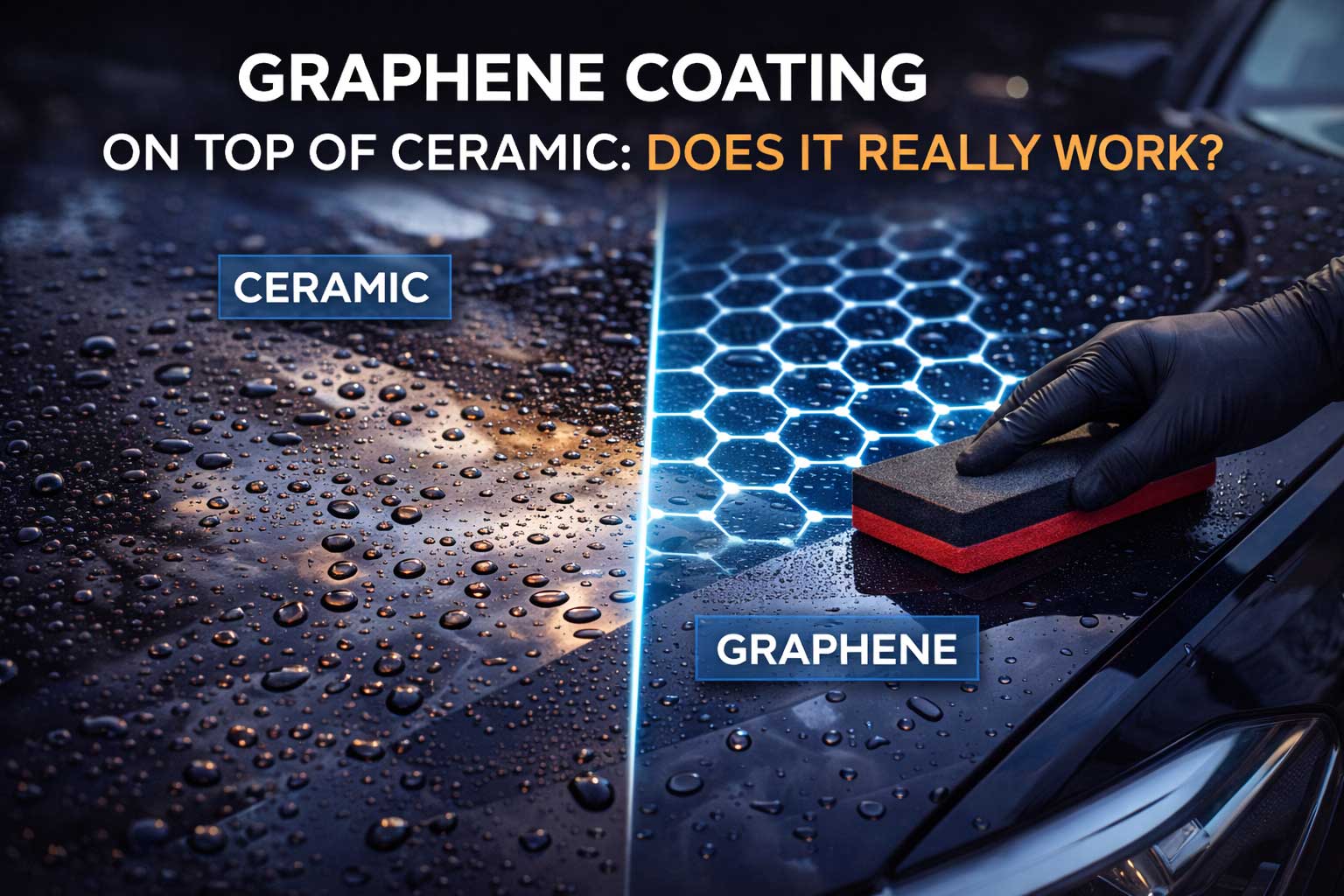
When graphene is applied on top of ceramic, it does not chemically bond to the paint. Instead, it bonds to the ceramic layer itself. This makes it a topper, not a replacement.
In practice, this creates:
- A slicker surface feel
- Improved water beading and self-cleaning
- Temporary enhancement of gloss
- Additional resistance to contamination
However, this graphene layer wears away over time—usually weeks or months—depending on washing habits and environmental exposure.
Does It Increase Protection?
Graphene on top of ceramic does not replace the ceramic layer. It enhances the surface behavior but does not meaningfully increase scratch resistance or long-term durability.
The ceramic coating remains the true protective barrier. The graphene layer acts more like a high-tech maintenance sealant.
Why Detailers Use Graphene Toppers
- Restores hydrophobic performance on aging ceramic coatings
- Adds slickness and gloss before shows or events
- Provides short-term protection boost
- Easy to apply without polishing
Limitations
- Not permanent
- Wears off with washing
- Does not replace ceramic reapplication
- Performance varies by formulation
The Practical Truth
Applying graphene on top of ceramic is effective as a maintenance layer, not as a structural upgrade. It improves slickness, water behavior, and appearance, but the ceramic layer remains the foundation.
Think of it like waxing over ceramic—only with more advanced chemistry and better performance.
Frequently Asked Questions
Can graphene replace ceramic?
No. Graphene toppers do not bond like ceramic coatings.
How long does graphene last on top of ceramic?
Typically a few weeks to a few months.
Is it worth using?
Yes, for maintenance and appearance enhancement.
Does it make ceramic stronger?
No. It improves surface behavior, not core durability.
Should it be reapplied?
Yes, as part of regular ceramic maintenance.