
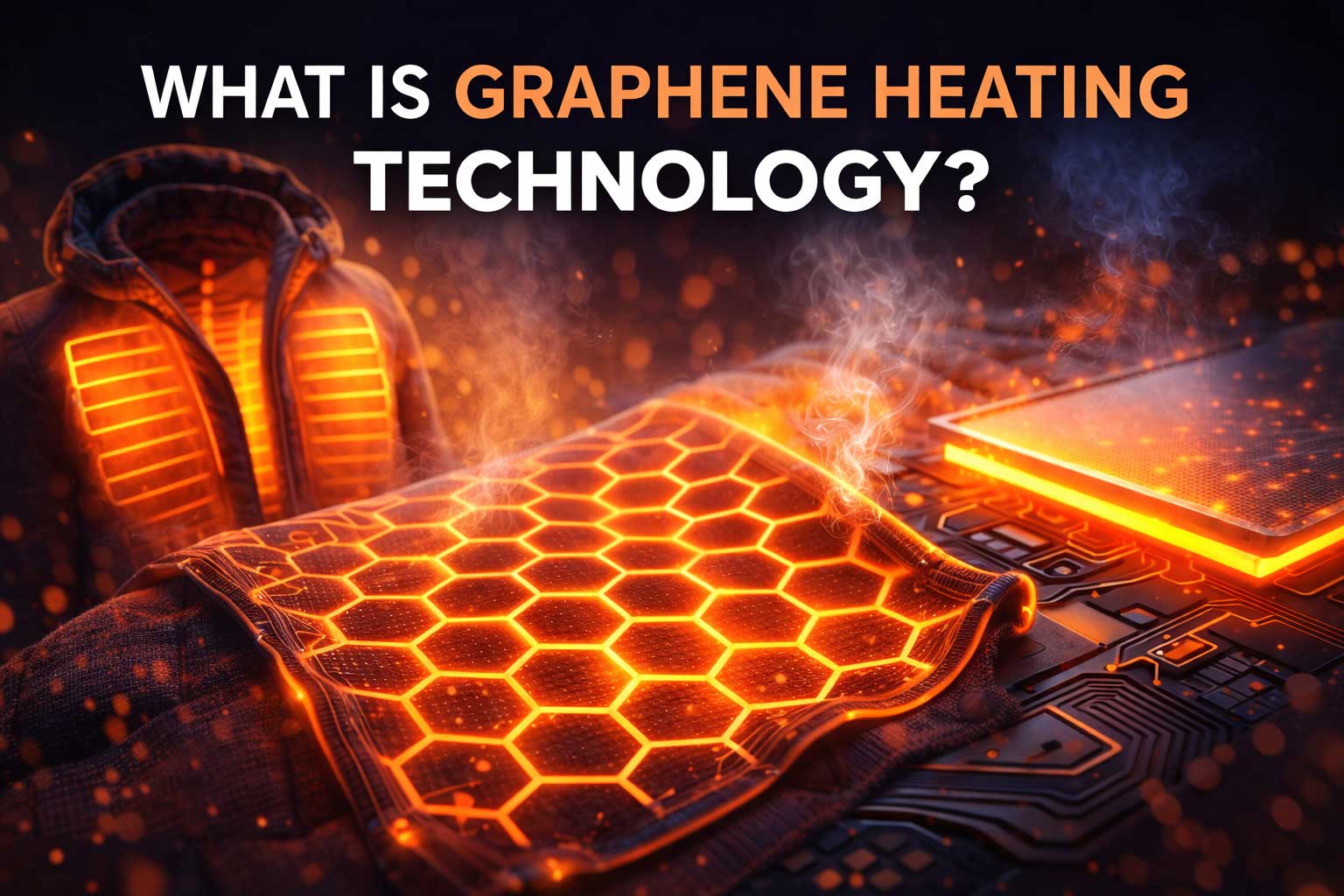
What Is Graphene Heating Technology?
Graphene heating technology is a new way of producing heat using ultra-thin sheets of graphene as the heating element. Unlike traditional metal wires, graphene spreads heat evenly, responds instantly, and operates with remarkable efficiency.
From heated jackets and car seats to wall panels and medical pads, graphene heating is redefining how warmth is generated, delivered, and controlled in both consumer and industrial products.
Definition
Graphene heating technology uses graphene-based films or coatings that generate heat when electrical current passes through them. This process relies on resistive (Joule) heating, but with far greater efficiency and uniformity than conventional materials.
Because graphene is only one atom thick and highly conductive, it converts electricity into heat rapidly and distributes that heat across its entire surface. The result is thin, flexible, fast, and energy-efficient heating.
Composition and Structure
Graphene heating elements are typically made from:
- Graphene nanoplatelets or flakes
- Carbon-based conductive inks
- Polymer films infused with graphene
- Printed graphene circuits on fabric or plastic
These materials are arranged in ultra-thin layers that can bend, stretch, and conform to surfaces. Unlike metal coils, graphene heaters have no hot spots, no rigid structure, and no bulky components.
How Graphene Heating Works
When voltage is applied, electrons move through the graphene layer. Because graphene has controlled resistance, part of that electrical energy converts into heat. The atomic structure allows heat to spread laterally at exceptional speed.
This creates:
- Instant warm-up
- Even surface temperature
- Low power consumption
- Stable thermal output
Key Properties
- Ultra-thin (often under 0.1 mm)
- Flexible and lightweight
- Rapid thermal response
- Uniform heat distribution
- High energy efficiency
- Low operating voltage
Production and Processing Methods
Graphene heaters are produced using methods such as:
- Screen printing graphene inks onto films or fabrics
- Coating polymer substrates with graphene layers
- Laminating graphene sheets between insulating films
- Embedding graphene into composite textiles
These methods allow mass production at low cost while maintaining flexibility and durability.
Applications and Use Cases
- Heated clothing (jackets, gloves, insoles)
- Car seats, steering wheels, and dashboards
- Wall and floor heating panels
- Medical heating pads and therapy wraps
- Smart bedding and mattresses
- Industrial anti-fog and anti-ice surfaces
- Battery and electronics thermal management
Advantages Over Traditional Heating
- No bulky coils or wires
- Even heat with no hot spots
- Faster warm-up time
- Lower energy usage
- Lightweight and flexible
- Long operational lifespan
Limitations and Challenges
- Higher initial material cost
- Requires precise power regulation
- Quality varies by manufacturer
- Still emerging in large-scale building systems
Safety, Environmental, and Ethical Notes
Graphene heaters operate at low voltages and produce stable radiant heat, making them safe for direct human contact when properly manufactured. They contain no exposed metal filaments and have minimal fire risk.
Environmentally, graphene heaters reduce energy consumption and material waste. Long-term nanoparticle exposure during manufacturing requires controlled handling, but finished products are considered safe.
Future Outlook
Graphene heating will become a standard feature in smart homes, vehicles, and wearables. As production costs fall, entire walls, furniture, and clothing may integrate invisible heating layers.
Rather than replacing existing systems entirely, graphene heating will complement them—bringing localized, efficient, and responsive warmth exactly where it is needed.
Frequently Asked Questions
What is graphene heating technology?
It is a heating method that uses ultra-thin graphene films to generate fast, even, and energy-efficient heat.
Is graphene heating safe?
Yes. It operates at low voltage and has no exposed metal elements.
Why is it better than wire heaters?
It heats evenly, uses less energy, and can be made flexible and ultra-thin.
Where is graphene heating used today?
In clothing, car interiors, medical pads, smart bedding, and wall panels.
Will graphene replace all heaters?
No. It will mainly enhance and localize heating rather than replace central systems.